


More news on this day
A four-hour shutdown of the UK’s air traffic control system this week has left thousands of passengers facing disrupted journeys and unexpected bills, with one family reporting costs of more than £1,000 despite the incident being classed as beyond airlines’ control.
Get the latest news straight to your inbox!
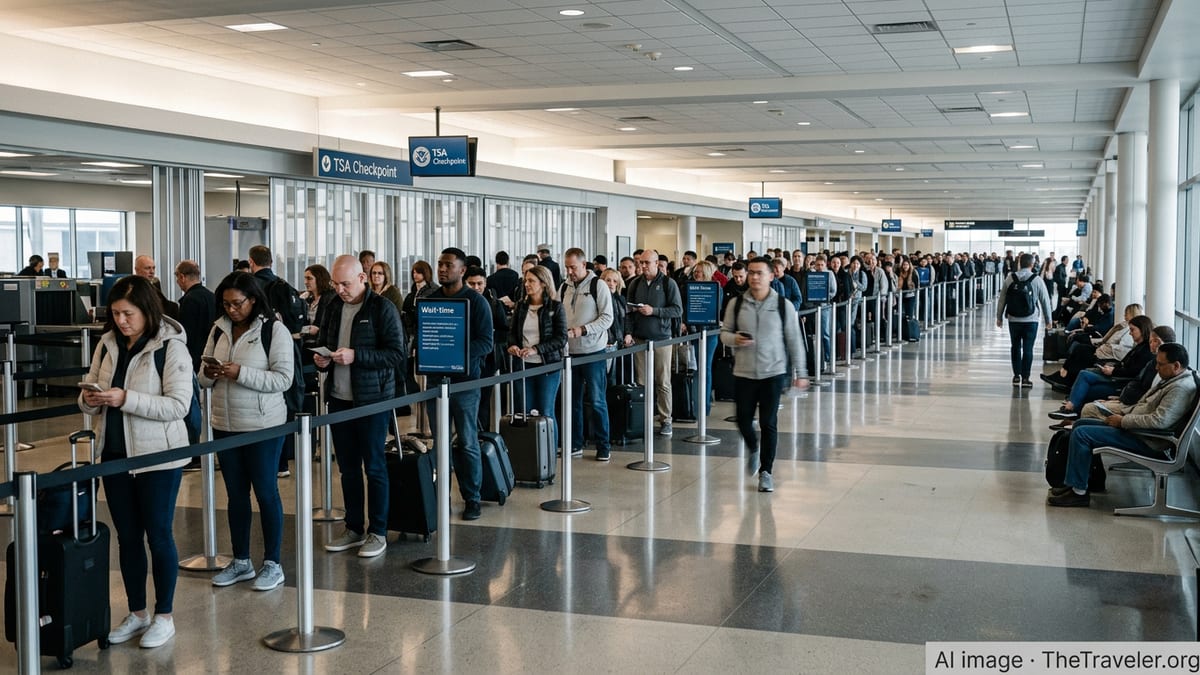
Families count the cost of an afternoon shutdown
The latest disruption originated in a technical issue affecting National Air Traffic Services (NATS), which briefly halted departures and significantly restricted arrivals across UK airspace. According to published coverage, traffic was reduced for around four hours while engineers worked to restore normal operations, triggering cancellations and widespread knock-on delays for the rest of the day.
Among those affected were Catie and her partner, who described how the shutdown left them stranded on their return from holiday and ultimately more than £1,000 out of pocket once new flights, overnight accommodation and other expenses were counted. Their experience, highlighted in a BBC report, reflects the financial shock many travellers face when a short-lived system failure ripples through a tightly scheduled aviation network and wipes out carefully planned connections and low-cost fares.
Reports indicate that hundreds of flights were delayed or cancelled as airlines struggled to recover aircraft and crew positions following the outage. With peak-season load factors already high, many passengers struggled to find affordable alternatives and were forced either to buy last-minute tickets on rival carriers or extend hotel stays while waiting for the next available seat.
The disruption also exposed how fragile tight travel budgets can be. Some passengers told consumer groups and media outlets that their original bargain fares were quickly eclipsed by the price of replacement tickets, airport meals and ground transport home, costs that can easily outstrip the value of the holiday itself.
Why many passengers will not receive cash compensation
Under UK Regulation 261, which sets out fixed-sum compensation for long delays and cancellations, travellers are entitled to payments only when disruption is considered to be within an airline’s control. Technical problems at NATS, which manages en-route and some terminal airspace, are typically treated as “extraordinary circumstances,” placing them outside that scope.
Following a similar NATS system failure on 28 August 2023, the Civil Aviation Authority (CAA) stated that passengers were not due Article 7 compensation because the outage originated in the national air navigation service provider rather than any individual airline. The independent review of that 2023 failure reiterated that assessment, concluding that carriers were not responsible for the incident itself although they were still required to provide care and assistance such as food, refreshments and accommodation where necessary.
Early commentary on the latest disruption suggests that the same legal framing is likely to apply again, limiting many passengers’ expectations of receiving set cash sums of up to £520 per person. Instead, airlines are generally obliged to reimburse reasonable “duty of care” expenses and offer re-routing at the earliest opportunity, but not to cover consequential losses such as missed events, prepaid hotels at the destination or the costs of choosing a more expensive alternative carrier.
For travellers such as Catie’s family, this distinction is crucial. While some of their outlay may be claimable, for example extra accommodation while waiting for a rebooked flight, additional voluntary spending on different airlines or upgraded routes may fall outside standard reimbursement rules unless travel insurance explicitly covers such scenarios.
Lessons from previous NATS failures
The scale of disruption has drawn comparisons with the August 2023 NATS outage, when a fault in the flight planning system led to thousands of delays and cancellations at the end of the summer holiday period. An independent review commissioned by the CAA later found that the failure, resolved within hours, nonetheless had effects that cascaded across Europe for several days as airlines and airports attempted to clear backlogs.
Transport Focus, which was asked to examine the passenger experience of that 2023 incident, reported that many travellers struggled to obtain clear information about their rights, encountered difficulty securing hotel rooms and were left uncertain about whether later claims for reimbursement would succeed. That research highlighted inconsistent handling by different airlines and airports and recommended clearer, more proactive communication when large-scale technical failures occur.
The review also underlined the financial burden that such outages impose on the wider industry. One major low-cost carrier reported spending more than £15 million on care and re-routing for affected passengers in 2023, despite the event being outside its direct control. This context helps explain why airlines insist they should not be liable for additional compensation when national infrastructure fails, even as individual travellers face significant personal costs.
While some technical and procedural changes have since been implemented at NATS following the 2023 report, the latest disruption shows that system vulnerabilities and recovery challenges remain a live concern for regulators and travellers alike, particularly during peak travel periods when any capacity reduction quickly turns into network-wide congestion.
What passengers can realistically claim back
Consumer advice published in the wake of the new shutdown stresses that passengers affected by air traffic control failures should still keep receipts and pursue claims for their basic out-of-pocket expenses. Even where fixed compensation is not available, airlines are generally expected to refund unused tickets for cancelled flights or offer alternative travel at the earliest opportunity.
Regulators and consumer groups note that carriers must also provide care and assistance during long waits, including meals relative to the delay and hotel accommodation plus transfers when overnight stays are required. If an airline cannot provide vouchers or rooms directly, passengers may later seek reimbursement for reasonable costs, although disputes frequently arise over what counts as reasonable in busy, high-cost airport locations.
Travel insurance can play a decisive role for those facing four-figure bills like the family whose story has circulated this week. Policies that offer disruption cover for missed connections, schedule changes or airspace closures may reimburse additional expenses that fall outside airline obligations, but coverage varies significantly between providers. Experts routinely urge travellers to review the small print and keep evidence of all communication with carriers and insurers when making a claim.
Passengers left dissatisfied by airline responses retain the option of escalating complaints through alternate dispute resolution schemes or, in some cases, small claims courts. However, previous NATS-related incidents suggest that success often hinges on careful documentation and a clear understanding of the line between statutory rights and goodwill gestures in extraordinary circumstances.
Pressure grows for stronger protections and resilience
The recurrence of large-scale air traffic control failures has intensified debate over how far current rules really protect passengers when critical national systems falter. After the 2023 outage, the CAA’s independent review recommended a series of measures to strengthen resilience at NATS and improve communication with both airlines and the travelling public, including more robust testing, clearer contingency planning and better data sharing.
The UK government has since indicated that it intends to implement reforms aimed at delivering higher levels of passenger protection, although concrete legislative changes have yet to reach the statute book. A progress update in 2024 referenced future work tied to the next NATS price control period, signalling that funding for resilience upgrades and clearer accountability mechanisms will be central topics in upcoming regulatory negotiations.
For passengers facing immediate costs, those long-term policy discussions may feel distant. Yet the pattern is becoming familiar: a relatively brief technical failure at a central node in the aviation network can produce days of disruption and leave individual travellers shouldering large, often uncovered expenses. Each fresh incident increases pressure on regulators, government and industry to close the gap between legal entitlements and the financial reality experienced by affected families.
As the latest wave of claims and complaints works its way through airline systems and ombudsman schemes, consumer advocates are watching closely to see whether lessons from 2023 are reflected in better information, faster processing and more consistent outcomes. For now, the experience of one family facing a bill of more than £1,000 has become a touchstone for growing frustration about where the costs of air traffic control failures ultimately land.
BBC News: Air traffic chaos and compensation
UK CAA: Independent review of August 2023 NATS failure
Transport Focus: Passenger experience during NATS outage
UK Government: Progress report on NATS technical failure recommendations