


More news on this day
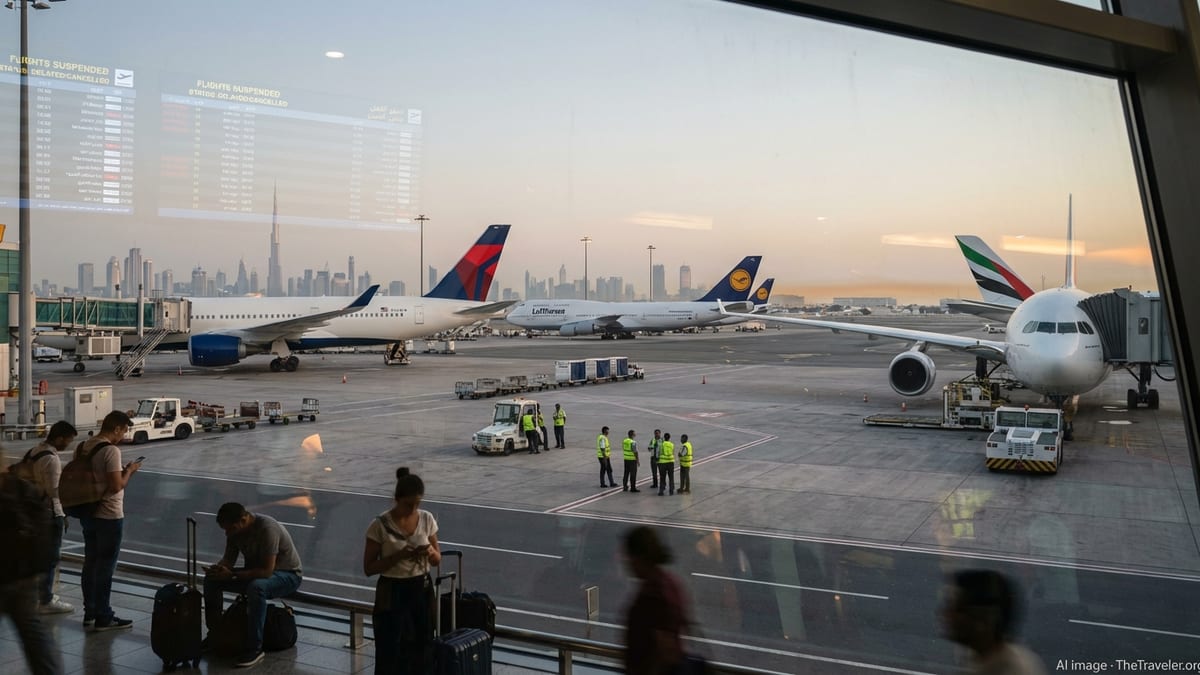
Escalating conflict involving Iran and its neighbors has triggered a rolling airspace crisis across the Middle East, forcing airlines to redraw Europe–Asia flight paths and reshaping passenger flows through the United Kingdom’s main hub at London Heathrow.
Get the latest news straight to your inbox!
Heathrow Passenger Mix Shifts as Middle East Routes Falter
Heathrow’s latest traffic data presents a mixed picture for the United Kingdom’s flagship gateway. Publicly available figures for March 2026 show the airport handled around 6.6 million passengers, a year on year increase, but with a notable shift in the type of travelers using the hub. Reports from aviation data providers indicate that connecting traffic through Heathrow has risen as airlines reconfigure routings that once relied heavily on Gulf hubs and Iranian airspace.
Industry summaries of Heathrow’s quarterly results in late April highlight that long haul markets to and from Asia and the Gulf are growing more slowly than short haul European and North American segments. While total passenger numbers remain resilient, the mix is changing, with more Europe–North America and Europe–Africa itineraries offsetting softer demand and reduced capacity on traditional Europe–Middle East–Asia corridors.
Analysts note that this shift has important revenue implications. Premium cabins on Middle East routes have historically been among Heathrow’s most lucrative segments, supported by corporate travel and high yielding leisure demand to Gulf hubs and onward to Asia. Any prolonged weakness or rerouting of those flows risks altering Heathrow’s role in global aviation, even if headline traffic numbers remain relatively strong.
Operationally, Heathrow has signaled in public statements that it is working with airlines to manage knock on delays, gate changes, and crew scheduling issues linked to extended flight times and late arriving aircraft from Asia and East Africa. Travelers transiting the airport are being advised by carriers to allow longer connection windows on itineraries that would previously have relied on fast, predictable overflight of the Middle East.
Middle East Airspace Closures Redraw Global Maps
The roots of the current disruption trace back to late February 2026, when joint United States and Israeli strikes on Iranian targets were followed by retaliatory attacks and a rolling series of airspace restrictions. Aviation risk trackers and specialist briefings describe the subsequent closure of Iranian and Kuwaiti flight information regions, as well as de facto avoidance of Iraqi airspace by many international carriers.
According to operational overviews from flight safety organizations, this has produced one of the largest coordinated sets of closures since the 2010 Icelandic ash crisis. Routes between Europe and South Asia, Southeast Asia, and parts of East Africa traditionally cross multiple Middle Eastern flight corridors. With key segments now closed or heavily constrained, airlines must choose between canceling flights outright or adding significant distance by detouring north via the Caucasus and Central Asia or south around the Arabian Peninsula.
Analytical case studies published in early 2026 outline the cost of these diversions. Rerouted widebody flights can add two to three hours to a sector, sharply increasing fuel burn and crew time while reducing the number of daily rotations a single aircraft can perform. Over hundreds of flights each week, these additional hours translate into mounting operating costs and growing pressure on fleet and crew availability.
The broader impact extends beyond passenger services. Air cargo networks, which rely heavily on predictable Middle East hubs such as Dubai and Doha, have seen capacity fall and transit times lengthen. Trade publications report a double digit decline in available belly hold capacity on some Europe–Asia lanes and a concurrent rise in air freight rates, developments that ultimately feed back into consumer prices and supply chain reliability worldwide.
Europe–Middle East Traffic Slumps as Rerouting Ripple Effects Spread
European air traffic data compiled by Eurocontrol and other regional bodies shows that flows between Europe and the Middle East remain sharply down compared with last year, even as overall European traffic continues to recover. Recent weekly overviews point to flights on these corridors running at around half of 2025 levels, underscoring the severity of the current operational environment.
At the same time, travel industry briefings for April highlight hundreds of cancellations and thousands of delays on Asia and Gulf routes originating in the United Kingdom and continental Europe. Many of these disruptions are directly linked to airspace closures, while others result from aircraft and crew being out of position after repeated rerouting and unscheduled technical stops for refueling.
Passengers are feeling the effects in longer journey times, tighter availability during peak periods and, increasingly, higher prices. Consultancy forecasts released in April suggest that the combination of extended routings, elevated fuel costs linked to the wider Iran related energy shock, and war risk insurance premiums could push average fares on affected long haul routes significantly higher through the northern summer season.
These operational stresses are colliding with existing constraints on aircraft supply. New generation long haul jets remain in high demand, and order backlogs mean airlines cannot quickly upgauge fleets to compensate for lost efficiency on their existing networks. As a result, carriers are being forced to prioritize the most profitable city pairs, leaving some secondary routes from the UK and Europe to the Gulf and South Asia with sharply reduced frequencies or temporary suspensions.
What International Travelers Should Expect Next
For travelers planning trips that involve the UK and any destination east of Istanbul or north of the equator, the next several months are likely to bring continued uncertainty. Aviation risk databases indicate that conflict related notices over portions of the Middle East, Russia, and Ukraine remain in effect, with few signs of near term de escalation. Analysts warn that even if some airspace gradually reopens, a full return to pre conflict routings may be slow due to lingering security concerns and insurance conditions.
In the short term, international passengers can expect schedules to remain fluid. Airlines are frequently adjusting departure times and routings up to the day of travel as they respond to updated assessments and air traffic control restrictions. Publicly available guidance from carriers and travel agents now routinely recommends that passengers check flight status repeatedly in the 24 hours before departure and prepare for last minute time changes or aircraft swaps.
Connections are another pressure point. Itineraries that once relied on tight layovers at Gulf hubs are increasingly being rebuilt around European gateways such as London, Paris and Frankfurt, or around alternative transit points in Central Asia. For UK based travelers, that means more journeys structured as direct long haul segments from Heathrow or other British airports to Asia, or via secondary European hubs, often with longer total journey times.
Travel insurers and consumer groups are also flagging the importance of understanding policy coverage for war related disruption. Many standard policies exclude events linked to armed conflict, which can affect eligibility for compensation in cases of cancellation or extended delay. Passengers are being encouraged, in publicly available advisories, to review fare rules, airline vouchers and refund policies closely when booking complex itineraries through the affected region.
Strategic Rebalancing of Global Hubs and UK’s Role
Beyond immediate disruption, the crisis is prompting a strategic rethink of how airlines design their global networks. Commentaries from aviation consultancies in April argue that the war in Iran has exposed a structural vulnerability in the reliance on a narrow band of Gulf airspace as the backbone of Europe–Asia connectivity. With that corridor constrained, carriers are experimenting with alternative hub structures, including more nonstop Europe–Asia services that bypass traditional Middle East stopovers.
For the United Kingdom, this rebalancing presents both risks and opportunities. On one hand, weaker connectivity via Gulf carriers could reduce competitive pressure on UK based airlines and consolidate Heathrow’s position as a long haul gateway linking North America and Europe to Asia and Africa. On the other, persistently higher operating costs and longer routings could dampen overall demand and discourage price sensitive leisure travelers from booking long haul trips that originate or connect in Britain.
There are signs that airports and airlines are already responding. UK based carriers have publicly outlined adjustments to capacity on routes to India, Southeast Asia and Australia, with some services shifted from one stop Gulf routings to either nonstop or two stop journeys via different hubs. Airport planners and tourism bodies are watching closely to see whether these interim changes crystallize into a more permanent restructuring of traffic flows.
For now, the working assumption across much of the industry is that geopolitical risk in the Middle East will remain a defining feature of global aviation planning for the foreseeable future. International travelers passing through the UK can expect more complex route maps, higher exposure to delays and schedule changes, and a premium on flexibility when booking. The coming year will reveal whether Heathrow and its airline partners can turn the turbulence into a long term advantage or whether the ongoing crisis ultimately erodes its standing in the global league of mega hubs.