


More news on this day
Rail passengers across parts of the United Kingdom are being urged to avoid non essential journeys this week as a rare red warning for extreme heat forces operators to cut services, impose speed restrictions and warn of severe disruption on some of the country’s busiest routes.
Get the latest news straight to your inbox!
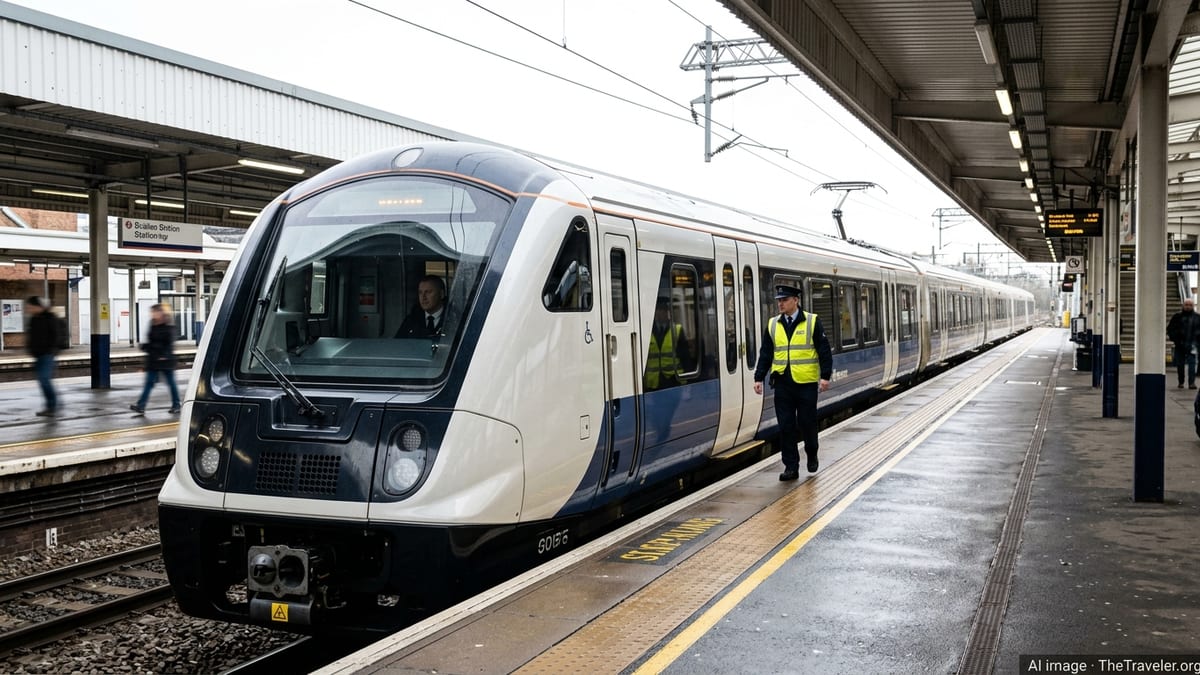
Red heat alert triggers system wide caution
The Met Office has issued a red warning for extreme heat across central and southern England and parts of Wales, with forecasters expecting some areas to approach or exceed 40 degrees Celsius over the coming days. Publicly available information indicates that transport networks are among the sectors expected to be hardest hit, with rail infrastructure singled out as particularly vulnerable to prolonged high temperatures.
According to recent coverage of the developing heatwave, the red alert applies during the hottest daytime hours later this week, when direct sunlight and air temperatures combine to push track temperatures far higher than the readings in the shade. Rail planners are responding by activating extreme weather protocols that have been refined during previous hot summers, but still anticipate significant disruption for passengers.
Network wide guidance circulated on Tuesday advises travellers to think carefully before boarding trains in the affected regions, with particular concern around long distance intercity routes and busy commuter corridors into London and other major cities. Travel advisories highlight the risk of sudden timetable changes, cancellations and overcrowding as services are thinned out to protect infrastructure.
Travel industry reports note that red warnings for heat are still relatively rare in the UK, underscoring the exceptional nature of this event and the pressure it is placing on systems originally designed for a cooler, more temperate climate.
Rail firms cut services and urge essential travel only
Several operators are revising timetables and warning that only essential journeys should be attempted on the hottest days. Coverage from national and regional outlets indicates that long distance routes to and from London Euston, a key hub for services to the Midlands, North West England and Scotland, will see reduced frequencies as track owners and train companies seek to lower the load on vulnerable sections of line.
In northern England, public notices reproduced by local news platforms report that services across the North West will continue to run but to amended schedules, with fewer trains and longer journey times expected as extreme temperatures arrive. Operators are advising passengers who cannot postpone trips to check journey planners on the day of travel and to be prepared for last minute changes.
In the south and west, Great Western Railway is highlighted in recent coverage as one of the firms making early alterations. The company is set to run amended timetables through the Thames Valley and towards the West Country during the hottest parts of the day, combining cancellations with speed restrictions to reduce strain on tracks and overhead equipment. Passengers are being encouraged to travel earlier in the morning or later in the evening where possible, when conditions are marginally cooler.
Across much of the network, industry information systems are not expected to show the final version of altered timetables until the day itself, reflecting how quickly operators are having to respond to evolving weather forecasts. Travellers are being repeatedly reminded to monitor live updates rather than relying on printed schedules or older bookings.
How extreme heat affects the rail network
Technical guidance from rail infrastructure managers and independent analyses published in recent years explain why high temperatures pose such a challenge to the UK rail network. Steel rails expand in the heat, and if the temperature exceeds the level used when tracks were stressed and installed, that expansion can create forces strong enough to cause the line to kink or buckle. Even a minor distortion can make a section of track unsafe for high speed trains.
To minimise that risk, rail controllers routinely introduce blanket speed restrictions when temperatures rise towards critical thresholds. Slower running reduces the lateral forces exerted by trains on the track, but lengthens journey times and reduces the number of services that can safely operate in a given hour. On busy main lines, this effectively compels operators to cancel some trains in order to maintain reliability on those that remain.
Overhead power equipment and signalling systems can also suffer in intense sunshine and high air temperatures, adding further complexity. Cables can sag, components can overheat and lineside equipment may fail more readily, all of which increase the likelihood of additional delays and unplanned closures. Reports from previous hot spells indicate that even well prepared networks struggle when extreme heat coincides with peak travel demand.
Passenger focused research commissioned by the industry has also shown that hot weather intensifies discomfort on crowded trains and at unshaded stations, especially if air conditioning fails or doors remain open during extended delays. In response, current advisories are urging travellers who must use the rail network to carry water, avoid running for trains and allow extra time to complete their journeys.
What passengers can expect this week
Based on current forecasts and the latest service updates, travellers in affected parts of England and Wales should expect a combination of reduced timetables, slower services and busier trains on the days covered by the red warning. Long distance routes into and out of London, including those serving Euston, are likely to be among the most disrupted, with some operators already signalling that only essential journeys should go ahead.
Regional networks, including lines in the North West and South East, are also implementing revised schedules that keep routes nominally open while accepting that performance will suffer. According to rail travel bulletins, many of these changes are being framed as precautionary steps to prevent more serious failures such as track damage or stranded trains, which could have knock on effects lasting well beyond the immediate heatwave.
For leisure travellers and holidaymakers, the message across official channels and media coverage is consistent: consider postponing rail journeys that are not strictly necessary, or rebooking for cooler periods later in the week once the peak of the heat has passed. Those who need to travel are being told to check and recheck departure times on the day, stay flexible about routes and connections, and prepare for potentially crowded conditions despite the reduced number of services.
While some disruption is expected to ease as temperatures fall, rail planners are cautioning that residual delays and displaced rolling stock could continue to affect timetables after the red warning expires. For passengers, that means the impacts of this latest extreme heat event may linger on the network even after the immediate weather hazard has passed.
Rising heatwaves highlight climate resilience challenges
The current disruption is the latest illustration of how rising temperatures and more frequent extreme weather events are testing the resilience of legacy transport infrastructure in the UK and across Europe. Climate watchers point to a pattern of increasingly severe summer heatwaves over the past decade, each prompting new rounds of operational changes and investment plans from rail managers.
Publicly available strategy documents from the rail sector describe a growing focus on measures such as heat resistant rail specifications, improved track stressing regimes, additional lineside monitoring and expanded use of real time weather data. However, many of these upgrades take years to deliver across a national network of thousands of miles, leaving operators to rely on short term tools such as speed restrictions and emergency timetables when temperatures spike.
For now, rail passengers are living with that reality. As the latest red warning takes effect, the strong advice emerging from operators, infrastructure managers and travel planners is aligned: avoid rail travel during the hottest periods if possible, plan carefully if a journey cannot be deferred, and be prepared for disruption as extreme heat once again exposes the limits of an ageing network in a rapidly warming climate.