

More news on this day
UK travellers heading to or transiting through the United Arab Emirates are being urged to follow updated guidance from Emirates as the airline adjusts its UK schedules amid continued regional tensions, airspace restrictions and recent weather-related disruption.
Get the latest news straight to your inbox!
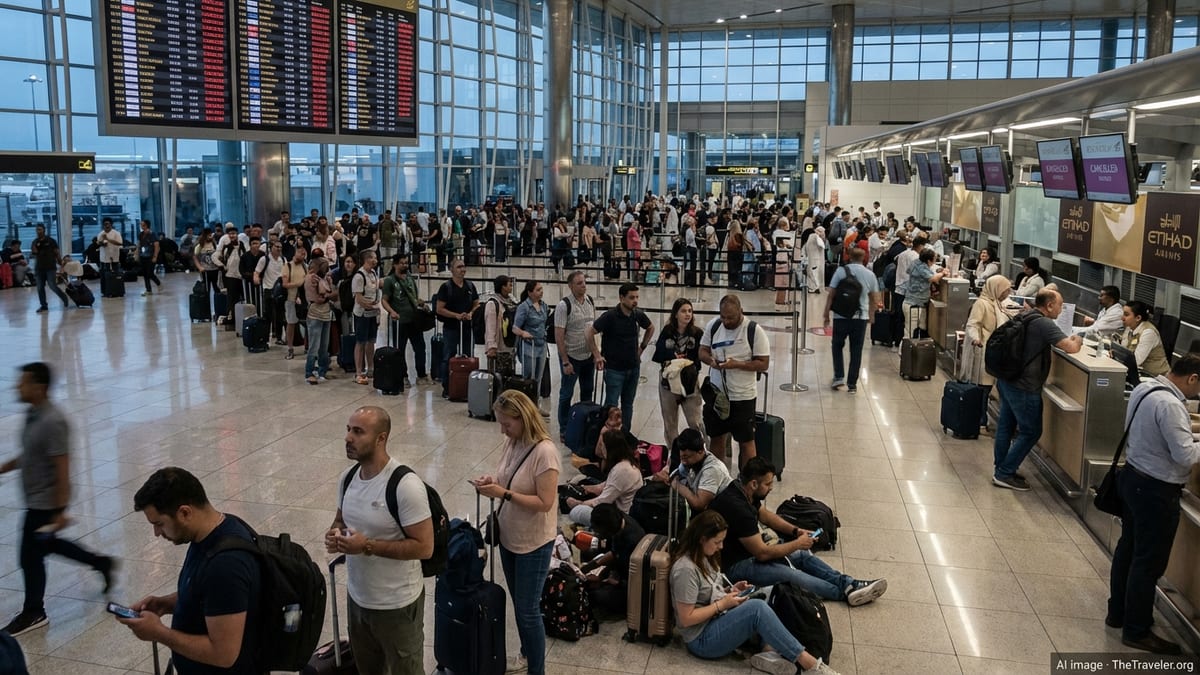
Regional tensions keep pressure on UK–UAE aviation links
Air travel between the United Kingdom and the United Arab Emirates has faced sustained disruption since late February 2026, when airspace around Dubai was periodically restricted following missile and drone activity linked to the wider Middle East crisis. Publicly available information shows that Dubai International Airport temporarily halted regular operations after Iranian strikes on targets in the UAE, prompting mass cancellations and a rolling programme of repatriation flights for stranded passengers.
Although operations at Dubai have gradually resumed, industry updates describe a reduced and frequently adjusted schedule across the Gulf region, with airlines rerouting around sensitive airspace and building in longer flight times. The situation has been further complicated by intermittent security alerts and precautionary measures affecting connecting traffic to Asia, Africa and Australasia, many of which funnel through Dubai on Emirates services.
According to published coverage and specialist travel advisories, these conditions have left UK-bound passengers particularly exposed, as the UK remains one of Emirates’ largest long-haul markets. Travellers returning from holidays, business trips and stopovers have reported last-minute schedule changes, extended layovers and limited options for same-day rebooking as the carrier works within constrained airspace corridors.
In parallel, government travel advice for the UAE has tightened in recent weeks, with some guidance urging travellers to reconsider non-essential trips. Analysts note that such advisories do not automatically halt commercial flying but tend to feed into airline risk assessments and passenger demand, reinforcing the sense of uncertainty around future schedules.
Emirates issues updated advisory for UK routes
Against this backdrop, Emirates has issued an updated travel advisory aimed specifically at customers booked on flights between the UK and Dubai. The latest guidance, published via the airline’s travel updates page and amplified by travel trade channels, urges passengers not to travel to the airport until they have received confirmation that their flight is operating as scheduled.
The carrier has highlighted that schedules on UK routes, including London Heathrow, London Gatwick, Manchester, Birmingham and Glasgow, remain subject to short-notice change as crews, aircraft and slots are repositioned. Published summaries of the advisory state that Emirates is prioritising rebooking affected customers on the next available services, while also offering ticketing flexibility within a defined disruption window.
Travel industry briefings and passenger reports indicate that Emirates has extended its disruption waiver several times since the initial shock in late February. The current policy is understood to cover tickets issued on or before 28 February, with original travel dates running through at least mid-April, and in some cases stretching to later in the month. Eligible customers have been allowed to change their travel dates without additional fare differences in many scenarios, or to request refunds through standard channels.
Consumer advocates in the UK note that these waivers sit alongside statutory protections such as UK261, which can apply to flights departing from UK airports on any carrier. However, regulators and travel law specialists caution that compensation rights may be limited where disruption stems from extraordinary circumstances such as regional conflict or government-imposed airspace closures.
UK airports juggle recovery from storms and Middle East shock
The pressure on Emirates’ UK operations has been magnified by recent severe weather at British airports. Earlier this month, a powerful storm system, identified in meteorological reporting as Storm Dave, drove high winds and heavy rain across parts of the UK, triggering further disruption at major hubs. London Heathrow and Gatwick implemented contingency schedules and flow-control measures that reduced movements across all long-haul carriers, including Emirates.
Latest performance data from Heathrow points to a complex picture. Passenger numbers in March remained robust, but airport statements acknowledge that services to and from the Middle East have been repeatedly affected by a mix of regional instability and weather-related congestion. This has resulted in scattered delays and cancellations on Emirates’ high-frequency Heathrow services, which typically include multiple daily departures to Dubai.
Regional airports have also felt the impact. At Manchester and Birmingham, travel agents and airport information feeds have reported fluctuating departure times for flights to Dubai, with some rotations consolidated or retimed to fit within the airline’s limited operating windows into the Gulf. In Scotland, travellers from Glasgow have faced occasional aircraft swaps and routing changes, particularly on itineraries involving onward connections to Asia-Pacific destinations.
Observers note that Emirates has continued to rebuild capacity despite these headwinds. Recent business media coverage indicates that the airline expects to operate services to more than 120 destinations from Dubai in April, although the precise pattern of UK frequencies remains fluid and subject to short-notice operational decisions.
Practical guidance for UK travellers booked with Emirates
With schedules shifting from day to day, travel specialists are advising UK passengers heading to the UAE or transiting via Dubai to adopt a more hands-on approach to monitoring their trips. Publicly available guidance from regulators and consumer organisations stresses the importance of checking flight status directly with airlines before setting out for the airport, rather than relying solely on third-party booking platforms or historic itineraries.
For Emirates customers, this typically means using the airline’s booking management tools to confirm whether a flight is confirmed, delayed, rerouted or cancelled. Industry commentary suggests that call centres and online chat services have experienced heavy demand, so some travellers have turned to ticket desks at airports or Emirates sales offices where available, especially when travelling on complex multi-sector tickets.
Specialist travel blogs and advisory sites recommend that passengers build additional buffer time into any trips involving connections through Dubai, particularly if onward flights are operated by other carriers or involve separate tickets. With some UK-based tour operators reportedly moving to cancel or refund packages that rely on transiting the UAE, travellers are encouraged to clarify who bears responsibility for any changes and to keep records of all communications about rebooking or refunds.
Insurance is another key consideration. Many UK policies contain exclusions for war, civil unrest and airspace closures, and some explicitly reference extreme travel disruption. Consumer organisations advise policyholders to review terms closely, paying attention to clauses relating to Foreign, Commonwealth & Development Office advisories and to seek written confirmation from insurers on what is and is not covered before departure.
Outlook for the UK–UAE corridor in the coming weeks
Looking ahead, aviation analysts describe the situation on UK–UAE routes as fragile but improving. Emirates has been gradually adding back flights as airspace restrictions ease and as operational patterns in Dubai stabilise following the initial wave of cancellations. Industry data and trade press reports suggest that the carrier has already restored a significant portion of its global network, even if frequencies remain below pre-disruption levels in some markets.
Much will depend on the trajectory of the regional security environment and on how quickly air navigation authorities expand safe routing options over and around the Gulf. Any renewed escalation could prompt fresh closures or capacity cuts, while a continued easing of tensions might allow Emirates and other Gulf carriers to reintroduce more normal timetables for UK services.
For now, sector watchers expect UK travellers to face an extended period of uneven operations, where pockets of normality coexist with sudden cancellations, pop-up repatriation flights and short-notice retimings. Travel firms advise that flexibility will remain crucial, both in terms of dates and routing, with some passengers likely to consider alternative hubs in Europe or Asia if their preferred Dubai connections do not materialise.
Against this uncertain backdrop, Emirates’ updated advisory for UK passengers is likely to remain in place for some time, reinforcing a message echoed by airports, regulators and travel agents across both countries: check official updates repeatedly, avoid unnecessary trips to the airport without confirmed bookings, and prepare for plans to change at short notice as the UK–UAE corridor continues to adjust to an unsettled aviation landscape.