

More news on this day
United Airlines has quietly rewritten the rules of in-flight etiquette, updating its contract of carriage so that passengers who play audio or video aloud on their personal devices without headphones can now be removed from a flight and, in extreme cases, banned from the airline altogether.
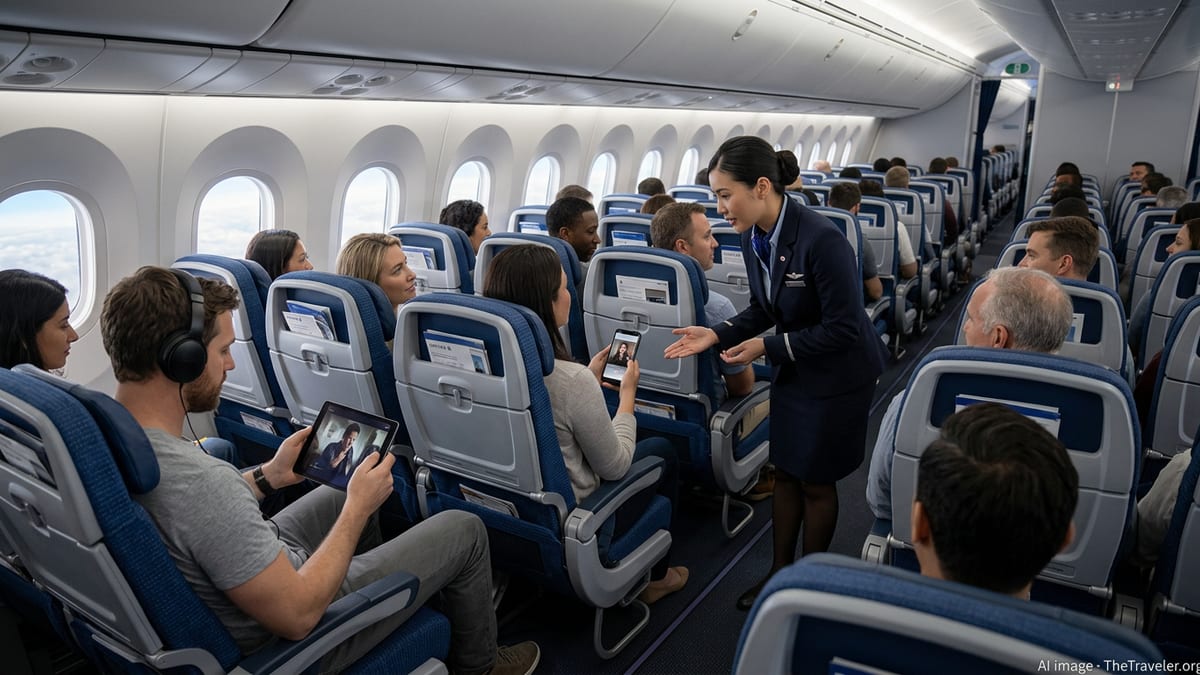
New Rule Targets Speakerphone Culture at 35,000 Feet
The updated policy, which took effect on February 27, 2026, folds a long-simmering cabin courtesy debate into the airline’s official rulebook. Tucked into the “refusal of transport” section of United’s contract of carriage, the new clause explicitly cites passengers who “fail to use headphones while listening to audio or video content” as a reason they can be denied boarding or removed from an aircraft.
For years, flight attendants and frequent travelers have complained about travelers watching movies, scrolling social media, playing games or chatting on speakerphone with the volume turned up for everyone around them to hear. United already discouraged this behavior in onboard announcements and Wi-Fi terms of use, but the practice remained common and largely unenforced.
By elevating what was once a soft guideline into a formal rule, United has given its crews a sharper tool to deal with passengers who ignore repeated requests to quiet their devices. The airline also reserves the right to refuse future travel to offenders, effectively imposing a ban on those who persistently disregard the policy.
United says flight attendants can provide complimentary earbuds on most flights, reducing the chances that someone who simply forgot their headphones will find themselves in conflict with the crew or fellow passengers.
From Courtesy Suggestion to Enforceable Contract Clause
Cabin announcements urging customers to “use headphones for everyone’s comfort” have been a staple on many United routes for years, but until this week they were framed as etiquette, not an enforceable condition of carriage. That legal line has now shifted. The headphone clause sits alongside far more serious offenses such as threatening behavior, smoking violations and harassment.
The change reflects how personal electronics have reshaped the in-flight environment. As streaming video, short-form social media clips and mobile gaming have become ubiquitous, sound spilling from phones and tablets has joined seat reclining and armrest hogging as a top source of friction onboard. Surveys commissioned by travel brands in recent years consistently rank “watching videos without headphones” among the most annoying passenger habits.
United’s update formalizes a standard many travelers assumed already existed. While airlines have long had the authority to remove disruptive passengers, they rarely itemized something as specific as device audio in their contracts. Industry analysts say codifying the rule provides clarity both for crews, who must make judgment calls in crowded cabins, and for customers, who now have less room to claim they were unaware of expectations.
In practice, the rule is likely to be applied after at least one warning. Cabin crew still retain wide discretion, and United has not indicated that a single slip, such as a brief video played during boarding, will automatically trigger removal, especially if a passenger quickly complies when reminded.
Mixed Reaction From Travelers and Etiquette Experts
The response from travelers has been divided, though many frequent fliers greeted the news with relief. On social media, some described the move as “overdue” and praised United for taking what they see as a firm stand against inconsiderate behavior in a confined space. Travel bloggers and etiquette commentators have argued for years that airlines should treat loud personal devices as a quality-of-life issue rather than a mere courtesy.
Others worry the policy edges into what they call draconian territory, handing airlines too much latitude to punish relatively minor infractions. Civil liberties advocates note that the term “failure to use headphones” is broad and could, in theory, be applied unevenly if not carefully managed and documented by crews.
Travel behavior experts counter that the rule is targeted less at accidental offenders than at passengers who refuse to cooperate. They point to rising reports of air-rage incidents and cabin confrontations, many of which start with small annoyances that escalate when one party digs in. Clear, published rules, they argue, can help defuse tensions by making it obvious that the crew’s request carries the backing of the airline’s legal framework.
For families and nervous travelers, the new standard may bring both benefits and anxieties. Parents will be expected to ensure children’s tablets and games are muted or paired with headphones, but they may also find that a quieter cabin makes it easier for kids and adults alike to rest on long flights.
What Passengers Need to Know Before Boarding
Under the revised contract language, passengers agree when purchasing a United ticket that they will listen to audio only through headphones or earbuds, whether the sound comes from personal devices or streaming services accessed via onboard Wi-Fi. The rule applies throughout the journey, including boarding, taxi, cruise and arrival, not just during designated quiet periods.
Customers who forget their headphones are not automatically out of options. United says its crews can typically supply basic earbuds free of charge, particularly on longer flights and on aircraft with seatback entertainment systems. However, as with other amenity items, availability can vary by route, aircraft type and load factor.
Travelers who prefer to watch or listen together with a companion will need to use headphone splitters or shared wireless solutions rather than relying on open speakers. Those who rely on their device speakers for accessibility reasons are encouraged to contact the airline in advance or speak with gate and cabin crews so accommodations can be considered without disturbing other passengers.
Passengers who refuse to comply with a crew member’s instructions to use headphones, lower the volume or turn off audio entirely risk being reported as disruptive. That can lead to being removed from the flight at the next opportunity and, according to the contract language, in serious or repeated cases, facing a temporary or permanent ban from future United travel.
Could Other Airlines Follow United’s Lead?
United’s headphone rule lands at a time when airlines around the world are wrestling with how to balance connectivity with cabin calm. Carriers have steadily relaxed bans on phones and portable electronics as aircraft systems have become more resilient to interference, and several regions now permit in-flight mobile data and voice services. The result has been a sharp rise in potential noise sources at every seat.
While most major airlines encourage headphone use, few have gone as far as United in spelling out device audio as grounds for refusal of transport. Industry watchers say that could change quickly if the policy proves popular with customers and manageable for crews. Competitors may see an opportunity to advertise “quieter cabins” as a differentiator, just as they promote legroom or Wi-Fi speeds.
Regulators are unlikely to intervene directly in the headphone debate in the near term, leaving airlines to set their own standards. That gives United a first-mover advantage in testing how far they can go to enforce social norms through legal language, not just polite announcements. Other carriers will be watching closely to see whether the policy reduces complaints or instead adds to the list of potential flashpoints between passengers and staff.
For now, travelers should expect that what was once a matter of courtesy is becoming a matter of contract, at least on United flights. In an era of crowded cabins and constant connectivity, silence, or something close to it, is being formally written into the price of a ticket.