

More news on this day
United Airlines has quietly rewritten the rules of in-flight etiquette, formally requiring passengers to use headphones for any personal device audio or risk being removed from the aircraft or even banned from future travel.
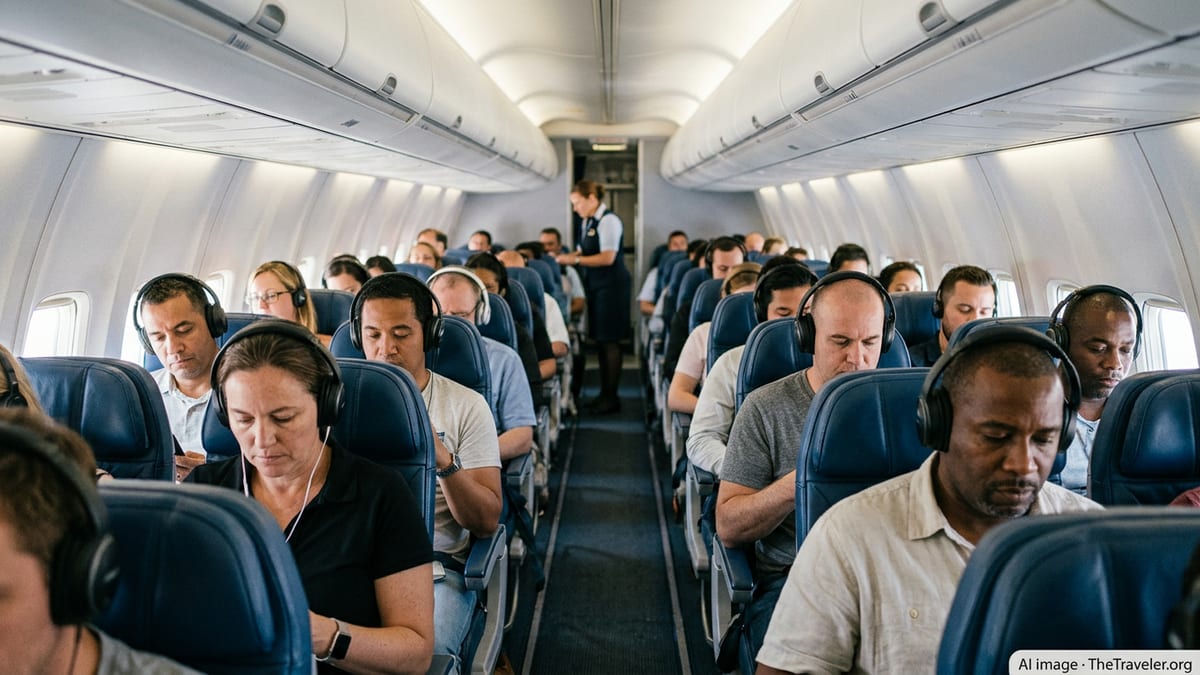
A Quiet Policy Becomes Enforceable Rule
The new policy, introduced through an update to United’s contract of carriage on February 27, 2026, moves headphone use from a courtesy request to a condition of travel. Buried in Rule 21, the “Refusal of Transport” section, the carrier now explicitly lists “passengers who fail to use headphones while listening to audio or video content” among the behaviors that can trigger denial of boarding or removal mid-journey.
In practical terms, that means any music, movies, games, social media clips or other audio on phones, tablets and laptops must be routed through headphones or earbuds. If the sound is audible to others, flight crews have clear authority to intervene, escalate and, if necessary, ask the passenger to leave the aircraft.
United has long asked customers to use headphones, and its in-flight Wi-Fi portal already reminded travelers to plug in before playing audio. What is new is that the airline has given itself contractual backing to treat loud device use in the same category as other disruptive behavior, aligning cabin courtesy with enforceable rules.
The company has framed the change as supporting a quieter, more predictable experience on board, particularly as travelers increasingly rely on personal devices instead of built-in seatback screens.
What the Headphone Requirement Covers
According to the updated language, the requirement applies to any audio or video content played on a personal device once a passenger is in the aircraft environment. Whether a traveler is streaming a film, scrolling through short videos, playing a game with sound effects or listening to music, headphones will be required if others can hear it.
The rule is distinct from the long-standing prohibition on voice calls after the cabin doors close. United already banned traditional phone calls and app-based voice conversations during taxi, takeoff, flight and landing, citing both safety and comfort. The headphone clause closes a separate loophole by targeting speaker audio from entertainment and social media, not just live conversations.
Messaging, texting and silent device use remain unaffected, and passengers can continue to use their phones and tablets for reading, work or muted content. The focus is strictly on sound that spills beyond the user’s seat area and into the shared cabin.
United says travelers who forget their headphones will be able to request a complimentary pair from flight attendants, subject to availability. That provision gives crews a practical way to secure compliance before resorting to more serious measures.
Penalties: From Gentle Reminder to Potential Ban
Although the headline-grabbing aspect of the policy is that noncompliant passengers can be removed or even permanently banned, aviation experts note that such outcomes are likely to be rare and reserved for egregious cases. In most situations, crew members are expected to start with a reminder and an offer of headphones.
The presence of the rule in the contract of carriage, however, means that if a traveler repeatedly refuses to lower the volume or put on headphones, staff can escalate. That could include denying departure until the issue is resolved, requiring a passenger to disembark or logging the incident for review that might lead to suspension of flying privileges.
By situating the rule within its refusal-of-transport framework, United is signaling that cabin noise is not just a matter of politeness but of maintaining order and comfort in a confined space. The move also helps protect flight attendants, who increasingly find themselves mediating disputes over behavior in the air, by giving them a clear policy to reference when asking someone to comply.
Industry observers see the change as part of a broader trend in which airlines are codifying expectations around passenger conduct amid heightened sensitivity to disruptive incidents and viral confrontations on board.
How United Compares With Other Airlines
United is not the only carrier that tells passengers to use headphones, but it appears to be among the first major U.S. airlines to embed the requirement directly into its contract of carriage with explicit enforcement powers. Other airlines typically address device noise through onboard announcements and general customer conduct policies rather than contract clauses.
Some competitors, including low cost and full service carriers, already make preflight announcements asking customers to use headphones when watching videos or listening to music. In practice, crews often intervene when sound becomes disruptive, particularly during overnight or long haul sectors. Without specific contractual backing, though, such requests can be harder to enforce if a passenger refuses.
Internationally, a number of airlines have adopted similar quiet cabin concepts, especially on long haul routes with designated rest periods. However, most still frame headphone use as etiquette rather than a condition that can lead to denied boarding or permanent bans. United’s move could encourage rivals to review their own contracts, especially if the policy proves popular with frequent travelers.
Consumer advocates are watching to see whether other U.S. airlines follow suit or instead rely on softer messaging. For now, the change underscores that a behavior once governed almost entirely by social norms is entering the realm of formal regulation.
Passenger Reaction and What Travelers Should Expect
Early reaction from travelers has been mixed but leans toward approval from frequent flyers who have long complained about blaring videos and games in tight cabins. Many see the policy as overdue recognition that constant, unwanted noise can be as stressful as cramped seats or delays, especially on full flights.
Some passengers, though, worry about inconsistent enforcement or confusion over borderline situations, such as very low volume audio or brief sounds from notifications. United has not published a specific decibel threshold, leaving it to crew discretion to decide when sound is disruptive enough to address.
For now, travelers can expect more pointed announcements about headphone use during boarding and safety briefings, along with firm follow-up if someone continues to play audio out loud. Those flying without their own headsets are likely to find that cabin crew emphasize the availability of complimentary pairs when supplies permit.
As peak spring and summer travel seasons approach, the new rule effectively turns quiet into a shared responsibility. For United passengers, ensuring a peaceful flight will now start with one simple step at the seat: plugging in a pair of headphones.