

More news on this day
United Airlines is preparing to launch a new “Coastliner” version of the Airbus A321neo, creating an ultra-premium narrowbody subfleet designed specifically for high-demand cross-country routes between its West Coast hubs and the New York area.
Get the latest news straight to your inbox!
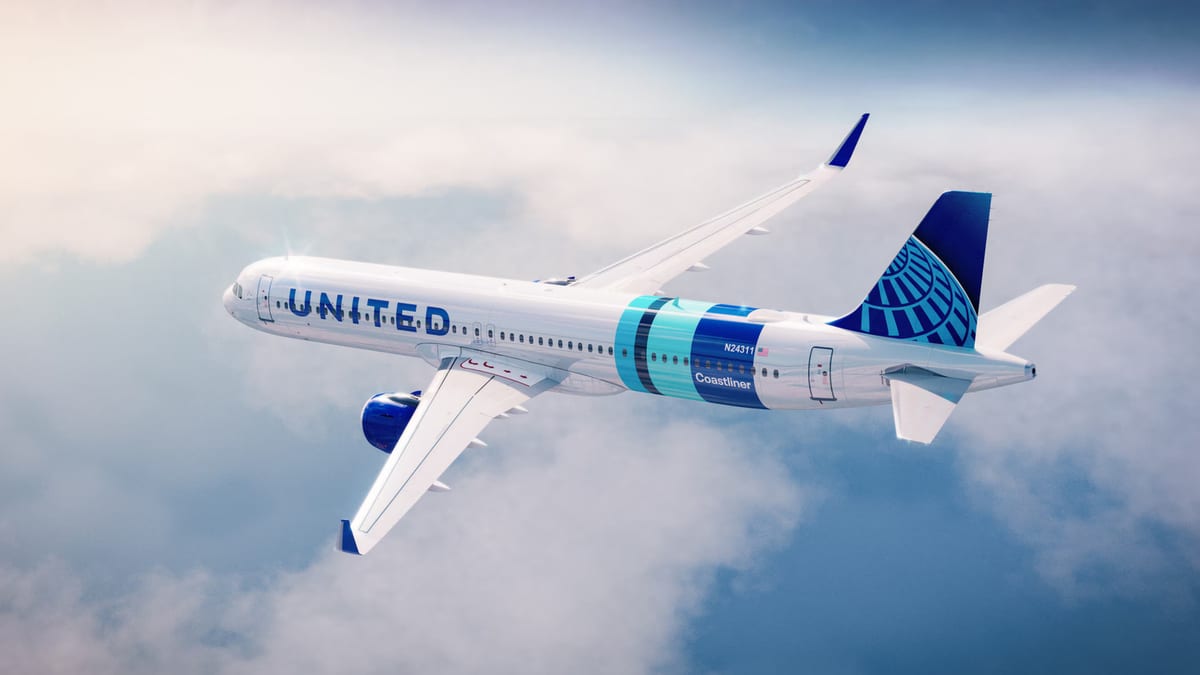
Image by jalopnik.com
Purpose-Built A321neo Subfleet for the Coasts
Publicly available fleet data and recent investor materials indicate that United plans to deploy the A321neo Coastliner on marquee transcontinental routes linking Los Angeles and San Francisco with Newark and the broader New York market. The announcement forms part of a wider fleet expansion program that will see the carrier add more than 250 aircraft by April 2028, with a significant share dedicated to premium-focused narrowbodies.
The Coastliner concept positions the A321neo as a specialized aircraft for business-heavy coastal markets rather than as a general-purpose domestic workhorse. Industry reports suggest the aircraft will join existing widebody services on key corridors rather than fully replacing twin-aisle jets, giving United more flexibility to match seat capacity to demand while preserving a top-tier product on routes where travelers expect it.
For United, the move reflects a broader strategic shift toward high-yield traffic on routes where schedules, onboard comfort, and lounge access can command substantial fare premiums. The Coastliner subfleet is intended to offer a consistently upgraded experience on these routes, narrowing the gap between domestic transcontinental flying and long-haul international service.
Analysts note that United’s A321neo Coastliner also responds to sustained competition from rival carriers that already operate premium-configured narrowbodies in the transcontinental market. By creating a named subfleet, United is signaling that these aircraft are meant to be recognized by customers as a distinct, elevated option within its broader narrowbody lineup.
Cabin Layout Centers on All-Aisle-Access Polaris
According to company disclosures and aviation-industry summaries, the A321neo Coastliner will feature an all-new cabin interior from nose to tail, built around a three-class layout that mirrors elements of United’s latest long-haul products. The aircraft is expected to offer 20 United Polaris lie-flat business-class seats with direct aisle access, an unusually premium configuration for a single-aisle jet dedicated to domestic routes.
In addition to Polaris, the Coastliner layout incorporates 12 United Premium Plus seats, the carrier’s premium economy product more commonly associated with widebody international flights. Industry coverage notes that this marks the first time United has installed Premium Plus on a narrowbody aircraft for domestic operations, underscoring how important the transcontinental segment has become in its network strategy.
Behind the premium cabins, the Coastliner will include 129 United Economy seats, maintaining a sizable economy section while still allocating proportionally more space to higher-yield cabins than on the airline’s standard 200-seat A321neo layout. Seatback entertainment, power at every seat, larger overhead bins, and fast onboard connectivity are expected to align with United’s latest “signature interior” standards already rolling out across its narrowbody fleet.
Observers point out that this blend of Polaris, Premium Plus, and Economy on a narrowbody aircraft closely tracks broader industry trends, where airlines are leveraging new-generation jets like the A321neo to deliver long-haul style amenities on routes previously served by older widebodies or less capable single-aisle planes.
Competing in a Crowded Transcontinental Premium Market
The A321neo Coastliner enters one of the most hotly contested segments in U.S. aviation. Major competitors already offer enhanced products on premium transcontinental routes, including lie-flat business-class seats, upgraded catering, and expanded ground services at hub airports. Publicly available comparisons show that airlines increasingly view coast-to-coast flying as a showcase for their brands.
United’s move can be seen as a bid to increase its share of high-paying travelers who have grown accustomed to flat beds, privacy, and lounge access even on domestic itineraries. Reports indicate that the Coastliner’s inclusion of Polaris seating will align these flights more closely with United’s international network, making it easier for corporate travel buyers to secure a consistent product for long itineraries that mix domestic and overseas legs.
Industry commentary also highlights that a designated Coastliner subfleet gives United more tools to fine-tune capacity. Rather than committing widebodies to every premium transcontinental frequency, the airline can deploy A321neo Coastliners where demand justifies a high-end cabin but not the full gauge of a twin-aisle aircraft. This approach allows for more frequencies with a premium experience, which can be particularly attractive to business travelers.
Some aviation-watch discussions frame the Coastliner as part of an “arms race” in transcontinental comfort, with carriers layering more differentiated products onto routes that generate disproportionate revenue. In that context, United’s decision to brand and configure a specific A321neo subfleet is interpreted as a signal that it expects sustained competition on these corridors for years to come.
Part of a Larger Premium and Fleet-Modernization Push
The Coastliner introduction is only one aspect of a much broader overhaul of United’s fleet and passenger experience. Recent disclosures show that alongside the A321neo family, the airline is taking delivery of new Boeing 787-9 Dreamliners featuring an “Elevated” interior with reworked Polaris business suites, an expanded premium footprint, and upgraded in-flight entertainment. Together, these investments are designed to raise the baseline for what customers encounter throughout United’s long-haul and premium domestic network.
United has repeatedly emphasized its intention to retrofit or replace older cabins so that the vast majority of mainline aircraft carry consistent features such as in-seat screens, enhanced lighting, and improved baggage storage. The Coastliner’s tailored interior fits into that vision by ensuring that even on narrowbody jets used for domestic routes, the carrier can deliver a product that reflects its latest design language and amenities.
Fleet-planning summaries suggest that the airline expects to take delivery of dozens of A321neo variants by the end of the decade, including both Coastliner and longer-range A321XLR aircraft. While the Coastliner is targeted at transcontinental flying, the XLR is expected to open or support longer routes with similar premium-focused layouts, further blurring the line between traditional domestic and international operations.
Sector analysts view this dual investment in widebody and advanced narrowbody cabins as a way to lock in a consistent premium identity across the network. The Coastliner’s debut is therefore likely to be watched closely not only by travelers on U.S. coasts but also by competitors evaluating how aggressively to respond in the race to attract high-yield passengers.
Implications for Travelers on Key Routes
For travelers, the arrival of the A321neo Coastliner is expected to bring a more predictable and upscale experience on some of United’s busiest cross-country flights. Business-class customers booked into Polaris will gain access to lie-flat seating and enhanced privacy on an aircraft type that, for many carriers, still offers only recliner-style domestic first class.
Passengers seated in United Premium Plus should see a notable step up from standard economy, with wider seats, extra legroom, and additional service touches that mirror what is already available on United’s international widebody fleet. Economy travelers, meanwhile, stand to benefit from refreshed interiors that prioritize individual power outlets, modern inflight entertainment, and improved overhead storage.
Timetables and specific route assignments for the Coastliner subfleet have not yet been fully detailed in public schedules, but industry reporting consistently points to Los Angeles and San Francisco to Newark and New York routes as the first and most prominent beneficiaries. As aircraft deliveries ramp up over the next several years, observers expect the Coastliner branding to become a recognizable signal that a given flight offers United’s highest standard of narrowbody comfort.
While some commentary has raised concerns that the Coastliner’s premium-heavy layout could reduce the number of lower-fare seats available on certain departures, others point out that not every transcontinental frequency will use the new subfleet. United is expected to continue a mix of aircraft types, leaving customers to choose between schedule convenience and the elevated experience that the Coastliner is designed to provide.