


More news on this day
United Airlines’ long-awaited return to Erie International Airport with nonstop flights to Chicago O’Hare has been pushed back once more, extending uncertainty for northwest Pennsylvania travelers who had expected the route to launch this year.
Get the latest news straight to your inbox!
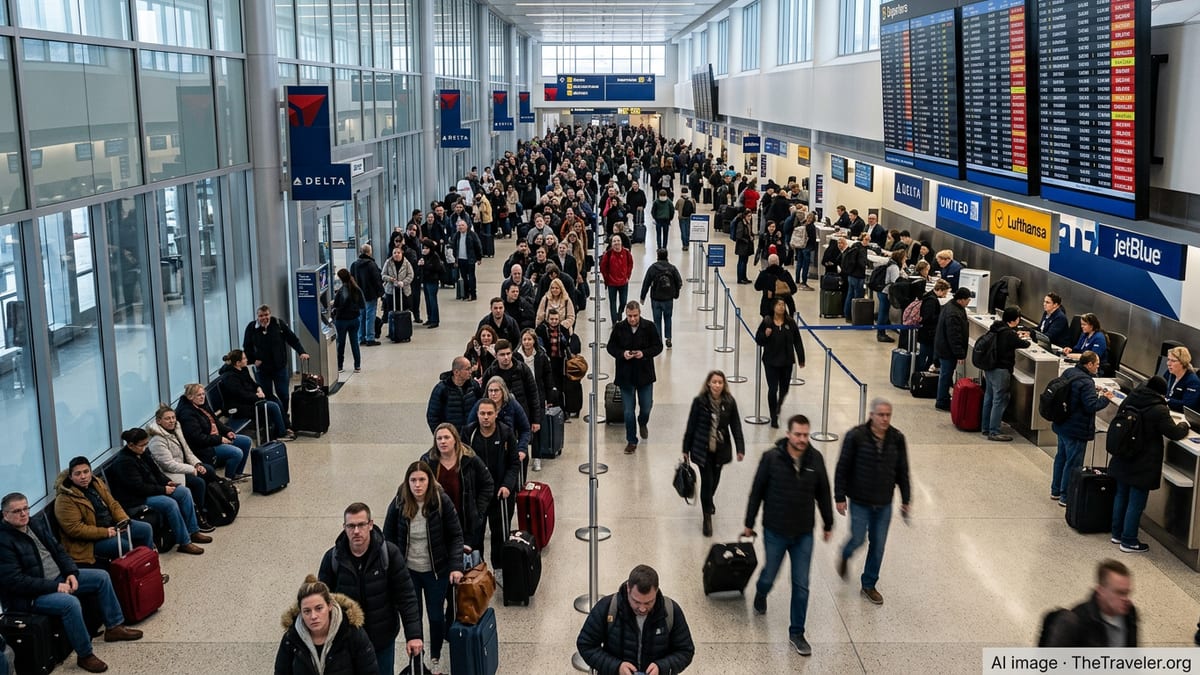
Launch of Erie–Chicago link pushed back again
Plans for United-branded service between Erie, Pennsylvania and Chicago O’Hare have been delayed beyond the upcoming travel seasons, according to updated schedule information and local reporting. The route, which had been promoted as a key connection to a major Midwest hub, will now remain off the board longer than initially anticipated.
The Erie to Chicago link was first announced as part of a broader push to restore and expand regional connectivity into O’Hare. Publicly available summaries of air service plans described three daily nonstop United Express flights operated by a regional partner, aimed at giving Erie travelers one-stop access to a wide range of domestic and international destinations via Chicago.
Subsequent updates shared in local aviation forums and community discussions indicate that the debut, once tied to the 2026 summer season, has slipped more than once, with the most recent extension pushing any start of operations well into the future. Flight-search and schedule tools show no active United-operated Erie–Chicago service for the coming months.
The shifting timeline has left travelers who were hoping for new options out of Erie watching for each new schedule update, only to see the start date move back again. The extended delay underlines how vulnerable small-city routes can be to broader operational pressures in the nation’s busiest hubs.
O’Hare capacity limits and ripple effects on smaller airports
One major factor behind the repeated postponements appears to be reduced capacity at Chicago O’Hare. Aviation industry coverage has highlighted a federal cap on daily operations at the hub, cutting planned movements for the 2026 summer season and forcing airlines to rework their schedules across multiple regional markets.
Analysts note that when a slot-constrained hub faces reductions, carriers typically protect their highest-demand trunk routes first, with thinner regional links more likely to be delayed or scaled back. In this context, proposed service from Erie to Chicago competes against a long list of existing United and United Express destinations, many of which already carry substantial passenger volumes.
Commentary from route-planning watchers suggests that the Erie–Chicago pairing has been caught in this wider reshuffle. References to postponed launches in multiple smaller communities, from Pennsylvania to the Midwest, point to a pattern in which new or returning routes are deferred while airlines adjust to regulatory limits, air traffic control constraints and ongoing construction at large hubs.
The O’Hare cap arrives at a time when carriers have been working to rebuild regional networks after the disruptions of recent years. For airports like Erie that rely on a small number of carriers and routes, each schedule change at a hub can have an outsized impact on local connectivity.
What the delay means for Erie travelers and the local market
The prolonged delay in launching United’s Erie–Chicago service has immediate consequences for travelers in northwest Pennsylvania. Instead of a new nonstop link to a major Midwestern hub, passengers continue to depend on existing routes and longer surface connections to reach Chicago and points beyond.
Without Erie–Chicago flights, many residents must drive to larger airports such as Cleveland, Buffalo or Pittsburgh to access a broader range of nonstop options. Others rely on connecting itineraries through different hubs, which can lengthen total travel time and increase the risk of missed connections during periods of disruption.
Local business and tourism interests had viewed the promised United service as a potential boost, offering more convenient links for corporate travel, visiting friends and relatives, and inbound visitors to the Lake Erie region. The extended delay keeps those anticipated benefits on hold and maintains competitive pressure from nearby airports that already feature multiple daily hub connections.
At the same time, broader industry data show that carriers have been reassessing the economics of small-city flying, balancing aircraft availability, crew resources and demand patterns. In that environment, a route like Erie to Chicago may be periodically revisited as market conditions evolve, even if the current schedule reflects a pause rather than a near-term start.
Regional air service outlook remains fluid
The shifting plans for United’s Erie–Chicago flights underscore how fluid regional air service remains across the United States. Airlines continue to refine networks in response to fuel costs, staffing levels, evolving travel demand and regulatory constraints at key hubs. Routes can move from announcement to postponement, or even be removed entirely, as carriers recalibrate their strategies.
Published analyses of airline networks describe how smaller communities often sit at the edge of these decisions. When resources tighten, new or marginal routes can be scaled back before more established, higher-volume city pairs see major changes. Conversely, when conditions improve, regional markets sometimes benefit quickly as airlines look for growth opportunities with relatively modest incremental investment.
For Erie, attention now turns to how existing carriers adjust their offerings and whether future schedule updates restore the Chicago link on a revised timeline. The extended delay does not rule out eventual United service, but it highlights how dependent such plans are on factors far beyond a single airport’s catchment area or marketing efforts.
Travelers watching the situation are advised to monitor airline schedules and booking channels closely, as any reinstated launch date for Erie–Chicago flights would likely appear first through official timetable changes and reservation systems before being reflected more broadly in local coverage.