


More news on this day
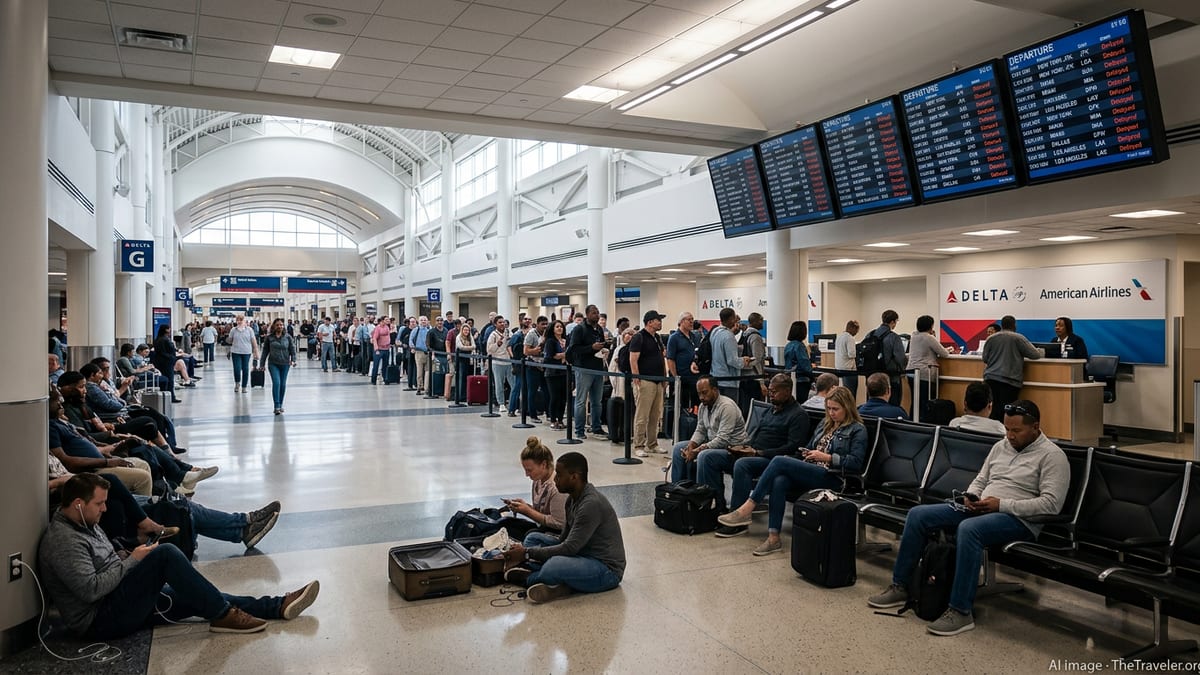
More than 1,000 flight cancellations and a growing backlog of delays have rippled across the U.S. East Coast this week, after a communications failure affecting air traffic control disrupted operations at some of the nation’s busiest airports, including Newark, New York City-area hubs, and Philadelphia.
Get the latest news straight to your inbox!
What triggered the disruption, and where the biggest impacts are
Published coverage describes an outage tied to damaged communications lines at a Federal Aviation Administration air traffic control facility serving the Northeast corridor. Reports indicate the primary communications line failed and a backup fiber line was also severed during railroad construction work, leaving controllers without radar or communications for hours.
The effects were especially severe at Newark Liberty International Airport, where published coverage indicates more than 600 flights were canceled into and out of the airport on Monday, and commercial arrivals paused for much of the day. Philadelphia International also saw more than 200 cancellations, with knock-on disruptions affecting New York’s LaGuardia and JFK as carriers worked through aircraft and crew positioning issues.
By early Tuesday, operations had resumed, but a rolling recovery remained visible in flight-tracking data and airport status boards. Even when the immediate technical issue is resolved, airlines often need a full day or longer to realign aircraft rotations, crews, and gate availability, particularly in the tightly scheduled Northeast.
Your fastest next steps: rebooking strategy that actually works
When cancellations cascade, speed matters more than perfection. Travelers generally get better results by checking their airline’s app first for self-service rebooking, then pivoting to a phone call or airport agent only if the app cannot find a workable itinerary. Many airlines activate travel waivers during major disruptions, which can open same-day changes or fee-free adjustments, but the exact terms vary by carrier and fare type.
In a Northeast meltdown, the quickest salvage itinerary is often not the nearest airport. Consider searching for rebooking options from multiple departure points: Newark, JFK, LaGuardia, Philadelphia, Baltimore-Washington, Washington Reagan, and Washington Dulles can sometimes substitute for each other depending on the airline’s network and seat availability. If you are connecting, ask the app to reroute you through alternate hubs that avoid the most constrained airspace.
Also check nearby dates and off-peak times. Early-morning departures typically recover first because aircraft are more likely to be in position overnight. Red-eye flights and last departures of the day can be riskier during recovery because crews can time out and inbound aircraft may not arrive.
Refunds, credits, and what you are entitled to under U.S. rules
If your flight is canceled or significantly delayed and you choose not to travel, U.S. Department of Transportation guidance says you are entitled to a refund, even on a nonrefundable ticket, as long as you do not accept the alternative transportation offered. The same DOT guidance also covers refunds of certain fees when a paid service is not provided.
For travelers who still need to go, airlines often offer rebooking on later flights, sometimes including partner options, but DOT guidance notes that alternative flight offers are not required by regulation and can vary widely in practice. If the only rebooking offered is unacceptable, it can be worth pricing a new ticket on another carrier and then deciding whether to take a refund on the original flight, but travelers should avoid double-booking without a clear cancellation plan to prevent being stuck with two nonrefundable itineraries.
For travelers who bought through an online travel agency, the process can be slower. DOT guidance encourages passengers to watch for airline notifications and understand whether the carrier or the agency is processing the refund. In high-volume disruptions, documenting the cancellation and keeping screenshots of app alerts can help if you need to follow up later.
Alternatives to flying in the Northeast: rail, car, and airport-to-airport pivots
In the Northeast Corridor, rail can be the most reliable same-day alternative when air travel seizes up. Travelers trying to move between the Washington, Baltimore, Philadelphia, New York, and Boston markets often find that shifting to intercity rail avoids the air-traffic bottleneck altogether, though availability can tighten quickly during widespread cancellations.
Another practical pivot is to rebook into a less-congested airport and finish by ground. For example, flying into Baltimore-Washington or Washington Dulles and taking rail or a rental car north can sometimes beat waiting days for a seat into the New York area. Similarly, passengers bound for Philadelphia may find seats into New York or Washington sooner, then bridge the final leg on the ground.
For short-haul trips, a one-way rental car can be a pressure valve, but inventory can evaporate during irregular operations. If you go this route, confirm drop-off rules and after-hours returns before leaving the counter so you do not lose time or incur unexpected fees.
How to reduce the risk of getting stranded again during the recovery
During the next 24 to 72 hours after a major East Coast disruption, the biggest risk is a chain reaction: aircraft and crews out of place, packed flights with few empty seats, and long lines for re-accommodation. Flight-tracking dashboards can help you decide whether to head to the airport or hold back, but your airline’s in-app notifications are usually the most actionable source for your specific reservation.
If you must travel, aim for earlier departures, nonstop routes, and itineraries that avoid tight connections in the New York and Philadelphia airspace while operations stabilize. When a nonstop is not available, choose a connection with more time than usual so you are not dependent on a perfectly on-time first leg.
Finally, make sure your contact details are current in your reservation, and keep receipts for any reasonable out-of-pocket costs you incur because of a cancellation. Even when compensation policies differ by airline and by cause, having clear documentation puts you in a stronger position if you later request reimbursement or need to dispute a charge with the travel provider.