


More news on this day
Europe’s tourism rebound is accelerating, with new data showing Paris leading the continent’s most visited city rankings as international arrivals surge to fresh records across the region.
Get the latest news straight to your inbox!
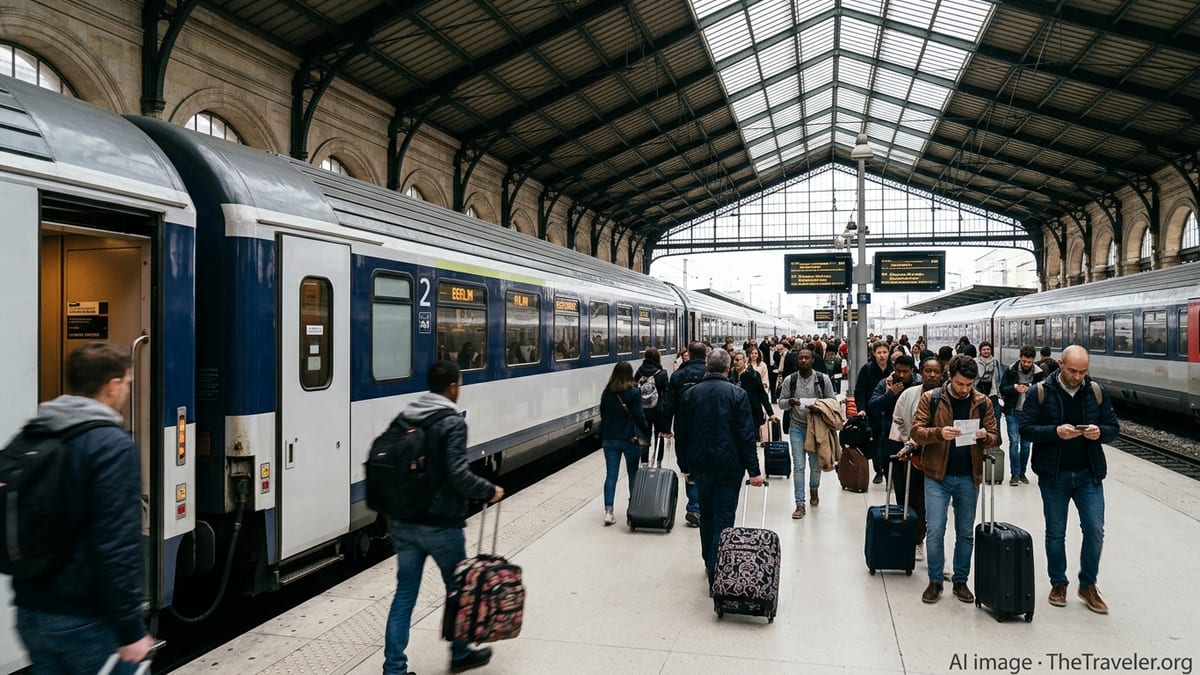
Paris Consolidates Its Lead in Europe’s Tourism Landscape
Recent European tourism statistics indicate that Paris has emerged as the most visited city in the European Union when measured by nights spent in tourist accommodation, underlining the French capital’s dominant role in the region’s travel economy. Eurostat’s latest city-level tourism tables for 2024 point to around 74 million nights spent in Paris, placing it ahead of other major urban destinations within the bloc and confirming its position at the top of Europe’s city rankings.
This performance comes against a backdrop of strong national results for France. Consolidated data from French and international institutions show that the country welcomed about 100 million inbound tourists in 2024, generating more than 70 billion euros in international tourism receipts. Publicly available economic briefings describe 2024 as a record year for French tourism, with the capital and its wider region acting as the main gateway.
Paris’s global attractiveness is also reflected in broader destination indices. Euromonitor International’s Top 100 City Destinations Index has repeatedly identified Paris as the world’s most attractive city, citing a combination of tourism performance, infrastructure, sustainability policies and cultural appeal. While such rankings do not measure only visitor volumes, they reinforce the picture of a city that sits at the apex of Europe’s urban tourism hierarchy.
Olympic Momentum and Infrastructure Boost Demand
The Paris 2024 Olympic and Paralympic Games added a powerful short term catalyst to an already strong tourism recovery. Preliminary evaluations from local tourism agencies and international organisations describe a marked increase in visitor numbers to the Paris region during the core Olympic period in summer 2024, with the average daily number of non resident visitors rising compared with the previous year.
City authorities have reported that Greater Paris welcomed more than 11 million visitors during the Olympic fortnight, with several million additional overnight stays generated by spectators, athletes, media and staff. Analyses published by economic and statistical bodies note that while visitor behavior during the wider summer season was mixed, the Games period itself produced a clear spike in arrivals and international visibility for the French capital.
The event also accelerated long planned investments in transport, accessibility and public space that are expected to benefit tourism beyond the Games. Upgrades to rail links serving Charles de Gaulle Airport, improvements to metro lines, new cycling infrastructure and pedestrian friendly redesigns around major attractions were all delivered or fast tracked in connection with the Olympic calendar. Policy studies on the Games’ legacy suggest that these changes could support higher visitor capacity and smoother mobility during peak seasons in the coming years.
Europe’s Cities Ride a Broad Travel Boom
The strength of Paris sits within a wider European travel boom. According to recent world tourism rankings, Europe welcomed more than 740 million international tourist arrivals in 2024, up around 5 percent on 2023 as the region moved decisively beyond the disruptions of the pandemic period. The continent remains the world’s leading tourism region by inbound volume, supported by dense transport networks, open internal borders and a high concentration of heritage cities.
Within this overall growth, European urban destinations stand out. International travel research highlights that European cities again dominated global city destination indices, with Madrid, Rome, Milan, Amsterdam and Barcelona all placing high in attractiveness rankings that weigh tourism performance, infrastructure and sustainability. These cities, together with Paris, form a dense cluster of short haul city break options that are sustaining high demand from both intra European and long haul markets.
Transport statistics support the picture of intensifying flows. The latest data on passenger traffic show Charles de Gaulle among Europe’s busiest airports by total passengers, reflecting Paris’s dual role as both a final destination and a major hub for onward connections across the continent. Separate Eurostat figures for maritime passengers also point to rising volumes at key European ports, underlining how multiple transport modes are feeding a broad based recovery in regional travel.
Recovery Brings Pressure on Capacity and Sustainability
The renewed boom is prompting renewed debate over how Europe’s most visited cities manage tourism flows. Urban destinations including Paris, Barcelona, Amsterdam and others were already grappling with pressure on housing, public space and local services before the pandemic. With overnight stays and arrival numbers now exceeding or approaching pre 2020 levels, city and national governments are revisiting policies on visitor management, short term rentals and transport capacity.
Publicly available policy documents and industry analyses point to a mix of responses. Some cities are tightening rules on tourist accommodation, particularly in historic centers, to ease pressure on residential housing. Others are promoting dispersion strategies that encourage visitors to explore lesser known neighborhoods or regional destinations beyond the traditional core hotspots, with the aim of sharing economic benefits more widely and reducing congestion at headline sites.
In Paris, the Olympic period served as a test case for crowd management tools, digital information platforms and enhanced public transport operations. Reports on the Games indicate that learnings from this compressed, high demand event are being integrated into longer term tourism strategies for the capital and the wider Île de France region as authorities prepare for continued growth in international travel.
Outlook: Paris as a Bellwether for Europe’s Tourism Cycle
Analysts view Paris as a bellwether for the broader European tourism cycle. The city’s combination of global brand recognition, diversified visitor base and extensive transport links means it tends to feel both downturns and recoveries early. The strong 2024 data on nights spent, arrivals and spending, together with continued recognition in international destination rankings, are seen as signals that Europe’s urban tourism market retains substantial momentum.
Industry forecasts referenced in recent tourism and economic reports suggest that medium term growth will be shaped by several factors: the resilience of consumer travel budgets despite higher living costs, airline and rail capacity decisions, and the speed at which destinations can adapt to environmental and social sustainability targets. Paris, with its prominent climate and mobility commitments, is likely to remain in focus as a test case for balancing high visitor numbers with quality of life for residents.
For now, the numbers underline a simple reality. Travelers are returning to Europe’s cities in ever greater numbers, and Paris sits firmly at the top of the continent’s most visited urban destinations. How the French capital manages that lead is expected to influence not only its own future, but also the strategies of city tourism authorities across Europe.