


More news on this day
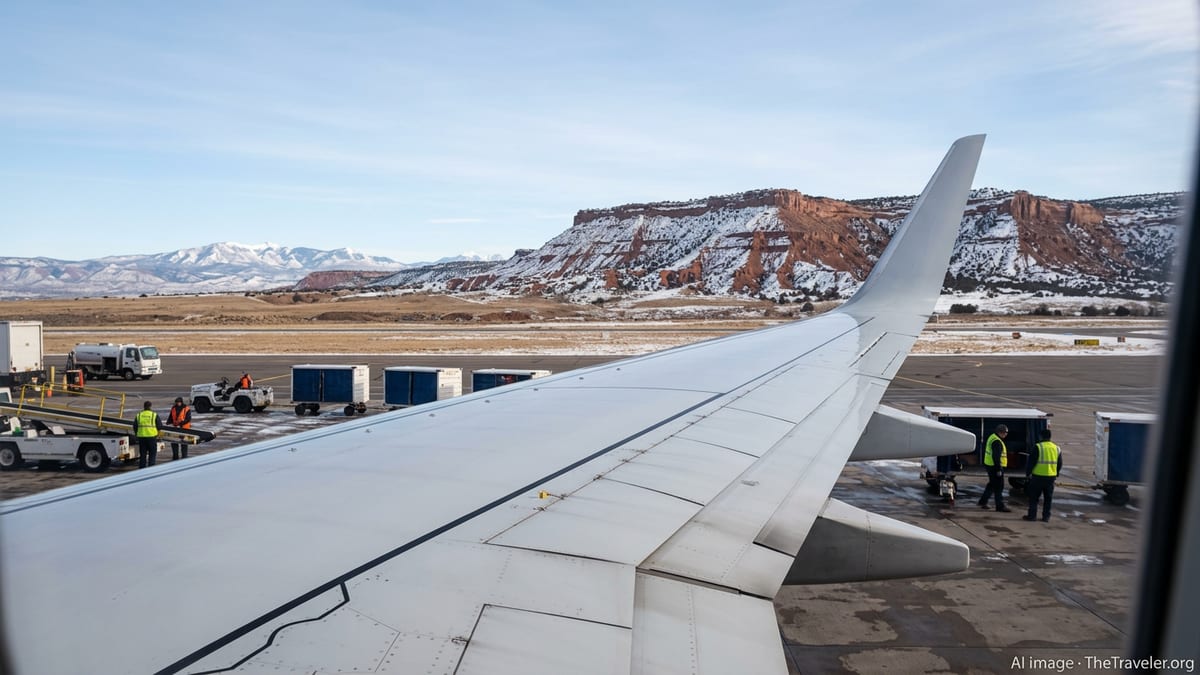
United Airlines flight 1942, operating an Airbus A320-232 from Eugene, Oregon to Denver, Colorado, diverted en route to Grand Junction Regional Airport, creating disruption for passengers and highlighting ongoing operational challenges into Denver.
Get the latest news straight to your inbox!
What Is Known About United Flight 1942’s Diversion
Publicly available flight-tracking data indicates that United Airlines flight 1942 was scheduled to operate from Eugene Airport to Denver International Airport using an Airbus A320-232. Instead of completing the planned route, the aircraft diverted and landed at Grand Junction Regional Airport in western Colorado.
The diversion placed the aircraft more than 200 miles west of its intended destination, a pattern that has occurred in the past when Denver has experienced weather, congestion, or other capacity constraints. Data from flight-tracking services and schedule aggregators show that Grand Junction often receives diverted traffic bound for Denver when conditions along the Front Range deteriorate.
As of the latest tracked information, the aircraft completed its diversion and arrived safely in Grand Junction. Subsequent movements of the aircraft and onward travel options for passengers have been managed through standard airline disruption procedures, including rebooking and, where possible, continuation of the journey once conditions and logistics permitted.
At the time of writing, no detailed public explanation had been posted specifying whether the diversion was prompted by weather, air traffic flow restrictions, or another operational factor, but the routing aligns with typical diversion patterns into Grand Junction when Denver’s capacity is constrained.
Operational Context: Challenges Flying Into Denver
Denver International Airport is known for rapidly changing weather, including strong winds, thunderstorms, and winter storms, all of which can limit arrivals and departures. Historical coverage of operations at Denver describes periods of ground stops and arrival rate reductions that trigger diversions to airports such as Colorado Springs and Grand Junction when aircraft are already airborne and cannot be held indefinitely.
Reports from previous disruption events show that flights bound for Denver are often rerouted to airports across the Rocky Mountain region when storms or wind shear develop near the approach corridors. In some instances, dozens of aircraft have diverted to alternative airports in Colorado and neighboring states during a single operational window, underscoring how quickly the situation can change.
Grand Junction’s location on the western side of the Rockies and its role as a regular United destination make it a practical diversion point from the west. The airport routinely handles United-branded regional and mainline flights to and from Denver, and airport planning documents describe steady passenger volumes supported by multiple carriers, including United.
Because of these factors, the diversion of a Eugene to Denver service to Grand Junction fits within an established pattern in which airlines use secondary Colorado airports as relief valves when Denver experiences capacity or weather-related constraints.
Impact on Passengers and Downline Connections
For passengers aboard flight 1942, the diversion likely led to missed connections and extended travel times. Travel forums and past media coverage of similar events show that diversions into Grand Junction and other Colorado airports routinely disrupt itineraries, particularly for travelers with tight connections at Denver to domestic or international destinations.
Standard airline practice in such situations typically involves holding the aircraft on the ground at the diversion point until a path into the original destination can be reestablished, or arranging onward travel through rebooking and, in some cases, ground transportation. When there is regular scheduled service between the diversion airport and the intended destination, airlines sometimes coordinate seats on later flights to move passengers onward.
Passengers affected by diversions are commonly advised, in published consumer guidance, to monitor airline apps and flight-status tools closely, as these platforms are often updated before information filters through gate displays. In addition, travel experts frequently note that those with complex or international connections may need to contact the airline or their booking provider proactively to protect downline segments.
In the case of flight 1942, the disruption would have been felt most acutely by those relying on a Denver connection for same-day onward travel. Travelers terminating their journey in Denver face delays but generally have more flexibility to adjust ground transportation or overnight plans once they reach the metro area.
The Role of Grand Junction Regional Airport in Diversions
Grand Junction Regional Airport has long served as a regional hub for western Colorado and, according to public records, regularly handles commercial jet traffic, including United-branded services to Denver. Airport authority documents describe a facility sized to accommodate regional jets and narrowbody aircraft, which positions it to take on diversions when required.
Historically, Grand Junction has played an important role as a western Colorado gateway, and traffic statistics released by aviation authorities place it among the busier non-front-range airports in Colorado. The airport’s runway length and available services make it suitable for aircraft such as the Airbus A320-232 used on the Eugene to Denver route.
Because Grand Junction already sees daily United operations to and from Denver, diversions there can sometimes be integrated into the existing schedule. This can involve repositioning aircraft, moving flight crews, or scheduling additional segments once conditions at Denver stabilize, according to patterns observed in previous irregular operations.
For local travelers and airport staff, diversions add traffic and can strain facilities, but they also underscore the airport’s strategic role in maintaining connectivity when Denver experiences disruptions. Public planning documents emphasize Grand Junction’s importance as a diversion and relief airport on the western slope.
What Travelers Can Take From the Latest Disruption
The diversion of United flight 1942 from Eugene to Grand Junction serves as a reminder that flights into major hub airports surrounded by complex terrain, such as Denver, remain vulnerable to rapid changes in operating conditions. Even on routine domestic routes, travel plans can shift midflight.
Travel guidance published by aviation and consumer organizations often recommends building buffer time into itineraries involving hubs with known weather volatility, especially in peak storm or winter seasons. Allowing extra time between connections and monitoring conditions at hub airports can reduce the risk of missed onward flights when diversions occur.
For travelers flying into Denver from the Pacific Northwest, the latest disruption highlights the likelihood that nearby airports, including Grand Junction, Colorado Springs, and others, may serve as temporary stopping points when storms or air traffic constraints arise. Understanding these patterns can help passengers interpret unexpected route changes displayed in flight-tracking apps.
While diversions are disruptive, flight-tracking data and previous case histories show that they are a common and often precautionary measure to maintain safety margins when conditions change. United flight 1942’s diversion to Grand Junction fits within this broader pattern of operational decision-making on routes into Denver.