


More news on this day
Passengers flying with Emirates, Etihad Airways and Air Arabia are facing fresh delays and cancellations as heightened US–Iran tensions trigger airspace restrictions and schedule changes across key Gulf routes.
Get the latest news straight to your inbox!
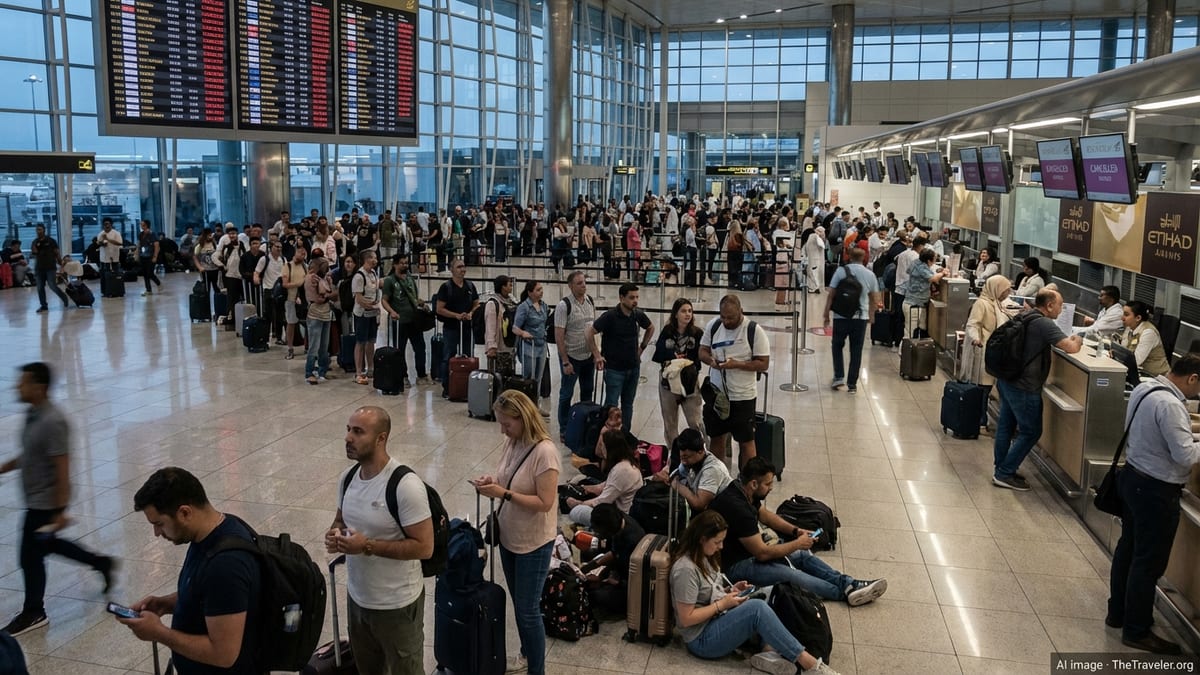
Regional escalation triggers fresh disruption
Renewed confrontation between the United States and Iran has led to further turbulence for air travel in the Gulf, with carriers in the United Arab Emirates adjusting flight paths, cancelling select services and warning of potential last-minute changes. Travel advisories from several governments note an elevated risk of missile and drone activity in parts of the region, alongside the possibility of temporary airspace closures affecting civilian aviation.
While the UAE’s major hubs in Dubai and Abu Dhabi remain operational, the broader pattern of conflict and retaliatory strikes has created a fragile operating environment. Aviation analysts note that airlines are prioritising safety by rerouting around sensitive airspace and trimming schedules on higher-risk routes, steps that can trigger knock-on delays even for flights not directly exposed to the most affected areas.
Publicly available information indicates that the latest disruption follows months of intermittent upheaval since open conflict between the United States and Iran erupted in late February 2026. Earlier rounds of escalation saw wide regional airspace closures and temporary suspension of flights across several Gulf states, and industry observers now warn that a return to those conditions cannot be ruled out if hostilities intensify further.
Travel advice issued by foreign ministries in late July highlights the prospect of sudden operational changes, urging passengers bound for or transiting through the UAE to monitor airline announcements closely. These notices underline that while most flights are still running, the situation remains fluid and subject to rapid shifts in line with developments on the ground.
Emirates adjusts schedules amid Kuwait and regional tensions
Dubai-based Emirates has emerged as one of the most visible carriers affected by the latest wave of instability. In recent days, published coverage shows that the airline has cancelled or suspended a number of services linking Dubai with regional destinations such as Kuwait and parts of Saudi Arabia, responding to security concerns and temporary restrictions following reported missile activity in neighbouring states.
Industry trackers and passenger accounts suggest that, beyond outright cancellations, Emirates has been dealing with rolling delays linked to congestion on alternative routings and tighter slot availability in crowded skies. Flights that would ordinarily cross portions of Iranian or Iraqi airspace are being reprofiled to avoid sensitive corridors, extending journey times and compressing turnaround schedules at already busy airports.
Despite these pressures, operations at Dubai International Airport remain largely intact, with the majority of Emirates’ long haul network continuing to function. Observers point out that the airline has significant experience managing disruption following previous episodes of regional tension and has been using its scale and fleet flexibility to consolidate services where necessary while maintaining core connectivity between Europe, Asia, Africa and the Americas.
Travellers transiting Dubai are being encouraged, through airline advisories and travel agent communications, to keep contact details up to date and to check their flight status repeatedly in the 24 hours before departure. In cases where routes are curtailed, affected passengers are generally being offered rebooking options on later services or alternative routings through less affected hubs.
Etihad and Air Arabia suspend select Gulf routes
Abu Dhabi based Etihad Airways has also implemented targeted cancellations and schedule changes as the regional security picture has deteriorated. Public reports detail the suspension of flights to Kuwait and Bahrain around July 19 to 21 following overnight strikes in those countries, along with warnings of further disruption if tensions persist. Some services to other nearby destinations have experienced delays or minor timetable adjustments as the airline reshuffles aircraft and crews.
Sharjah headquartered low cost carrier Air Arabia has taken similar steps, temporarily halting or curtailing flights between the UAE and Kuwait and adjusting services to certain Saudi Arabian cities. As a point to point airline with a dense regional network, Air Arabia is particularly exposed to short haul Gulf routes that may be affected first when airspace restrictions tighten or security incidents occur.
In earlier phases of the conflict, information from regional news outlets recorded broader suspensions by UAE carriers during periods of wide airspace closure across Iran, Iraq and segments of the Gulf. Although operations have since largely resumed, the current pattern of selective cancellations underlines how quickly airlines may be forced to react when conditions change, especially on routes over or near contested areas.
Both Etihad and Air Arabia have issued general travel advisories asking customers to verify departure times and to allow additional time at airports in case of congestion or secondary screening. Travel experts note that even when flights proceed as scheduled, passengers may encounter longer taxi times and holding patterns as air traffic control works around restricted zones.
Travel advisories and what passengers can expect
Government travel advisories for the UAE and wider region, updated in recent days, emphasise the risk of further escalation and caution that air travel could be disrupted with limited warning. These notices highlight that airlines may face temporary airspace closures or rerouting orders, which can lead to delays, diversions or cancellations even when airports remain open.
For passengers, the immediate impact is most visible on short haul links within the Gulf, where several UAE carriers have already suspended or reduced frequencies to Kuwait, Bahrain and select Saudi Arabian cities. Longer haul services to Europe, Asia and North America are generally continuing but may operate on modified routings that add time to the journey or require schedule tweaks.
Consumer rights organisations advise travellers to familiarise themselves with airline policies on rebooking and refunds in the event of disruption linked to security events. In many cases, carriers have introduced temporary flexibility, allowing customers on affected routes to change dates or destinations without additional fees, although such waivers can vary from one airline to another and may be time limited.
Travel insurance specialists also point out that coverage for conflict related disruption can differ widely between policies. Passengers are encouraged to review their documentation to understand whether delays or cancellations connected to military activity or airspace closures are included, and to retain receipts and records in case they need to file a claim.
Planning UAE trips amid an uncertain outlook
For tourists and business travellers planning journeys to or through the UAE in the coming weeks, the overall message from aviation and travel industry sources is one of cautious preparedness rather than outright alarm. Flight operations at Dubai, Abu Dhabi and Sharjah remain substantial, and many visitors continue to transit the country’s hubs without major incident.
At the same time, the interplay between the US–Iran confrontation and regional security dynamics means the risk of further short notice disruption is real. Analysts note that even if direct attacks on UAE territory remain unlikely, incidents in neighbouring states or along key air corridors can ripple quickly through airline schedules, particularly on busy summer travel days.
Prospective passengers are therefore being urged to build flexibility into their plans where possible. This can include allowing longer connection times, avoiding tight same day onward commitments after arrival, and maintaining up to date contact information with both airlines and booking platforms so that notifications about any changes are received promptly.
As the geopolitical situation evolves, the outlook for UAE flights will hinge on whether the current cycle of strikes and counterstrikes gives way to de escalation or intensifies into broader confrontation. For now, travellers using Emirates, Etihad and Air Arabia should prepare for a travel environment in which delays and selective cancellations are an ongoing possibility and close monitoring of official schedules has become a critical part of trip planning.