


More news on this day
The United States has issued new security warnings to its citizens in 11 Middle Eastern countries, highlighting an increasingly volatile regional climate and urging Americans to reconsider nonessential travel, stay prepared for rapid changes in security conditions, and closely follow local alerts from U.S. embassies.
Get the latest news straight to your inbox!
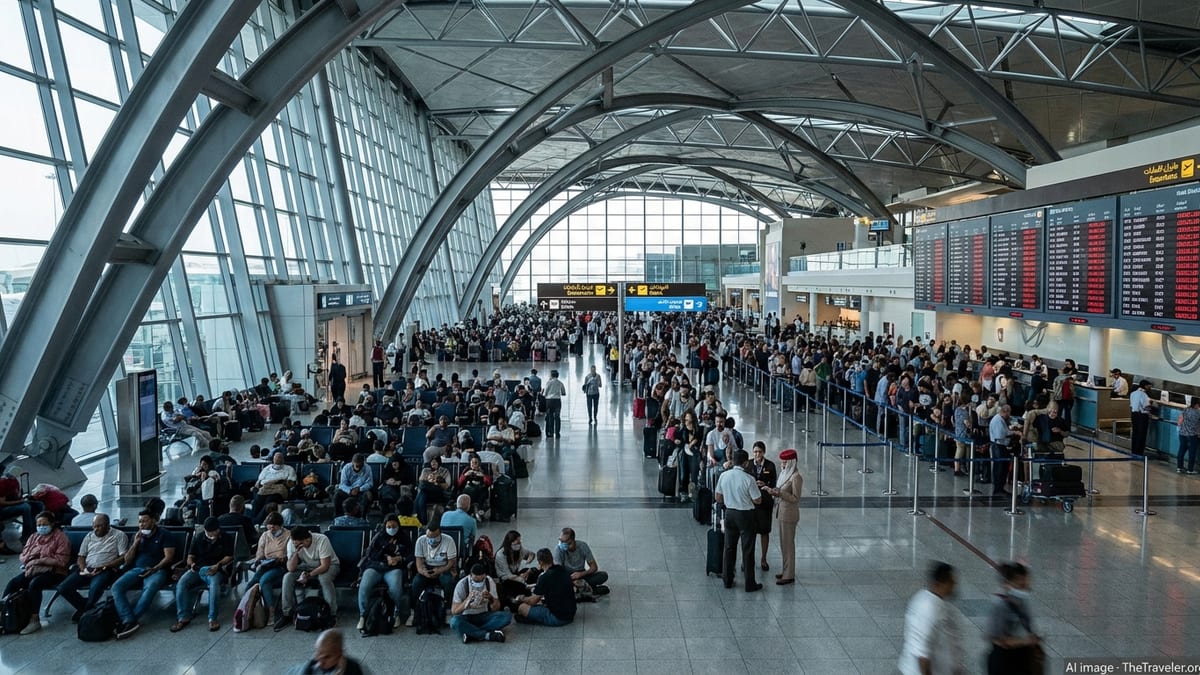
Heightened Alerts Across a Volatile Region
The latest U.S. guidance builds on a broader pattern of elevated concern for American travelers and residents across the Middle East. A recent worldwide security update emphasizes that the regional environment remains fluid and can shift rapidly, particularly around political flashpoints, religious holidays, and sites associated with Western governments.
In parallel with this global messaging, country-specific travel advisories for several Middle Eastern states have been revised or reissued in recent months. Publicly available information shows that a number of Gulf and Levant countries are now subject to some of the highest advisory levels, ranging from instructions to reconsider travel to explicit calls for citizens to depart while commercial options remain available.
The focus on 11 Middle Eastern countries reflects a convergence of factors, including interstate tensions, the risk of drone and missile activity, localized unrest, and episodic disruptions to airspace and key transport corridors. The warnings are framed as precautionary but underscore that U.S. government assistance may be limited in the event of a sudden deterioration.
Advisories for Americans in the region consistently stress that incidents can occur with little or no warning and that individuals living, working, or transiting there should have contingency plans in place, including arrangements for evacuation or relocation if needed.
Countries Seeing the Strongest Warnings
Published advisories indicate that some of the strongest language is directed at countries where conflict spillover or direct involvement in regional hostilities is a concern. In several cases, Americans are advised not to travel at all, while those already present are urged to leave as soon as it is safe and feasible to do so.
Other states, particularly in the Gulf, are subject to warnings tied to the risk of drone and missile attacks, disruptions to international flights, and potential targeting of locations linked to Western interests. Guidance for these destinations stresses that travel conditions may change quickly, that airports and seaports could be affected with limited notice, and that overflight restrictions or airspace closures may complicate departure options.
The mix of advisories spans a spectrum from Level 2 “exercise increased caution” to Level 4 “do not travel,” creating a patchwork of risk levels that U.S. travelers must navigate. The 11 countries identified in recent coverage are described as having either elevated or rapidly evolving threats, with particular concern for major cities, border regions, and areas near active conflict zones.
For some of these countries, warning language has been gradually tightened over the past year as tensions rose. For others, public guidance shifted more abruptly in early 2026, coinciding with broader regional military developments and new assessments of potential retaliatory attacks against U.S. interests.
Impact on Travelers, Expats, and Regional Mobility
The expanded warnings significantly affect both short-term travelers and long-term American residents in the 11 countries. Tourism flows had already been constrained by existing tensions, but the latest alerts are prompting many travelers to cancel or postpone visits, particularly leisure trips and nonessential business travel.
For expatriates and dual nationals, the calculus is more complicated. Many have professional, family, or educational ties that make immediate departure difficult, even when official advice encourages them to leave while commercial routes remain open. Reports indicate that some Americans in the region are weighing whether to relocate temporarily to neighboring countries with lower advisory levels, while others are staying but updating their emergency plans and documentation.
The advisories also influence corporate risk assessments. Multinational firms with operations in the affected countries are reviewing travel approvals, rotating staff, and in some instances relocating families or nonessential personnel. Travel managers are relying heavily on the U.S. advisory system and similar guidance from European and regional governments to shape internal policies, including the use of approved airlines, hotels, and transit hubs.
Regional mobility has been complicated by intermittent flight disruptions and route changes as carriers adjust to evolving airspace restrictions and perceived security risks. Travelers have reported longer itineraries, additional layovers, and higher fares when trying to reach or leave certain Middle Eastern hubs listed in the heightened U.S. guidance.
What the Warnings Advise Americans to Do
Across the 11 Middle Eastern countries, the consistent message in U.S. guidance is to exercise increased personal security awareness and plan carefully. Citizens are urged to stay alert at locations associated with Western interests, avoid large gatherings and demonstrations, and be cautious in crowded public places such as malls, hotels, transport hubs, and entertainment venues.
The alerts recommend maintaining a low profile, monitoring local media and official embassy messages, and ensuring that travel documents remain valid and accessible. Americans are encouraged to identify multiple exit routes in case primary airports or land crossings become unavailable, and to prepare go-bags with essential supplies, prescriptions, and key records.
Public information also emphasizes the importance of maintaining communication with family, employers, and local contacts. Travelers and residents are urged to be ready for intermittent disruptions to mobile networks and internet access, particularly during periods of unrest or military activity, and to agree on backup communication plans ahead of time.
At the same time, the language of the advisories underscores that decisions about staying or leaving are ultimately personal and should take into account individual circumstances, risk tolerance, and the availability of safe and practical departure options from each country.
How the Alerts Fit Into a Broader Security Posture
The warnings for the 11 Middle Eastern countries are part of a wider security posture that has evolved as regional tensions have escalated. Official guidance over the past year has included both targeted country advisories and broader notices drawing attention to the potential for heightened threats against U.S. citizens and interests abroad.
Analysts note that this multi-layered approach allows the United States to respond to emerging risks while also signaling concern to travelers, partners, and local authorities. Worldwide cautions and regional alerts set the overall context, while country-level advisories spell out specific concerns related to terrorism, civil unrest, armed conflict, and limitations on the ability to provide consular services.
In the Middle East, the pattern of tightening advisories has tracked with episodes of cross-border missile and drone activity, maritime security incidents, and domestic political unrest. Publicly available documents indicate that as the threat picture changes, posts in the region have used security alerts, messages to registered citizens, and advisory level changes to keep Americans informed.
Travel experts suggest that the most recent focus on 11 countries may not be the final word, as further changes to advisory levels are possible if the regional situation deteriorates or stabilizes. For now, the guidance serves as a strong signal to U.S. citizens that the security environment across much of the Middle East remains complex and warrants close, ongoing attention.