


More news on this day
United Airlines Flight 579 from Los Cabos to Houston diverted to Monterrey, Mexico on May 10 after a reported mechanical issue, renewing public attention on airline safety and what such diversions mean for travelers flying between Mexico and the United States.
Get the latest news straight to your inbox!
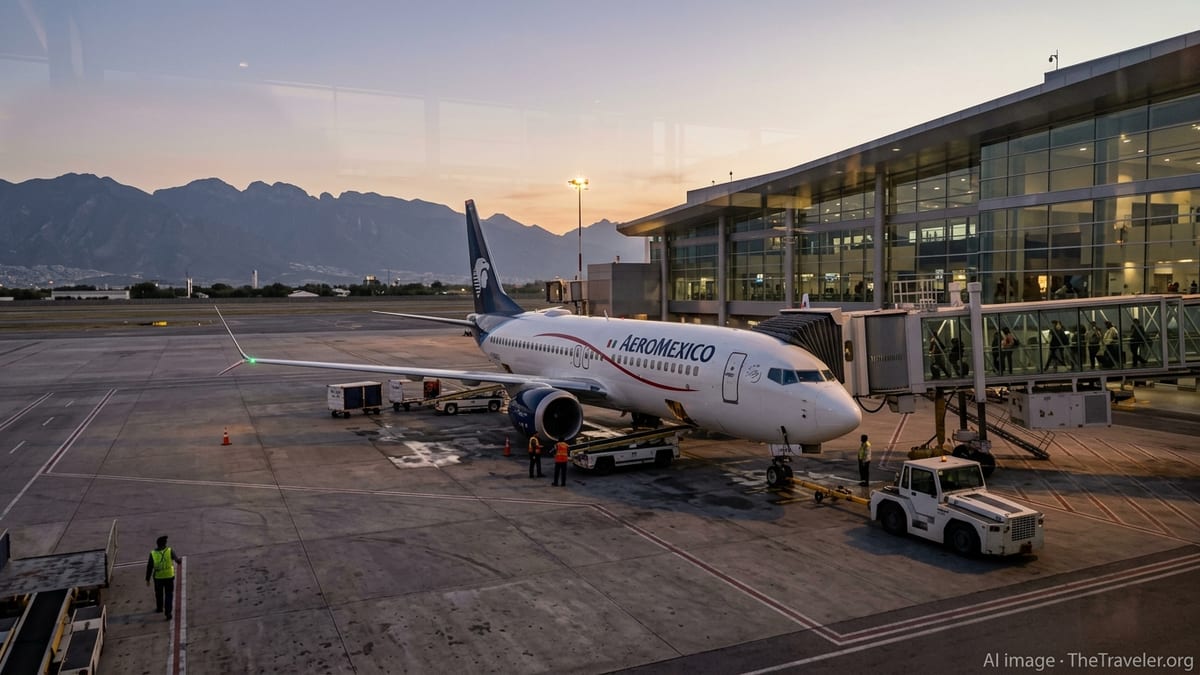
What Happened on United Airlines Flight 579
Publicly available flight-tracking data and regional media reports indicate that United Airlines Flight 579, operating an Airbus A320 between Los Cabos (SJD) and Houston George Bush Intercontinental Airport (IAH), diverted to Monterrey International Airport (MTY) on Sunday, May 10. The flight had already departed Los Cabos and was en route to Texas when the crew reported a technical irregularity and opted to change course to Monterrey.
Coverage in Mexican business and aviation outlets describes the issue as mechanical in nature, prompting the flight crew to request priority handling into Monterrey, a major northern Mexico hub with extensive maintenance and operational support. The aircraft landed there without reports of injuries, and there have been no indications in public reporting of a more serious in-flight emergency.
Initial accounts circulating in Spanish-language media reference commentary from aviation analysts and pilots active on social networks, who emphasize that the diversion appears to align with standard safety protocols. The episode nonetheless added to a broader climate of traveler concern around airline reliability and maintenance practices, particularly on busy cross-border routes linking Mexican resorts with hubs such as Houston.
United has not publicly detailed the precise component involved, and as of press time no official incident report has been released through U.S. investigators. For passengers, the most immediate impact came in the form of an unscheduled stop, disrupted connections, and renewed questions about how often such diversions occur and what protections they have when flights are forced to change course.
Operational Impact on Houston (IAH) and Monterrey (MTY) Routes
Houston George Bush Intercontinental Airport is one of United’s largest hubs and a primary gateway for traffic between the U.S. and northern and central Mexico. Flight-tracking boards on the days following the diversion show United and its competitors continuing to operate regular Houston–Monterrey and Houston–Los Cabos frequencies, with no broader suspension of service tied to the UA579 event.
Monterrey International Airport, for its part, functions as a strategic alternate for northbound flights from the Mexican Pacific region. Its location and runway infrastructure make it a common diversion point when aircraft need to land short of Houston for weather, fuel, or technical reasons. Recent schedules show multiple daily departures from Monterrey to Houston on different carriers, underscoring the airport’s role as a backup and connection point rather than a last-resort airfield.
For travelers already booked on United itineraries into IAH from Mexico, publicly visible schedules suggest that the UA579 diversion did not trigger systemic changes to the network. The disruption appears to have been confined to the passengers and crews on the affected flight and any downstream rotations involving that specific aircraft. Nonetheless, the incident serves as a reminder that tight connection times through major hubs can quickly become risky when an aircraft is rerouted.
In Monterrey, the diversion temporarily added an unscheduled narrowbody jet to an already busy ramp, but airport operations data do not show cascading cancellations linked directly to the event. Travelers using MTY should expect typical security and immigration procedures if their own flight were ever diverted there from an international route, including potential re-screening and passport control if they deplane.
How Common Are Diversions and What Do They Signal About Safety?
U.S. Department of Transportation performance summaries for major carriers show that diversions remain a small fraction of total operations, typically well under 1 percent of flights in a given reporting period. For a large airline such as United, that still translates into hundreds of diverted segments per year, driven by causes ranging from weather and airspace congestion to mechanical and medical issues.
Aviation safety specialists broadly note that a diversion in response to a suspected technical fault is a sign that built-in safeguards are working as designed. Modern airliners are equipped with extensive sensors, and crews are trained to land at the nearest suitable airport whenever there is uncertainty about the reliability of a critical system. In that sense, the decision to bring Flight 579 into Monterrey reflects a conservative approach rather than an indication that flying the route has become inherently more dangerous.
Publicized incidents can, however, heighten traveler anxiety, especially when they coincide with other coverage of inspections, fleet reviews, or enforcement actions involving different carriers. While these stories may create an impression of mounting risk, overall accident rates for commercial aviation in North America and on U.S.-Mexico routes remain historically low, according to aggregated safety databases and international transport organizations.
Regulators in both countries require airlines to log and investigate diversions tied to mechanical issues, and those findings can inform future maintenance practices and safety directives. Travelers rarely see the technical paperwork behind such events, but the formal process is an important part of why diversions are generally treated as precautionary rather than signs of systemic failure.
What Travelers to Houston and Monterrey Should Expect Now
For passengers flying into Houston from Mexican airports in the coming days and weeks, the most likely consequence of the UA579 diversion is heightened awareness rather than tangible schedule changes. Airlines may make behind-the-scenes adjustments, such as swapping aircraft types or adding maintenance checks, yet these steps typically appear to customers only as routine equipment changes on their itineraries.
Travelers with tight connections in Houston should continue to build in realistic buffers, particularly during late afternoon and evening peaks when thunderstorms and congestion can already stretch arrival times. A diversion similar to Flight 579 can add several hours to a journey if the aircraft needs to land elsewhere, refuel, undergo inspections, and then continue on or if passengers must be reaccommodated on alternate flights from the diversion point.
For those flying directly to or from Monterrey, the incident underscores the airport’s importance as a regional hub that can unexpectedly become a temporary arrival point even for travelers who did not plan to visit the city. In such cases, passengers might be asked to remain on board while inspections occur, or they may be required to clear local immigration and customs before being rebooked. The exact experience depends on the nature of the issue and the decisions of the airline and local authorities.
Passenger rights in diversion scenarios vary by jurisdiction and by the cause of the disruption. In general, travelers can expect airlines to prioritize safety first and then address rebooking, meals, and lodging on a case-by-case basis, particularly when the diversion is linked to a mechanical concern rather than weather or air traffic control limits.
Practical Tips for Passengers Concerned About Airline Safety
Travelers unsettled by headlines about Flight 579 and similar events can take several practical steps to regain a sense of control. Checking flight status on multiple platforms before heading to the airport, building extra connection time into itineraries, and keeping essential medications and chargers in a personal item rather than checked luggage all help if a diversion or extended delay occurs.
A review of public safety data can also provide context. Historical statistics compiled by regulators and independent aviation bodies consistently show that commercial air travel remains one of the safest modes of transportation, even as news coverage focuses on rare but dramatic disruptions. Understanding that diversions are designed to add layers of protection, not to signal imminent danger, may ease some of the anxiety associated with unscheduled landings.
For those flying frequently between Mexico and Houston, monitoring airline communications channels and subscribing to flight alerts can ensure faster notice if a routing change occurs. While no traveler can eliminate the possibility of a diversion, being informed and prepared can make an unexpected stop in a hub like Monterrey more manageable and less stressful.