


More news on this day
United Airlines is set to restore nonstop service between Houston and Caracas in August, a move that reopens one of the most important U.S.–Venezuela air corridors and is expected to give tourism and family travel a significant lift after years of suspension.
Get the latest news straight to your inbox!
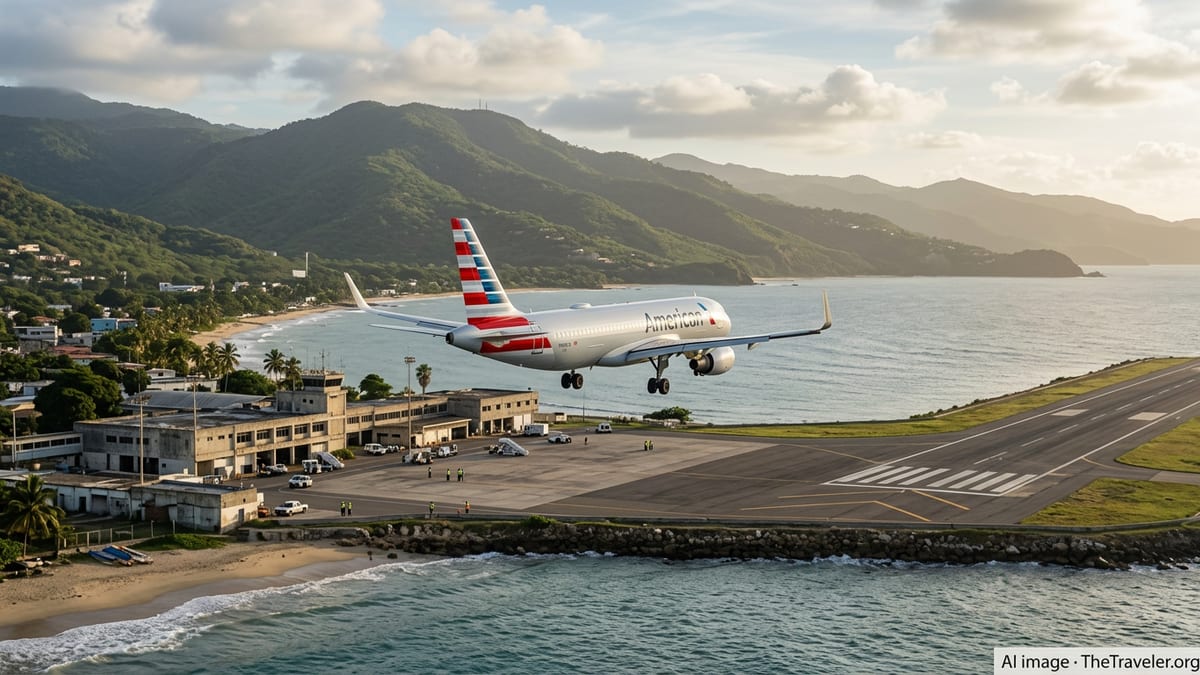
Nonstop Link Between Houston and Caracas Returns
Publicly available information shows that United will resume daily nonstop flights between George Bush Intercontinental Airport in Houston and Simón Bolívar International Airport outside Caracas starting August 11, subject to final government approvals. The service marks the carrier’s return to the Venezuelan capital after it halted operations in 2017 amid tightening U.S. restrictions and security concerns.
The restored route will operate as a nonstop link between Texas and Venezuela, eliminating the need for U.S. travelers to connect through third countries such as Colombia, Panama, or Mexico. Travel industry analysts note that the simplified routing is likely to appeal to both diaspora travelers visiting relatives and business passengers watching for signs of a broader normalization in commercial ties.
United’s announcement follows a gradual thaw in U.S.–Venezuela aviation ties, which had effectively frozen direct commercial flights for several years. Recent regulatory clearances for other U.S. airlines to return to Caracas created the framework for additional carriers to reenter the market and rebuild a network of North American connections.
The Houston–Caracas relaunch also restores a historic link for United. Reports indicate the airline and its predecessors served the Venezuelan market for more than two decades before the 2017 suspension, making the new schedule a symbolic return as much as a commercial one.
Schedule Details and What Travelers Can Expect
According to published coverage, United plans to operate the Houston–Caracas route on a daily basis, offering consistent options for travelers seeking direct service. Exact departure and arrival times are being marketed through reservation systems, giving passengers the ability to coordinate same-day connections across United’s domestic and international network from Houston.
Houston is one of United’s largest hubs, which means the reinstated Caracas flight will plug Venezuela back into a wide web of one-stop itineraries from major U.S. cities. Travelers originating in markets such as Chicago, Denver, Los Angeles, and San Francisco are expected to gain more predictable access to Caracas via a single connection in Texas, rather than weaving through multiple carriers and countries.
Industry observers note that the nonstop routing can shave several hours off typical travel times compared with connections through third-country hubs. That time saving, combined with familiar frequent-flyer earning options and integrated baggage handling, is projected to make the reinstated route particularly attractive for travelers who postponed trips during the years of suspended service.
Fare levels are still evolving as schedules are loaded and competitors respond. However, aviation analysts suggest that the reintroduction of a U.S. carrier on the route is likely to increase overall capacity and could, over time, place downward pressure on some ticket prices relative to more circuitous itineraries.
Tourism and Family Travel Between USA and Venezuela
The return of nonstop Houston–Caracas flights is widely seen as a boost for tourism and family visits in both directions. Before the suspension of services, Venezuelan communities in Texas and across the United States relied on direct flights to maintain close family ties, and many shifted to more complex travel patterns when those links were cut.
Travel trade publications highlight strong underlying demand from Venezuelan nationals living in the United States who are eager for more straightforward routes home, especially around school holidays and end-of-year peak seasons. The ability to fly nonstop between Houston and Caracas is expected to make short trips more feasible, reducing the fatigue and uncertainty associated with multi-stop journeys.
For U.S. visitors, the route reopens an important gateway to Venezuela’s Caribbean coastline, historic districts, and ecotourism regions that fan out from the capital. Tour operators tracking the market say that reliable long-haul access is a prerequisite for rebuilding itineraries that combine Caracas with destinations such as the coastal resort areas and inland highlands.
While some travel advisories for Venezuela remain in place, the gradual restoration of scheduled service is viewed as a sign that conditions have evolved sufficiently for regulators to permit carefully controlled operations. Travelers are still being urged, through publicly available guidance, to review safety and entry information before booking trips.
Business, Energy and Diaspora Links Through Houston
Houston’s role as a global energy hub adds an additional dimension to United’s return to Caracas. Analysts note that, historically, the corridor linked executives, engineers, and service providers involved in the oil and gas sector with Venezuela’s significant reserves, even during periods of political tension.
With diplomatic and commercial channels slowly reopening, the reestablished flight is expected to support exploratory business travel as companies reassess opportunities in Venezuela’s energy and infrastructure sectors. The convenience of a nonstop connection can be an important factor in determining whether firms pursue on-the-ground visits rather than relying solely on virtual meetings.
The route also serves one of the largest Venezuelan diaspora communities in the central United States. Community organizations in the Houston area have long pointed to the absence of direct flights as a barrier to maintaining cultural and family ties. The return of nonstop service is likely to be felt in rising demand around key cultural festivals, school vacations, and religious holidays.
In addition, the flight reinforces Houston’s position as a major connecting gateway for Latin America. The city’s airport system has invested heavily in international facilities in recent years, and updated route maps already highlight growing links across Central and South America that can feed into the new Caracas service.
How the New Service Fits Into the U.S.–Venezuela Aviation Reboot
United’s move comes amid a broader reopening of the U.S.–Venezuela air market after a multi-year shutdown of regularly scheduled passenger flights. Earlier in 2026, other major U.S. carriers secured approvals to begin or resume nonstop service between Miami and Venezuelan cities, creating the first wave of restored connectivity since a 2019 ban.
Aviation policy specialists describe these steps as part of a phased normalization, in which regulators assess airport security, airline compliance, and bilateral relations before allowing more capacity back into the market. The Houston–Caracas route represents a second phase that extends connectivity beyond South Florida to a major inland hub.
Industry reports indicate that U.S. authorities retain the option to adjust permissions if conditions change, meaning all new services, including United’s, remain subject to ongoing regulatory oversight. Airlines have therefore emphasized operational readiness, security coordination, and contingency planning as they return to Venezuela.
For travelers, the practical effect of this aviation reboot is a growing menu of options. With Miami–Caracas flights already operating and Houston–Caracas set to follow in August, the U.S.–Venezuela corridor is reemerging after years of near standstill, potentially reshaping both leisure and business travel patterns across the region.