

More news on this day
Spring travel plans unraveled for thousands of passengers on April 11 as flight disruptions involving United Airlines and regional partner SkyWest converged on Denver International Airport, triggering a wave of delays that spread across North American routes.
Get the latest news straight to your inbox!
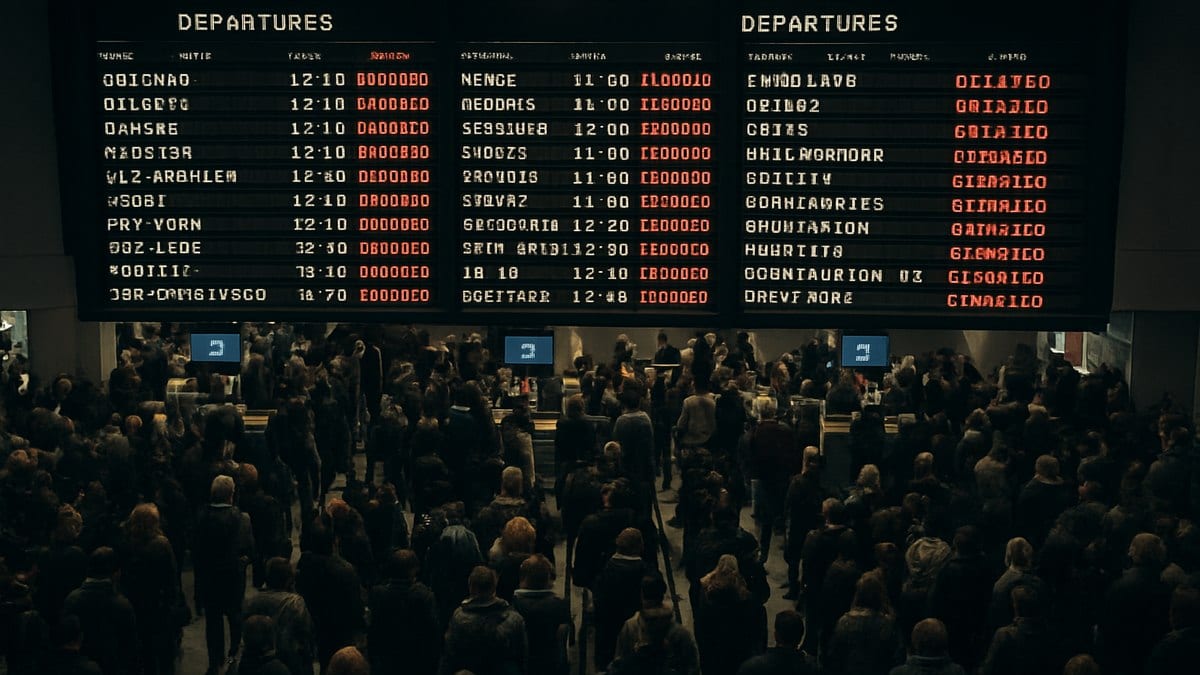
Denver Hub Sees Elevated Delays and Cancellations
Publicly available tracking data for April 11 indicates that Denver International Airport recorded more than 200 delayed flights and a handful of cancellations, placing it among the most affected U.S. hubs for the day. Reports highlight United Airlines, American Airlines and Southwest among the biggest contributors to the disruption, reflecting Denver’s role as a critical connecting point for domestic and international itineraries.
United, which operates one of its largest hubs at Denver, saw a dense bank of departures and arrivals slowed, with knock-on effects for services to major markets including Los Angeles, Chicago, New York, San Francisco and Dallas. When a hub of that scale encounters operational strain, even modest schedule changes can cascade quickly, leaving aircraft and crews out of position and forcing rolling delays through subsequent waves of flights.
Airport status information showed Denver operating under weather and traffic constraints at various points during the day, with congestion building as late-morning and afternoon departures stacked up. Although the airport remained open, extended taxi times, air traffic flow programs and arrival metering combined to keep many flights on the ground longer than planned, eroding connection times for passengers traveling through Colorado.
Travel-industry coverage notes that the April 11 disruption at Denver forms part of a broader pattern in early April, when several large U.S. hubs reported higher-than-normal delay volumes triggered by a mix of unsettled spring weather, tight schedules and ongoing air traffic control staffing challenges.
United and SkyWest Routes Experience Cascading Impact
Across the national network, United Airlines and its regional partner SkyWest featured prominently in April 11 delay tallies. Aggregated data compiled by aviation news outlets shows United among the carriers with the highest number of late departures and arrivals, while SkyWest was heavily represented in regional delay statistics, particularly on feeder routes linking smaller communities to major hubs.
SkyWest operates flights under multiple brands, including as a United Express carrier into Denver and other United hubs. When Denver’s departure banks slowed, many of these regional legs were pushed back, affecting communities across the Mountain West and Midwest that rely on tightly timed connections to reach larger coastal cities. Routes involving cities such as Minneapolis–St. Paul, Chicago and smaller Upper Midwest airports saw schedules squeezed as aircraft cycled through delayed turns.
Industry analyses emphasize that disruptions at a major United hub can quickly propagate through SkyWest’s schedule because the regional carrier’s aircraft and crews are closely synchronized with mainline operations. If a mainline arrival reaches Denver late, the regional connection it feeds may depart behind schedule, and that delay can follow the aircraft through the remainder of its day’s flying.
Data from national delay trackers for April 11 further indicates that United and SkyWest were not alone, with other major airlines also recording elevated disruption. Even so, the concentration of United and United Express traffic at Denver helped make the Colorado hub a focal point of the day’s problems, particularly for passengers moving between western states and the central and eastern United States.
Ripple Effects Felt at Other North American Hubs
The difficulties centered on Denver were mirrored at several other high-traffic airports on April 11, underscoring how interconnected the North American air travel network has become. At Phoenix Sky Harbor International Airport, publicly available figures show more than 160 delayed flights and multiple cancellations, disrupting American Airlines, Southwest and JetBlue operations to major hubs such as Chicago, New York and Los Angeles.
Las Vegas also reported atypically high delay levels, with travel-industry coverage describing Harry Reid International Airport as facing a notable day of disruption that affected flights to Denver, Chicago, New York and other key destinations. For travelers, this meant that even journeys not directly touching Colorado could be indirectly influenced by the same weather systems and traffic-management programs that were constraining airspace in the western United States.
Separate reporting from Detroit and other Midwestern airports pointed to a broader national picture of strain. One aviation news summary for April 11 cited nearly 80 cancellations and more than 1,700 delayed flights across U.S. carriers, including Delta, United, Spirit and SkyWest. With that level of systemwide stress, relatively minor schedule adjustments in one region could result in missed connections or last-minute aircraft swaps thousands of miles away.
The ripple effects extended into Canada and cross-border routes, where airlines depend on predictable connection windows through U.S. hubs like Denver and Chicago. Passengers traveling between Canadian cities and U.S. destinations encountered rebookings and extended layovers when their inbound flights arrived late from congested hubs.
Travelers Confront Long Waits and Tight Connections
For passengers, the operational details translated into long lines at gates, congested customer service counters and a flurry of app notifications as departure times shifted repeatedly throughout the day. Travelers connecting through Denver reported longer-than-usual walks across concourses as gate assignments changed and aircraft were swapped to keep parts of the schedule moving.
Publicly available guidance from airlines and consumer agencies advises that on days like April 11, travelers should arrive at airports earlier than usual, monitor airline apps and text alerts closely, and be prepared for gate or time changes even after boarding begins. Morning departures often retain the highest likelihood of leaving close to schedule, while afternoon and evening flights bear the brunt of rolling disruptions.
Analysts also point out that tight connections are particularly vulnerable when hubs are strained. A delay of 30 to 45 minutes on an inbound flight into Denver can wipe out what seemed like a comfortable layover at booking, especially if aircraft are parked at distant gates or security queues slow passengers changing concourses. As a result, some frequent flyers opt for longer connection windows at busy hubs during peak travel periods, trading extra time on the ground for a higher chance of making their next flight.
On April 11, that tradeoff became especially visible as travelers with longer connection times in Denver generally had more options to rebook or stand by for later departures, while those on tighter schedules were more likely to face overnight stays or significant itinerary changes.
What April 11 Signals for the Spring Travel Season
The disruption pattern surrounding Denver, United and SkyWest on April 11 offers an early signal for what travelers may encounter as the spring and early summer travel season accelerates. Aviation data over recent years has shown a growing number of days when total U.S. delays exceed several thousand flights, particularly when weather, air traffic control constraints and tight airline scheduling coincide.
Industry observers suggest that hubs like Denver, Phoenix and Las Vegas are especially sensitive in this environment because they serve as critical crossroads between east and west, as well as between major coastal cities and inland regions. When even one of these airports experiences operational constraints, a large swath of connecting itineraries can be affected within hours.
For airlines, the April 11 experience may reinforce efforts to refine crew scheduling, aircraft utilization and recovery playbooks ahead of the summer peak. For passengers, it serves as a reminder to build flexibility into plans, whether by allowing extra time for connections, considering earlier departures, or having backup arrangements in mind if flights encounter lengthy delays.
As carriers and airports work to stabilize operations, the April 11 disruptions around Denver highlight how quickly routine spring travel can tip into a day of widespread snags when a major hub and its regional partners are hit by overlapping pressures.