

More news on this day
Tokyo Narita is gaining renewed relevance in United Airlines’ Pacific strategy as the carrier begins rolling out Boeing 737 MAX 8 aircraft on key regional routes, notably its busy link to Guam, reinforcing the airport’s role as a connecting gateway between the United States and secondary cities across Asia and the Western Pacific.
Get the latest news straight to your inbox!
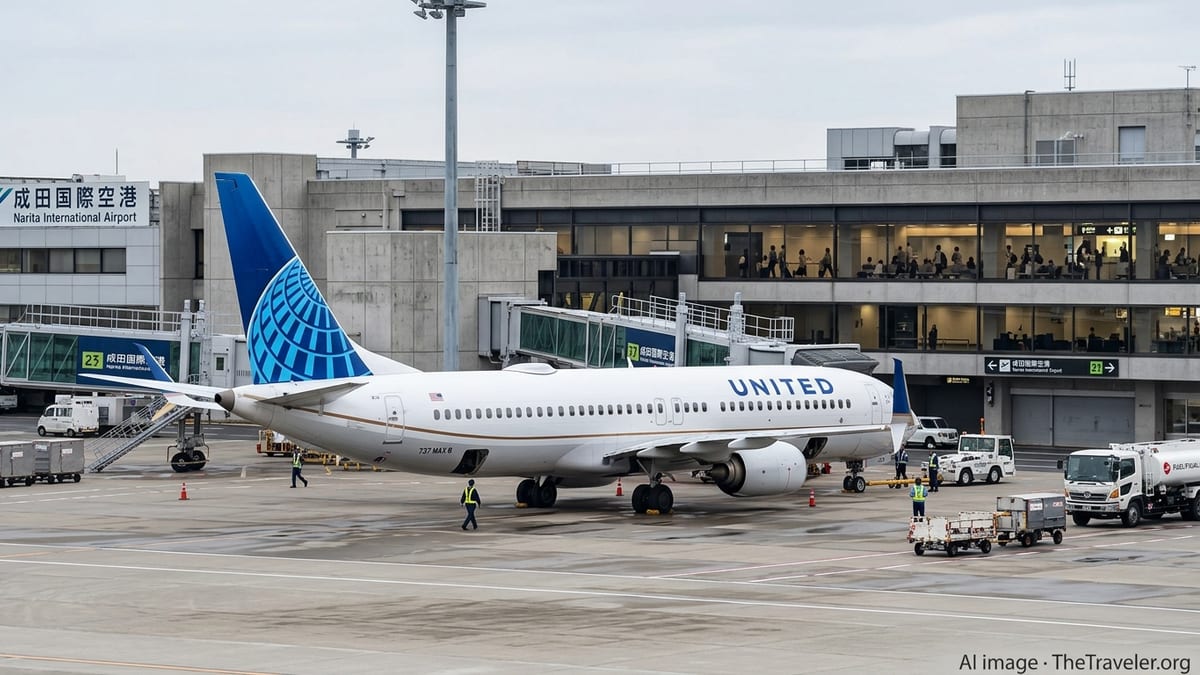
A Next-Generation Narrowbody at Narita
Recent schedule filings and aviation industry coverage indicate that United is transitioning parts of its Guam and Tokyo Narita operation from older Boeing 737-800s to the newer 737 MAX 8, with initial services set to appear in late April 2026 on the Guam–Narita route. The move follows the arrival of the first Guam-based 737 MAX 8 and signals a broader refresh of United’s Western Pacific narrowbody fleet.
According to published reports on the carrier’s Western Pacific plans, United is basing a dedicated subfleet of ten 737-8 aircraft in Guam to serve up to 15 regional destinations, including several routes that touch Narita. These aircraft will gradually replace the workhorse 737-800s that have underpinned United’s regional network from Guam for years, including flights that extend onward from Narita to points such as Kaohsiung, Cebu, Ulaanbaatar and Palau.
Publicly available information on Narita’s route map already shows United as one of several airlines linking the airport with Kaohsiung, reflecting the carrier’s push to build a short- and medium-haul network that feeds its long-haul transpacific services. The addition of the 737 MAX 8, with its longer range and improved fuel efficiency, provides more flexibility to sustain and expand that model.
For Narita itself, the deployment of the 737 MAX 8 on regional sectors reinforces the airport’s evolving identity. Once United’s primary Japan hub for widebody transpacific flights, Narita is now being repositioned as a high-frequency connector and distribution point, where modern narrowbodies shuttle passengers to and from U.S. hubs via Guam and other spokes.
Guam–Narita Becomes a MAX 8 Showcase
United’s Guam–Tokyo Narita service has long been a backbone of travel between Japan and the Micronesian region, feeding leisure flows to Guam and Saipan as well as onward connections around the Pacific. Industry schedule tracking shows that from April 30, 2026, selected rotations of this route are scheduled with the 737 MAX 8, with operations ramping up as more aircraft join the Guam base.
Aviation newsletters and local transport documents from Guam have highlighted incremental capacity growth on Guam–Narita in recent seasons, with added flights during peak travel periods. Moving the route to the MAX 8 allows United to combine schedule density with a significantly updated onboard product, positioning the service as a showcase for the airline’s latest narrowbody cabin in the region.
The Guam-based MAX 8s are configured with seatback entertainment, Bluetooth audio connectivity, expanded overhead bins and more extra-legroom seating compared with the outgoing 737-800s, according to public materials on United’s new narrowbody interiors. For travelers using Narita as a connection point between the continental United States and secondary destinations, this brings a more consistent experience across legs that can approach four hours in duration.
The improved economics of the 737 MAX 8 also matter on a route that combines leisure traffic with price-sensitive group tours. The aircraft’s lower fuel burn and higher capacity relative to earlier 737 generations give United more room to adjust fares and frequencies in response to seasonal swings in demand between Japan, Guam and the broader Micronesia market.
Strengthening Narita’s Role as a Pacific Gateway
United’s use of Narita as a springboard to secondary Asian and Pacific destinations has been evolving in recent years, even as more nonstops to Tokyo Haneda have shifted some long-haul flying closer to central Tokyo. Industry commentary describes Narita today as a hybrid node for United: a gateway that combines U.S. long-haul services with a growing portfolio of regional routes operated by 737s based in Guam.
Published coverage of United’s international expansion shows that the airline has singled out Narita for new links to cities such as Ulaanbaatar and Kaohsiung, as well as a nonstop to Koror in Palau. These routes, typically flown by Guam-based narrowbodies, are designed to connect seamlessly with transpacific services, turning Narita into a connecting point where passengers move between widebody flights from the United States and narrowbody hops across Northeast and Southeast Asia.
The introduction of the 737 MAX 8 into this mix gives United additional reach from Narita without having to commit widebody aircraft to every spoke. The type’s performance allows for seasonal flights to destinations that would be difficult to serve profitably with larger jets, while its cabin product reduces the gap in comfort between long-haul and regional segments.
For Narita, this strategy helps offset competitive pressure from Haneda by anchoring a distinct role in the network. Rather than competing solely on nonstop access to central Tokyo, Narita positions itself as a high-connectivity hub where U.S. travelers can access a wider range of secondary markets, often with single-airline itineraries that include a narrowbody leg on the MAX 8.
Passenger Experience and Competitive Landscape
The cabin upgrade associated with the 737 MAX 8 is a central element of United’s narrative in the Western Pacific. Publicly available information about the airline’s MAX 8 interiors emphasizes individual seatback screens, streaming entertainment options, power at every seat and larger overhead bins, features that are particularly noticeable on medium-haul routes from Narita that can exceed five hours in some cases.
This aligns United’s Narita operation more closely with expectations in the Japan and Asia markets, where full-service carriers and newer low-cost competitors alike have been investing in refreshed cabins. While Narita hosts a mix of Japanese and foreign airlines on overlapping routes, a consistent onboard product across transpacific and regional sectors may help United retain high-yield travelers who value comfort and connectivity throughout their journey.
The competitive context in and around Narita is also shifting. Some carriers have been reshaping their Tokyo networks, including adjustments in low-cost services and changes to regional routes. Against that backdrop, United’s decision to double down on a modern narrowbody fleet out of Guam, feeding Narita and beyond, can be seen as a long-term bet on sustained demand for multi-stop itineraries connecting North America to secondary cities across Asia and the Pacific.
For passengers, the effect is subtle but tangible. It becomes easier to book a single-ticket journey from a U.S. hub to a niche destination such as Ulaanbaatar or Palau via Narita, with a similar standard of onboard amenities on each leg. As the MAX 8 gradually replaces older aircraft on these services, Narita’s reputation as a practical, connection-friendly gateway across the Pacific is likely to strengthen.