

More news on this day
As airspace closures and missile strikes ripple across the Middle East, European governments are issuing urgent appeals for their citizens abroad to register with embassies and consular crisis lists, warning that unregistered travelers may be harder to locate, assist, or evacuate if the conflict worsens.
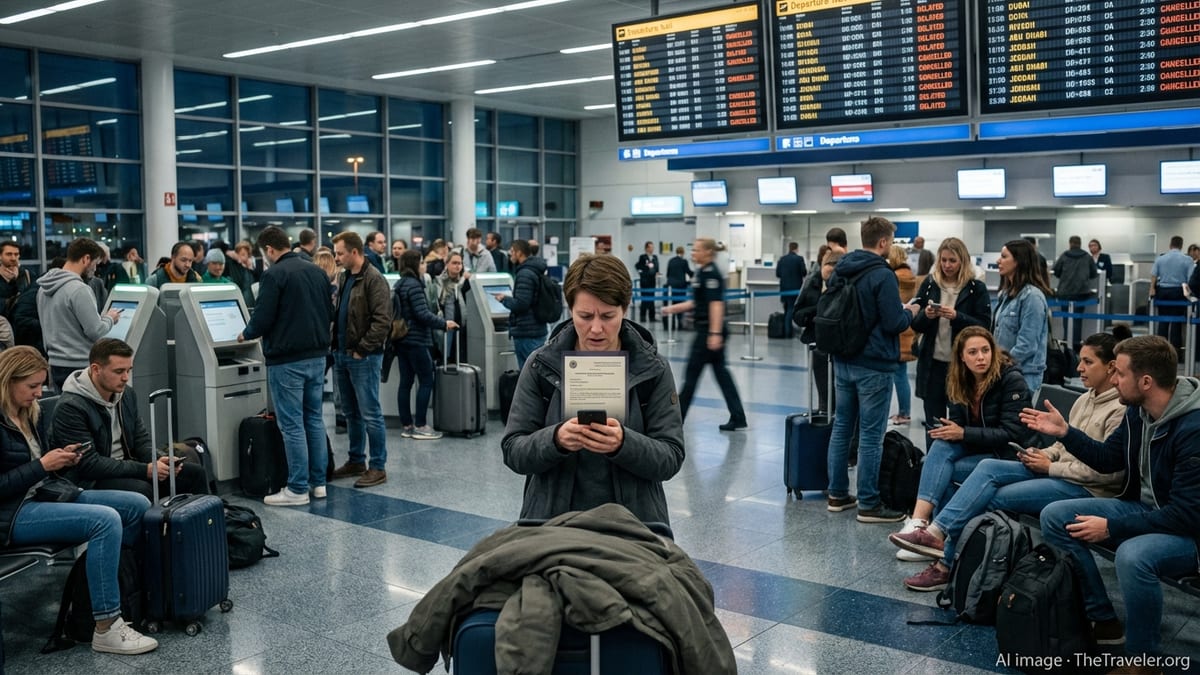
Middle East Conflict Turns Routine Trips Into High-Risk Journeys
The latest escalation involving U.S. and Israeli strikes on Iran and subsequent retaliatory attacks has rapidly transformed one of the world’s busiest transit corridors into a high-risk zone. Airspace over Iran, Israel, Iraq, Syria, Kuwait, Bahrain and parts of the Gulf has been intermittently closed, forcing the suspension of thousands of flights and leaving passengers stranded at hub airports such as Dubai, Abu Dhabi and Doha.
European nationals are heavily represented among those caught up in the disruption. EU officials estimate that tens of thousands of citizens are currently in affected countries or transiting through Gulf hubs, many of them on winter sun breaks or business trips that were booked long before tensions boiled over. Airlines including Emirates, Qatar Airways and Etihad have halted or curtailed operations as authorities assess security threats to civil aviation.
In London, Dublin, Paris, Berlin and other capitals, foreign ministries have updated their travel advisories within hours, warning against travel to Iran and Israel and cautioning against non-essential trips to parts of the wider region. Officials stress that while repatriation plans are being discussed at EU level, swift assistance depends heavily on whether citizens have shared their contact details and itineraries with consular authorities.
The United Kingdom has already begun contingency planning for the potential evacuation of thousands of nationals from the Gulf, while Ireland has urged its citizens in the region to shelter in place and “register their presence” as a priority. Similar appeals are being echoed by other European governments, reflecting lessons learned from the rapid airspace shutdowns seen during the pandemic and previous regional crises.
Consular Registration Becomes a Lifeline, Not a Bureaucratic Detail
Until recently, enrolling in a consular registry was often seen as optional paperwork that many travelers skipped. The current crisis has turned that perception on its head. Across Europe, foreign ministries are reminding citizens that registration is the primary tool embassies use to map who is in a danger zone, communicate security updates, and coordinate evacuations when commercial routes fail.
Germany’s long-standing crisis list system, known as ELEFAND, is being highlighted as a model. Citizens can pre-register online or via a dedicated app, entering planned destinations and dates so that, in a fast-moving emergency, consular teams can issue targeted “Landsleute” bulletins with shelter-in-place instructions, assembly points or evacuation options. Officials emphasize that similar systems exist in most EU states, from France’s Ariane platform to national travel registries in countries such as Spain, Italy, the Netherlands and the Nordic states.
For travelers in the Middle East now, registration can determine how quickly they learn of new curfews, airport reopenings, alternative exit routes or government-organized charter flights. Without a current email address or phone number on file, consular staff may have to rely on public statements or social media appeals, a far less efficient way to reach individuals in rapidly deteriorating conditions.
European Union institutions are also playing a coordination role. Diplomats in Brussels are discussing potential joint repatriation operations, drawing on mechanisms first tested during the large-scale return of EU citizens at the start of the COVID-19 pandemic. However, officials privately acknowledge that even the most sophisticated plans rely on an accurate picture of who is where, something only comprehensive consular registration can provide.
What Registration Actually Provides for Stranded Europeans
As the crisis deepens, officials are keen to clarify what citizens can realistically expect once they sign up with an embassy or consular list. Registration does not guarantee an automatic evacuation or special treatment, but it significantly improves the chances of receiving timely, practical help tailored to local conditions.
In the immediate term, registrants typically receive security alerts explaining whether to move, shelter, avoid certain districts or remain indoors. Where airspace is partially open, embassies may share advice on which commercial routes are still operating safely or warn against risky overland journeys that cut through active conflict areas or unstable border zones.
If the situation deteriorates, registration helps authorities prioritize those most in need. Families with small children, elderly or medically vulnerable travelers, and those without local contacts are more easily identified when consular teams have access to basic profile details. In past crises, this information has guided the allocation of limited seats on evacuation flights or convoys organized in cooperation with partner countries.
Consular registration can also streamline routine but vital services that become more difficult in a conflict. These include issuing emergency travel documents to replace lost passports, liaising with local hospitals if tourists are injured, and informing relatives in Europe about a traveler’s safety. For nationals of smaller EU countries with limited diplomatic networks, the system also underpins their right to receive help from another member state’s embassy when their own is not present.
Key Steps Europeans Should Take Before and During Travel
With the situation in the Middle East evolving by the hour, European governments are urging not only those already in the region, but also anyone with upcoming trips, to take a more “professionalized” approach to travel risk. That begins several days before departure, with checks of national foreign ministry advisories and aviation safety notices, followed by registration on the relevant consular platform for every country on the itinerary, including transit hubs.
Officials recommend that travelers keep both digital and paper copies of passports, visas, and key medical documents separate from original documents in case they need to move quickly. Contact details for embassies, consulates and local emergency services should be saved offline. Travelers are also urged to maintain flexible itineraries, with contingency plans that anticipate sudden airport closures or diversions to third countries.
Once on the ground, staying reachable is critical. That means promptly updating consular registrations with local phone numbers or hotel details, monitoring alerts issued by embassies and local authorities, and avoiding non-essential movements when advised to shelter in place. Authorities caution against attempting spontaneous overland exits through conflict zones without explicit guidance, noting that such journeys can be more dangerous than waiting for coordinated evacuation efforts.
Ultimately, European officials say, the latest Middle East conflict has underlined a simple reality: modern travel, particularly through geopolitically sensitive regions, requires more than a boarding pass and travel insurance. By taking the time to register with their embassies and follow official advice, European travelers can significantly reduce their exposure to risk and increase the likelihood that, if the worst happens, help can find them in time.