

More news on this day
Holy Week travel costs across Colombia’s key urban destinations are climbing sharply for 2026, as a strong US dollar and record demand from American visitors tighten capacity in Bogotá, Cartagena and Medellín over the Easter peak.
Get the latest news straight to your inbox!
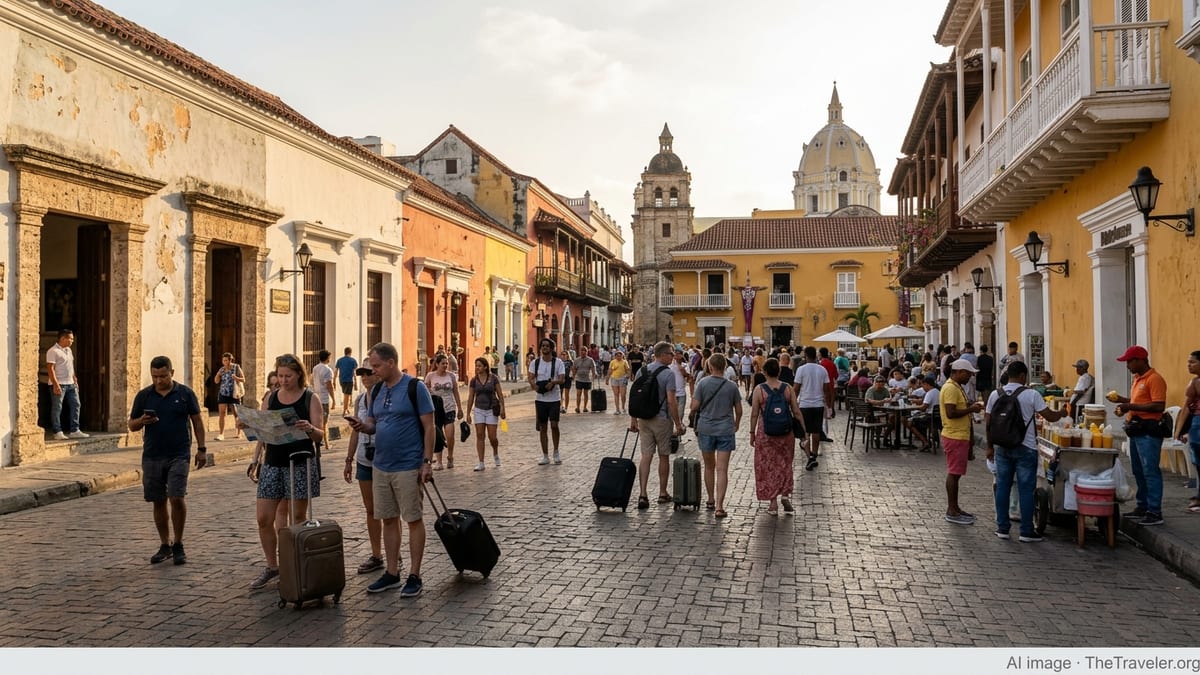
Record Visitor Growth Sets the Stage for a Costly Easter Peak
Colombia enters Semana Santa 2026 after several consecutive years of record-breaking tourism growth, creating intense pressure on prices during the country’s most important holiday travel period. Government and industry data show foreign arrivals reached new highs in 2023 and 2024, with tourism revenue approaching or surpassing the 10 billion dollar mark and international arrivals returning well above pre-pandemic levels. Published statistics also indicate that by 2025 the sector was contributing a growing share to national GDP, supported by more routes and frequencies from major US hubs.
United States travelers are now among the most significant international source markets for Colombia. Recent figures reported by national and international tourism bodies highlight that US visitors have led foreign arrival rankings, and separate coverage notes that US travel to Colombia reached roughly 1.5 million visitors in 2024. This expansion has coincided with aggressive route development by airlines linking US cities with Bogotá, Medellín and Cartagena, turning the three destinations into primary gateways for inbound leisure and business travel.
The combined effect of record tourism figures, concentrated demand around Easter and limited high-quality room stock in historic and beach districts is pushing Semana Santa 2026 into a higher price bracket. Industry-facing reports suggest that travel demand during Holy Week already outpaces other holiday periods in Colombia, and projections for 2026 point to another step up in traffic, particularly from dollar-based markets.
Bogotá Feels the Squeeze on Airfares and City Stays
As Colombia’s main international gateway, Bogotá is experiencing some of the earliest signs of a cost surge for 2026 Easter travel. El Dorado International Airport remains the country’s busiest hub for international passengers, and aviation data compiled in recent reports show that Bogotá captures well over one-third of foreign visitor flows. Airlines have expanded frequencies from large US cities, but this additional capacity is being rapidly absorbed by growing leisure and visiting-friends-and-relatives segments planning spring trips.
Search data from online travel agencies and fare trackers for late March and early April 2026 show higher average roundtrip prices between US hubs and Bogotá compared with equivalent weeks in 2025. Publicly available pricing snapshots indicate double-digit percentage increases on popular routes when travelers search within three months of departure, with the steepest jumps on nonstops from cities such as Miami, New York and Atlanta. Dynamic pricing models appear to be reacting quickly to compressed seat availability around Palm Sunday and the Easter weekend.
Accommodation patterns in Bogotá are also shifting. Sector reports emphasize that roughly 40 percent of Colombia’s hotel capacity is concentrated in the Bogotá–Medellín–Cartagena triangle, but much of the premium inventory in the capital is clustered in business districts and upscale neighborhoods. For Holy Week 2026, rate monitoring by travel platforms points to rising nightly prices in areas favored by international tourists, including Chapinero, Zona Rosa and the historic La Candelaria district, especially for full-service and boutique properties. Budget options remain, but these are booking further in advance than in prior years, narrowing last-minute choices for US visitors.
Cartagena’s Coastal Appeal Translates Into Steep Holiday Premiums
Cartagena is once again emerging as one of the most expensive Colombian destinations for 2026 Holy Week, reflecting its position as a flagship Caribbean city for both domestic and foreign travelers. Tourism-focused analyses describe Cartagena as an iconic destination that attracted more than 800,000 international tourists in 2024 and earned regional awards for romance and honeymoon travel. Its combination of UNESCO-listed historic streets and nearby beaches makes the city a natural magnet for Easter travelers from colder US climates.
Hotel market data and booking-engine snapshots show pronounced rate spikes across Cartagena’s walled city, Getsemaní and beachfront Bocagrande during the 2026 Holy Week period. Average nightly prices at upscale properties in the colonial center are trending significantly above 2025 levels, with many properties enforcing minimum-stay requirements over the Easter weekend. Even midscale hotels and well-rated guesthouses indicate reduced availability for stays that include Good Friday, suggesting that international demand is layering on top of strong domestic holiday travel.
Local tourism intelligence also highlights a tight balance between supply and demand along the coast. While new hotel projects and branded resorts have arrived in recent years, the most sought-after inventory in restored colonial mansions and seafront towers remains limited. Publicly accessible booking data for late March 2026 already show high occupancy forecasts, and fare comparisons on routes from US cities to Cartagena indicate solid price premiums on direct and one-stop itineraries that include return travel on Easter Monday.
Medellín Emerges as a Hotspot for US Leisure Travelers
Medellín, long known for its year-round spring-like climate and urban transformation, is consolidating its role as a major international gateway and Easter-time destination. Recent tourism statistics analyzed by private consultancies show that Medellín’s international arrivals have climbed past the one-million mark, giving the city close to one-quarter of Colombia’s foreign visitor share. A growing list of direct and one-stop connections from the United States has made it increasingly attractive to younger leisure travelers, digital workers and long-stay visitors.
For Holy Week 2026, public airfare and accommodation data indicate that Medellín is seeing rate patterns more commonly associated with coastal resorts. Airline pricing tools display strong yields on routes touching the city’s José María Córdova International Airport during the Easter timeframe, particularly for departures from US gateways in Florida and the US Northeast. While Medellín historically saw some softening in business travel during Semana Santa, the rise of lifestyle tourism is filling that gap, reducing the likelihood of shoulder-season bargains.
Hotel and short-stay rental markets in Medellín’s El Poblado and Laureles districts are also tightening. Industry reports point to sustained international demand for furnished apartments and boutique hotels that cater to remote workers and long-weekend visitors. For Easter 2026, listing data from major rental platforms signal both higher nightly rates in popular neighborhoods and a decrease in available entire-home options compared with the same period a year earlier, a trend consistent with increased US-origin bookings.
Strong Dollar and Capacity Constraints Push Costs Higher for 2026
Underlying Colombia’s Holy Week 2026 price surge is a currency dynamic that favors US travelers’ purchasing power while simultaneously attracting even more dollar-based demand. Over recent years the Colombian peso has experienced periods of depreciation against the US dollar, and financial-market reporting through 2024 and 2025 has repeatedly highlighted the relative value Colombia offers to Americans in terms of dining, accommodation and domestic transport. As travelers recognize that their dollars go further on the ground, interest in peak-period trips has grown.
However, this value perception is colliding with structural capacity constraints. Studies on Colombia’s tourism infrastructure indicate that Bogotá, Medellín and Cartagena concentrate a significant share of international-standard hotel rooms, event venues and airlift, which means sudden surges in demand are quickly reflected in prices. With Colombia targeting ambitious international arrival goals by 2026 and continuing to expand air connectivity, Holy Week sits at the intersection of strategic growth and operational limits.
Publicly available booking trends for March and April 2026 suggest that US-based travelers are reserving flights and accommodations earlier than in previous years, contributing to upward pressure on fares and room rates as algorithms adjust to dwindling inventory. Travel analysts observing these patterns note that Colombia’s main cities are evolving into classic “book-early” markets for major holidays. For those planning an Easter trip to Bogotá, Cartagena or Medellín in 2026, the data indicate that waiting may increasingly mean paying a premium, even in a destination still widely perceived as affordable by US standards.