

More news on this day
Tens of thousands of airline passengers across the United States are facing cascading disruption today as more than 2,063 flights are delayed and at least 142 are canceled at major hubs including Miami, New York, Chicago, Boston, Newark and Seattle, snarling operations for American Airlines, JetBlue, United Airlines, Spirit Airlines, SkyWest and other carriers.
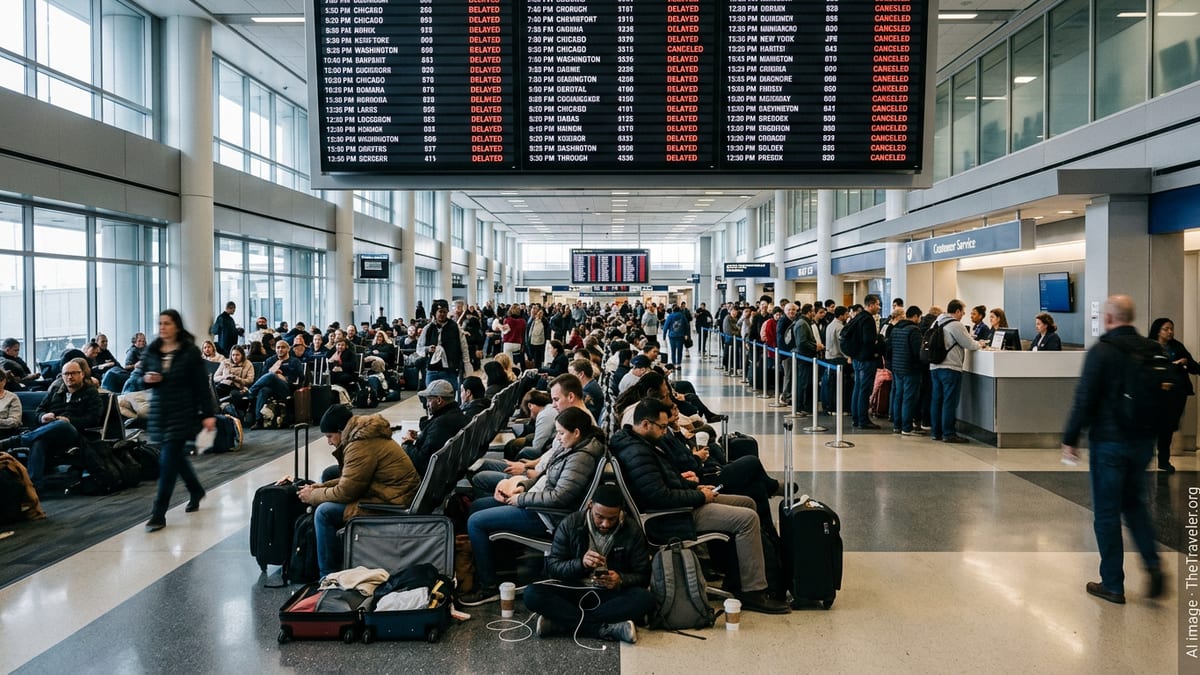
Major Hubs Buckle Under Mounting Operational Strain
From Miami International to New York’s trio of airports and on to Chicago, Boston, Newark and Seattle, departure boards turned into walls of red as a fresh wave of delays rippled through the system. While each airport is battling its own mix of local weather, congestion and staffing challenges, the combined effect has been a sharp squeeze on already fragile schedules.
Chicago O’Hare, one of the country’s most important connecting hubs, has been under particular scrutiny as regulators and airlines debate how to rein in overscheduling during peak hours. Any slowdown there quickly reverberates nationwide, pinching capacity on routes that connect smaller and mid-size cities to the wider network.
Along the East Coast, Boston Logan, Newark Liberty and New York’s airports remain especially vulnerable after a punishing winter season in which major storms repeatedly forced airlines to slash departures. Even as runways are cleared and skies improve, crews and aircraft are still playing catch-up, leaving little buffer when new disruptions arise.
On the opposite coast, Seattle-Tacoma International Airport is seeing its own knock-on delays, particularly on transcontinental and cross-border routes. That has complicated plans for travelers heading to and from the Pacific Northwest and put further pressure on carriers banking on strong spring demand.
Airlines Struggle to Recover Across Complex Networks
The latest tally of 2,063 delays and 142 cancellations underscores how tightly wound airline schedules remain, with little resilience when bad weather or airspace constraints hit key nodes. American Airlines, JetBlue, United Airlines, Spirit Airlines, SkyWest and regional partners all have aircraft and crews out of position, extending recovery times and stranding passengers far from their intended destinations.
Carriers are juggling multiple headwinds. Residual winter weather in the Northeast and Midwest, air traffic management initiatives designed to ease congestion, and ongoing staffing gaps in some operational roles are converging with a busy travel period. Together, they create a scenario where a problem in one city can cause rolling delays across multiple regions for much of the day.
Industry analysts note that the pattern is becoming increasingly familiar. Intensifying seasonal storms, chronic congestion at certain hubs and packed load factors mean airlines have fewer empty seats and spare aircraft available to absorb shocks. As a result, even when most flights do eventually operate, many leave hours behind schedule and with long standby lists.
Regional carriers such as SkyWest, which feed passengers from smaller communities into major hubs, are particularly exposed. When mainline partners cut frequencies or temporarily shutter certain routes to reset schedules, those upstream flights are often among the first to be reduced or retimed, shrinking options for travelers outside big metro areas.
Passengers Face Long Lines, Missed Connections and Limited Options
At airports from Miami to Seattle, travelers reported long security lines, crowded gate areas and a scramble for information as departure times repeatedly shifted. Missed connections have become a defining feature of the day’s disruption, with some passengers forced to overnight unexpectedly or accept lengthy reroutes through secondary hubs.
With so many flights running behind schedule, securing a same-day alternative has proven difficult, especially on popular business and sunbelt routes. Many services are operating close to full, leaving airlines with limited flexibility to re-accommodate disrupted customers without bumping others or further overloading crews and equipment.
Families returning from winter getaways, business travelers facing critical meetings and international passengers connecting to or from long-haul services are all caught in the tangle. Social media posts from stranded travelers feature images of packed terminals, lines snaking through concourses and children sleeping across rows of seats as parents wait for updates from carriers.
Airport staff and airline agents on the ground are bearing the brunt of traveler frustration, even as they work through high volumes of rebooking requests and explanations of compensation rules that vary by airline and by reason for delay. For many front-line workers, the day marks yet another test of resilience in an industry that has rarely had a sustained period of calm since the pandemic.
What Travelers Can Do if Their Flight Is Affected
With disruption spread across multiple hubs and carriers, travel planners recommend that passengers be proactive. The most immediate step is to monitor airline mobile apps and text alerts, which typically provide the earliest notice of gate changes, rolling delays or cancellations and allow customers to rebook digitally before call centers and ticket counters become overwhelmed.
Passengers whose flights are significantly delayed or canceled should review their carrier’s policies on rebooking, meal vouchers and hotel accommodations, which are generally more generous when the cause is operational rather than weather-related. Even when rules do not require assistance, some airlines will offer travel credits or flexible change options as a gesture of goodwill during severe disruptions.
Experts also advise travelers to think creatively about routings. Flying into or out of nearby secondary airports, accepting a connection instead of a nonstop or shifting to an early morning or late-night departure may open up options that are otherwise unavailable on peak daytime flights. For those who must travel immediately, splitting large groups across multiple flights can increase the chances that at least some members arrive on time.
For future trips, building in longer connection windows, traveling with carry-on luggage where possible and avoiding the last flight of the day on critical routes can help reduce the risk of being stranded when the system comes under strain. While such strategies cannot eliminate the impact of large-scale disruption, they can make individual travelers more resilient in an increasingly unpredictable air travel environment.
Broader Questions Over Resilience of the US Air Travel System
The latest wave of delays and cancellations is renewing questions about the overall resilience of the US aviation network. Regulators have already signaled concern about overscheduling at busy airports and the strain that concentrated peak operations can place on air traffic control, ground handling and terminal infrastructure.
Airlines, for their part, argue that they are investing heavily in new aircraft, upgraded technology systems and improved crew planning to better withstand surges and shocks. Yet they also face complex external pressures, from more volatile weather patterns to geopolitical tensions that are reshaping flight paths and aircraft utilization across entire fleets.
For travelers, the immediate focus remains on simply getting where they need to go. But for airport authorities, carriers and policymakers, days like this serve as a reminder that marginal capacity and just-in-time scheduling leave little room for error. As demand for air travel continues to grow, finding ways to add flexibility back into the system is likely to remain at the center of industry debates.
Until those structural issues are addressed, scenes of packed terminals, crowded customer service lines and aircraft waiting in long queues for departure slots are likely to reappear, especially during busy travel periods and active weather seasons. For now, passengers caught in today’s disruption are the latest to bear the brunt of a system struggling to keep pace with both external shocks and its own complexity.