

More news on this day
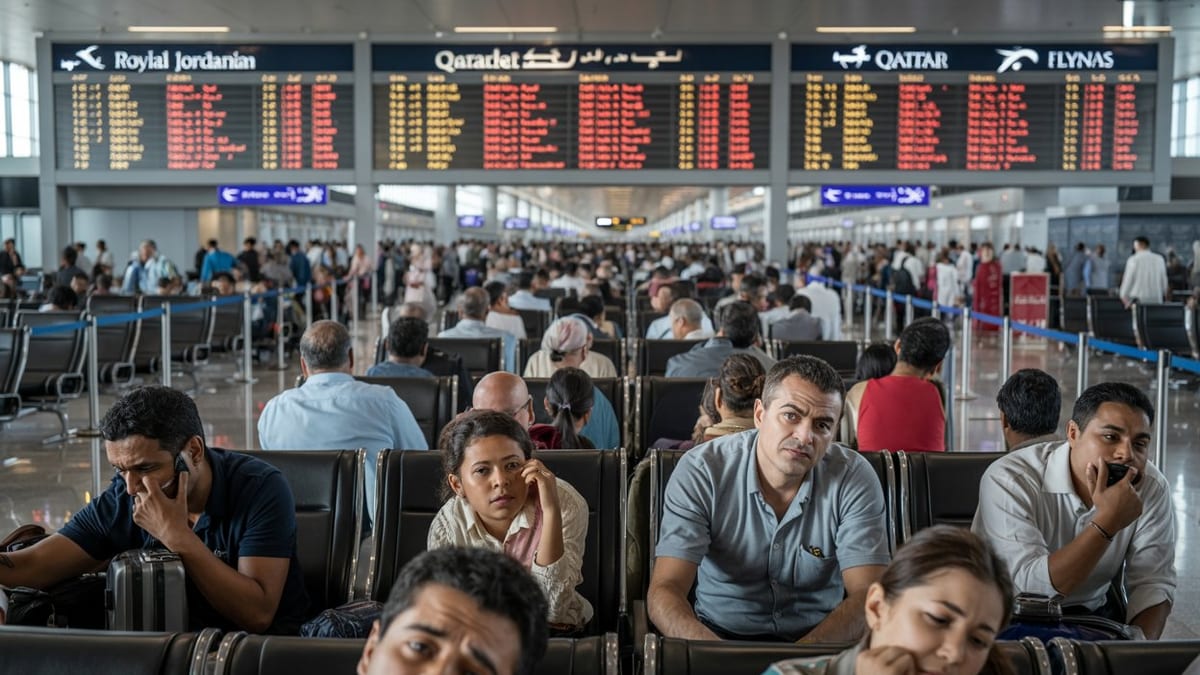
Air travelers across the southern United States are facing a new round of disruption as dozens of flights are canceled and hundreds more delayed at major hubs in Georgia, California, Texas and Florida, with published data showing Delta Air Lines, Spirit Airlines, American Airlines and Lufthansa among the carriers experiencing operational strain and leaving some passengers stranded overnight.
Get the latest news straight to your inbox!
Targeted Cancellations and Widespread Delays Across Four States
Operational data compiled from flight-tracking platforms and aviation industry coverage indicates that at least 84 flights have been canceled and roughly 477 affected by delays across key airports in Georgia, California, Texas and Florida. The pattern reflects a familiar mix of concentrated cancellations on certain routes and rolling delays that ripple through already tight schedules.
Atlanta, the primary hub for Delta Air Lines, continues to act as a pressure point for the Southeast, with cancellations and long delays affecting both domestic and international services. In Florida, busy leisure gateways such as Miami, Orlando and Fort Lauderdale appear particularly exposed when weather or staffing issues intersect with peak demand periods, leaving limited spare capacity to rebook passengers.
On the West Coast, California hubs including Los Angeles and San Francisco have reported disrupted departures and arrivals, complicating long-haul connections to Europe and Latin America. In Texas, Dallas Fort Worth and Houston have seen knock-on impacts as delayed inbound aircraft and tight crew rotations reduce on-time departures.
The cumulative effect is a travel landscape in which relatively modest raw cancellation numbers can still translate into significant passenger pain, as missed connections, aircraft reassignments and crew hour limits spread the disruption throughout the day.
Airlines Under Strain: Delta, Spirit, American and Lufthansa
Publicly available cancel and delay tallies show that Delta Air Lines and American Airlines continue to feature prominently in disruption statistics, reflecting their dominant positions in key hubs such as Atlanta, Los Angeles, Dallas Fort Worth and Miami. Low cost carrier Spirit Airlines also appears among the hardest-hit operators, particularly on dense short-haul routes popular with leisure travelers.
Industry analysis notes that Spirit’s lean scheduling model, which keeps aircraft in near-constant use, offers little margin when a single aircraft encounters a mechanical issue or weather diversion. Once one leg falls behind, the ripple effect can leave later flights without an available plane or crew, resulting in same-day or next-day rebookings and, in some cases, travelers forced to overnight unexpectedly.
American Airlines faces similar pressures at its sprawling Texas and Florida hubs, where high-frequency schedules mean that air traffic control restrictions or thunderstorms can quickly overwhelm available gates and crew rosters. Delta, meanwhile, remains closely watched after last year’s technology-linked disruption, and any fresh wave of delays or cancellations at its Atlanta home base carries outsized national consequences for connecting passengers.
Long-haul carrier Lufthansa is also appearing in disruption summaries, illustrating how delays in U.S. gateways can spill into transatlantic operations. When an inbound aircraft from Europe arrives late into congested airports like Los Angeles, Houston or Miami, turnarounds can be pushed back, forcing schedule changes that affect both U.S. and European passengers.
Why Passengers Are Being Stranded
Reports from affected travelers describe familiar scenarios: late-night cancellations once rolling delays exhaust crew duty hours, diversion of aircraft to less-affected airports, and limited remaining seats on alternative departures. When cancellations occur after most evening flights have already left, stranded travelers often have no same-day options, particularly from smaller cities feeding into Georgia, Texas or Florida hubs.
Airlines may provide hotel and meal vouchers in some situations, but these are not guaranteed, especially when carriers classify the cause as weather-related or outside their control. Even when vouchers are offered, nearby hotels can quickly sell out around major hubs, leaving passengers to seek accommodation farther from the airport or stay overnight in terminal seating areas.
Compounding the frustration, gate information and departure times can change repeatedly over short intervals as airline operations teams attempt to reshuffle aircraft and crews. Travelers who are already at the airport often experience a series of short rolling delays that eventually culminate in cancellation late in the evening, reducing their rebooking choices.
The combination of high load factors, lean staffing and tight aircraft utilization means that, once a disruption day begins, there are few spare seats available on remaining flights. This is especially true on popular routes linking California, Texas, Florida and Georgia, where many departures are already close to full during peak periods.
What Travelers Can Do Before and During Their Trip
Travel experts and consumer advocates advise passengers to approach upcoming trips through these affected hubs with extra caution, particularly for travel involving tight connections or last flights of the day. Booking earlier departures, even on the same route, can provide additional buffer time for missed connections and make same-day rebooking more realistic if a flight is canceled.
Before leaving for the airport, travelers are encouraged to check real-time information in airline apps, on airport departure boards and through independent tracking tools. Airline mobile apps in particular often show gate changes and creeping delays earlier than overhead monitors, giving passengers more time to adjust their plans or request assistance.
At the airport, passengers whose flights face extended delays may find that proactively asking about re-routing options, including connections through less-disrupted hubs, can sometimes yield better outcomes than waiting for automatic rebooking. Those with critical connections to cruises, tours or international departures may wish to build in overnight stops or additional buffer days.
Travel insurance and credit card trip protection policies can also be relevant, particularly for covering nonrefundable hotel stays, pre-paid activities or additional nights required because of cancellations. The fine print varies widely, however, so checking coverage terms well before departure is essential.
Understanding Your Rights and Managing Expectations
Transportation rules in the United States generally do not require airlines to compensate passengers for delays or cancellations caused by weather or air traffic control constraints, but carriers do publish detailed customer service commitments outlining when they will provide meal vouchers, hotel rooms and rebooking assistance. Consumer resources recommend reviewing the relevant airline’s service policy pages before travel so expectations are clear in the event of disruption.
For cancellations within an airline’s control, such as certain mechanical or crew-related issues, travelers are typically entitled to a refund if they choose not to travel, even on nonrefundable tickets. In many cases, airlines will instead attempt to rebook passengers on the next available flight at no additional fare, but this can still result in lengthy waits when seats are scarce.
With cancellations and delays now a recurring feature of peak travel periods, industry observers suggest that travelers plan around the possibility of disruption rather than treating it as an anomaly. That may mean avoiding tight self-planned connections between separate tickets, steering away from last-flight-of-the-day options on critical routes, and keeping essential items such as medication and chargers in carry-on bags in case checked luggage is separated during irregular operations.
As Georgia, California, Texas and Florida navigate this latest wave of flight turmoil, passengers connecting through their major hubs are likely to feel the effects for at least several days. For many, the most effective strategy will be a combination of careful advance planning, constant monitoring of flight status, and a flexible approach to routes and timing when conditions begin to deteriorate.