

More news on this day
The United States has issued its highest-level travel alert for Iran and Iraq, warning citizens not to travel to either country as rapidly escalating conflict with Iran triggers widespread airspace closures, major flight disruptions and heightened security risks across the wider Middle East.
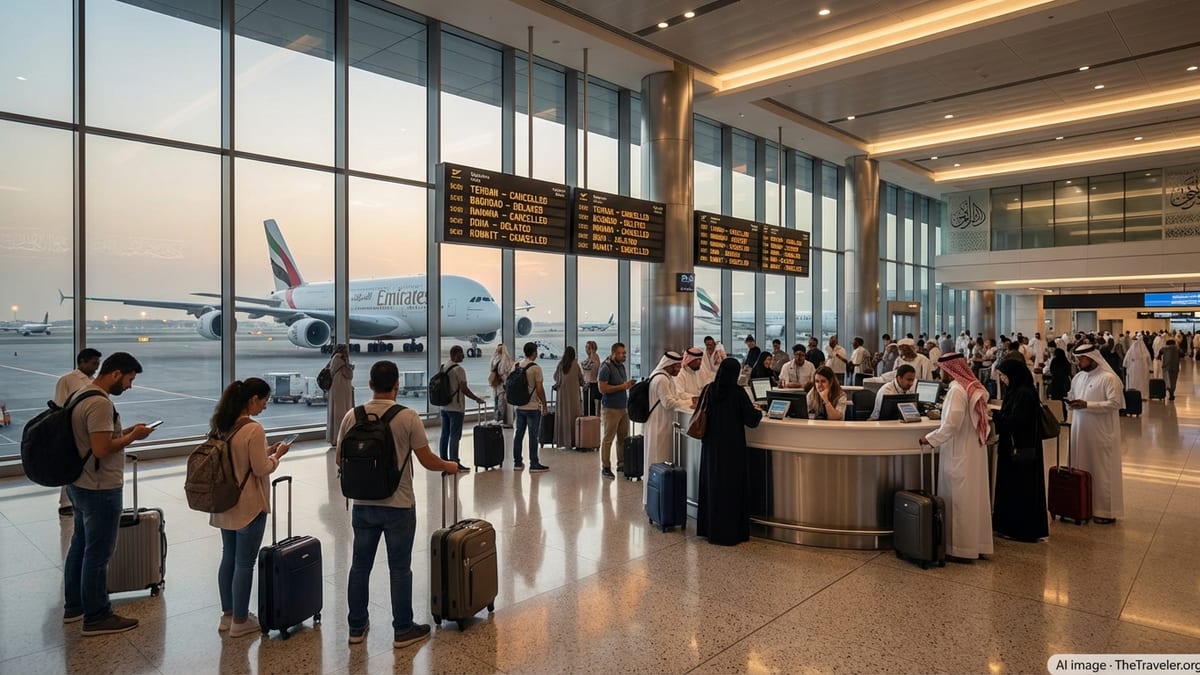
Top-Level Advisories amid Expanding Regional Conflict
The State Department’s latest guidance elevates Iran and Iraq to a strict “Do Not Travel” status, reflecting what officials describe as an unpredictable and highly volatile security environment. The move follows the launch of US combat operations in Iran on February 28 and subsequent regional attacks, which have sharply increased the risk to civilians and civilian infrastructure.
Travel warnings for nearby Gulf states have also been tightened, underscoring Washington’s concern that the conflict could spill over far beyond Iran’s borders. Bahrain, Qatar and Kuwait have all been raised to Level 3, meaning US citizens are urged to reconsider any non-essential trips as the threat of drone and missile strikes, protests and sudden border or airspace closures grows.
In addition to country-specific alerts, the State Department issued a worldwide caution at the end of February, advising Americans everywhere to exercise increased vigilance. Officials said US citizens in the Middle East in particular should closely monitor embassy security alerts, keep travel documents up to date and maintain contingency plans to depart at short notice if conditions deteriorate further.
US government employees and their families in several Gulf countries have been authorized to leave, a step that typically signals Washington’s expectation of sustained instability rather than a brief spike in tensions. Authorities warned that local security services may be stretched thin, raising the possibility of reduced consular access and slower emergency responses for foreign nationals.
Airspace Closures and Systemwide Flight Disruptions
The escalation has upended aviation across one of the world’s most important air corridors, with Iran, Iraq, Kuwait, Bahrain and Qatar all closing their airspace following the initial strikes. Airlines have been forced to cancel or divert scores of flights that normally traverse the region, while carriers based in the Gulf have temporarily suspended many services.
Dubai International Airport, routinely the world’s busiest hub for international passenger traffic, halted departures and arrivals after the offensive, creating a cascading impact for connecting itineraries between Europe, Asia, Africa and the Americas. Flight-tracking data showed aircraft rerouting widely to avoid the affected airspace, lengthening flight times and adding operational costs for airlines.
Emirates and other major Gulf carriers extended suspensions of flights through at least March 3 as air navigation authorities reviewed security and surveillance conditions. Aviation regulators warned of heightened risks to civil aircraft from potential miscalculation or misidentification in crowded skies, particularly where military operations are ongoing.
Industry analysts say the disruptions echo earlier crises in the region but are more geographically extensive, affecting north-south and east-west routes simultaneously. Travelers have been advised to expect rolling cancellations, last-minute rerouting and significant delays over the coming days, even on flights not directly serving the Middle East.
Impact on Travelers and Tourism Operators
For travelers already in Iran or Iraq, the new alerts urge immediate reassessment of safety plans and, where possible, departure via commercial options that remain available. Those in neighboring countries have been encouraged to stay in close contact with tour operators and airlines, as itineraries involving regional connections are particularly vulnerable to short-notice changes.
Tourism boards and travel companies across the Middle East are now facing a surge of cancellations and deferrals, particularly for multi-country itineraries that use Gulf hubs as gateways. Travel agencies in Europe, North America and Asia report clients seeking alternative routes via southern Europe, Central Asia or direct transatlantic services to bypass the affected airspace.
Insurance providers are also reassessing coverage for travel to high-risk areas, with some policies excluding trips to countries under Level 4 advisories. Travelers are being urged to review the fine print of existing policies, including clauses related to war, terrorism and government advisories, before attempting to proceed with any Middle East travel plans in the near term.
Business travel has been hit especially hard, as corporations activate contingency plans, postpone non-essential visits and move regional meetings online. Firms with operations in energy, logistics and construction sectors are tracking developments closely, given the region’s central role in global supply chains and fuel markets.
Heightened Security Concerns for Americans Abroad
Beyond the immediate travel disruptions, US officials are warning of broader security risks to American citizens and facilities worldwide. The global caution issued in late February notes the possibility of demonstrations, anti-US sentiment and opportunistic attacks on soft targets in response to the operations in Iran.
Embassies across the Middle East have amplified messages urging citizens to avoid large gatherings, maintain a low profile and follow local media as well as official alerts. Travelers are being advised to ensure that mobile phones remain charged, that they carry copies of key documents, and that family members know how to reach them if communications networks become overloaded or disrupted.
Security experts say the combination of military action, heightened rhetoric and constrained aviation corridors increases the risk of localized incidents in countries that might otherwise be considered relatively stable. They also note that sporadic cyber incidents targeting airports and airlines cannot be ruled out, further complicating the travel picture if reservation systems or flight-information platforms are affected.
The State Department continues to recommend that Americans abroad enroll in its traveler enrollment program to receive real-time alerts. Officials emphasize that local conditions can change with little notice, and that individual risk profiles may vary significantly depending on location, purpose of travel and reliance on commercial air routes through the region.
What Travelers Should Expect in the Coming Days
While the trajectory of the conflict remains uncertain, travel experts anticipate that airspace restrictions and elevated advisories will persist at least through the coming week, with the possibility of further extensions if hostilities continue. Airlines are likely to adjust schedules in phases, restoring routes only when regulators and security services judge the skies sufficiently safe.
Travelers planning future trips involving the Middle East are being urged to build in additional flexibility, including longer layovers, refundable or changeable tickets and accommodation bookings with lenient cancellation policies. Those who can postpone non-essential travel are being encouraged to do so until a clearer picture emerges.
For now, the State Department’s top-level alerts for Iran and Iraq, combined with strengthened warnings across neighboring states, signal a period of exceptional uncertainty for international travel through the region. As governments, airlines and travelers adapt, the Middle East’s role as a global aviation crossroads faces a rare and severe test, with ripple effects that are likely to be felt well beyond its borders.