


More news on this day
The United States Embassy in Lisbon has issued a security alert advising American citizens in Portugal to avoid Rossio Square in central Lisbon, as well as Praça Dom João I in Porto, following weeks of housing and cost-of-living protests that have increasingly drawn a heavy police presence and sporadic clashes.
Get the latest news straight to your inbox!
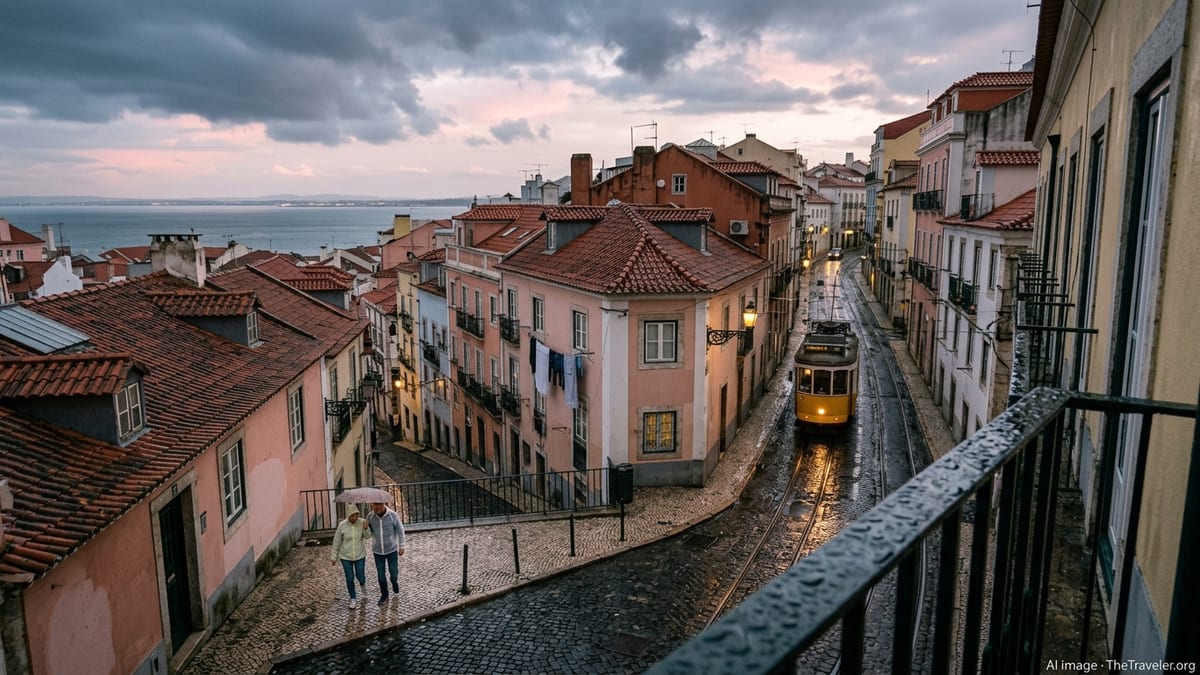
Security Alert Targets Two Central Protest Hubs
According to publicly available information from the US Embassy’s latest security notice, released on 1 November 2026, American citizens are urged to steer clear of Rossio Square in Lisbon and Praça Dom João I in Porto. The alert cites ongoing demonstrations over housing availability and rising living costs, which have turned both squares into focal points for marches, encampments and police operations.
Published coverage indicates that protest camps first appeared at Rossio Square in September, growing into a semi-permanent presence of tents and banners positioned in the middle of one of Lisbon’s busiest tourist nodes. Subsequent weekends have seen repeated police clearances of the encampments, including operations carried out before dawn, followed by renewed gatherings later in the day.
Local media reports describe similar dynamics in Porto, where Praça Dom João I has hosted nightly rallies and temporary encampments highlighting the strain of soaring rents and stagnant wages. The US alert frames both squares as predictable flashpoints for sudden crowd surges, traffic disruption and confrontations at short notice, especially in late afternoon and evening.
The warning is narrowly focused on these protest hubs and does not change Portugal’s overall travel advisory level, which remains at Level 1, indicating that travelers are advised to exercise normal precautions countrywide. The embassy alert instead functions as a location-specific caution for Americans already in Portugal or planning near-term travel to Lisbon and Porto.
Housing Protests Reshape Central Lisbon
Rossio Square, officially Praça Dom Pedro IV, is one of Lisbon’s most recognizable public spaces, situated between the Baixa district and Avenida da Liberdade. Under ordinary conditions the square is a crossroads for commuters, tourists, street vendors and café terraces. Since mid-September, however, it has also served as a visible symbol of Portugal’s housing pressures, with tents and protest banners occupying parts of the cobbled plaza.
Reporting on the housing movement notes that activists, tenants’ associations and trade union groups have rallied around Rossio to call attention to vacant housing stock, short-term rentals and the difficulty of securing long-term leases in central neighborhoods. Weekend marches often begin or end at Rossio, temporarily blocking surrounding streets and tram routes and drawing sizable crowds through the nearby metro station.
Accounts from the past month highlight periods of tension between demonstrators and police during clearance operations, particularly when officers attempted to dismantle or relocate encampments. While the majority of gatherings have been described as peaceful, isolated scuffles, arrests and injuries have been recorded in both Lisbon and Porto, raising concerns about the potential for sudden escalations in otherwise calm settings.
These dynamics have altered the atmosphere around Rossio for visitors. Travel advisories and local commentary increasingly recommend that tourists avoid the square during scheduled demonstrations or when police lines are visible, not because of a generalized crime surge but due to the unpredictability of crowd behavior, rapid shifts in traffic patterns and the risk of being caught between protesters and security forces.
What the Alert Means for US Travelers in Portugal
For Americans planning trips to Portugal, the new warning does not amount to a call to cancel travel. The State Department’s broader advisory continues to rate Portugal as one of Europe’s lower-risk destinations for visitors, and no nationwide restrictions specific to US citizens have been announced in connection with the housing protests.
The guidance instead centers on situational awareness in Lisbon and Porto. Travelers are encouraged by publicly available safety recommendations to monitor local news, stay attentive to announcements on public transport and adjust itineraries away from Rossio and Praça Dom João I on days when large gatherings are expected. In practice, that can mean rerouting walking tours through nearby avenues, choosing alternative meeting points and allowing extra time for airport or train transfers that might pass close to demonstration zones.
Reports on the protests emphasize that they have not targeted foreign tourists specifically. The main risks identified relate to crowd density, jostling, sudden stampedes if tear gas or batons are deployed and opportunistic petty crime in tightly packed conditions. Travelers who inadvertently approach a demonstration area are generally advised in public guidance to move away calmly, avoid photographing police operations at close range and seek alternative routes along side streets or parallel avenues.
Beyond the two highlighted squares, shopping districts, riverfront promenades and historic neighborhoods across Lisbon and Porto continue to receive visitors, with many hotels and tour operators indicating that operations are proceeding on regular schedules. Even so, travel-security briefings recommend planning flexible sightseeing days that can be adjusted at short notice if protests or police operations spread into adjacent streets.
Balancing Everyday Safety With Protest Disruption
Independent safety assessments continue to describe Lisbon and Porto as comparatively safe European cities for visitors, particularly in terms of violent crime. Most documented security concerns for tourists involve pickpocketing in crowded areas, bag snatching at viewpoints or on historic trams, and scams around nightlife hubs. The Rossio alert, therefore, represents an added layer of caution related to public-order events rather than a fundamental reassessment of general crime conditions.
Travel resources focusing on Lisbon note that Rossio, Baixa, Chiado and nearby transport hubs already required basic city awareness before the protests, with recurring mentions of street drug hawkers, distraction theft and the need to keep valuables out of sight. The current demonstrations add another factor, as marches and encampments can swell quickly and change the feel of streets that might otherwise be used as routine pedestrian corridors.
Published travel guidance suggests that visitors who still wish to pass near Rossio or central Porto should do so during daylight hours, keep an eye on nearby crowds and avoid lingering if they notice chanting, banners, sound systems or helmeted police forming lines. Simple measures such as carrying only essential documents, using zipped bags worn across the body and pre-saving accommodation details on a phone can help reduce stress if routes need to be altered on the fly.
Many Lisbon residents continue to use central districts daily for commuting and errands, but the protest encampments and frequent police interventions have introduced a level of unpredictability that foreign visitors may not anticipate. The US alert effectively serves as a prompt for Americans to factor this volatility into their travel planning, particularly for those unfamiliar with navigating large demonstrations abroad.
Planning Around Rossio While Still Visiting Lisbon
For future visitors to Lisbon, the embassy warning does not preclude exploring the city’s historic center; it simply narrows the spaces where vigilance should be highest. Alternative routes between major sights can be mapped to skirt Rossio entirely, threading instead through parallel streets in Baixa or approaching viewpoints and museums from different directions.
Tour providers and accommodation operators in Lisbon have begun adjusting meeting points and suggested walking paths to reduce the likelihood that guests will pass directly through the protest encampment area. Travelers booking guided activities may find that meeting locations have shifted a few blocks away from Rossio or Praça Dom João I, a practical response intended to minimize disruption if a march or police operation coincides with a tour departure time.
Publicly available travel-security advice also encourages visitors to build redundancy into their daily schedules by identifying at least one back-up route between their accommodation and key transport hubs, such as Santa Apolónia station or Lisbon’s international airport. This can be especially important for early-morning or late-night transfers, when a spontaneous demonstration or road closure near Rossio might create delays that are harder to absorb before a fixed departure time.
As the housing protests continue to evolve, updates from consular services, local media and municipal announcements will shape how long Rossio Square and Praça Dom João I remain singled out in foreign travel alerts. For now, the US warning highlights that even destinations widely perceived as safe can present localized pockets of volatility, and that adapting on-the-ground plans is an essential part of modern urban travel.