

More news on this day
The United States has issued a worldwide travel caution following the launch of combat operations in Iran, warning Americans overseas to brace for heightened security risks and significant disruption to global air travel as regional tensions escalate.
What the New Worldwide Caution Actually Means
The State Department’s updated Worldwide Caution, last revised on February 28, 2026, urges US citizens everywhere to exercise increased vigilance, with particular emphasis on those in or transiting through the Middle East. The notice follows US combat operations in Iran and warns that unrest, demonstrations, and hostile acts against US interests could emerge far beyond the immediate conflict zone.
Unlike country-specific advisories, a worldwide caution is relatively rare and signals a broad elevation in risk rather than a precise, time-limited threat. It is designed to prompt travelers to scrutinize their itineraries, monitor local security alerts and be prepared for sudden changes in conditions, including curfews, border closures and interruptions to commercial services.
The alert underscores that Americans abroad should closely follow guidance from the nearest US embassy or consulate. Local missions are issuing their own security messages that may recommend sheltering in place, avoiding certain neighborhoods, or limiting non-essential movements as the situation in the region develops.
Officials stress that the notice does not order US citizens to cancel all international trips, but it does place the burden on travelers to assess whether their journeys are essential and to implement robust personal safety measures wherever they go.
Regional Flashpoints and Countries of Highest Concern
The Iran conflict sits at the center of the State Department’s concerns, with Iran itself already subject to a Level 4 “Do Not Travel” advisory due to armed conflict, arbitrary detention and the near-total shutdown of normal consular services. Neighboring Lebanon, Iraq and parts of Israel and the Palestinian territories are also on the highest warning tier, reflecting longstanding instability that has now been sharpened by the latest hostilities.
In recent weeks, a number of governments have urged their citizens to leave Iran and parts of the wider region while commercial options remain available, echoing US assessments that further escalation and military clashes cannot be ruled out. Several Western countries have also authorized the departure of non-essential diplomatic staff from posts in Lebanon and other nearby states as they review contingency plans.
Beyond the conflict’s immediate theater, a widening ring of states across the Gulf, including Qatar, the United Arab Emirates, Bahrain and Kuwait, has seen risk levels revised upward. The United States has already elevated Qatar to a Level 3 “Reconsider travel” rating, while advising Americans in multiple Gulf destinations to remain alert for potential protests, missile or drone incidents, and sudden changes to local security posture.
Travelers heading to or via the wider Middle East, North Africa and parts of South and Central Asia are being told to expect more intrusive security checks, sporadic street demonstrations and a greater presence of heavily armed forces at airports and transport hubs, all of which can create delays and an unpredictable operational environment.
Global Aviation Disruptions and What Flyers Can Expect
The conflict’s most immediate impact for many travelers is in the air. Following major US and Israeli strikes on Iran at the end of February, authorities in Iran, Iraq, Kuwait, Bahrain and Qatar moved to close or heavily restrict their airspace, prompting a wave of cancellations, diversions and extended routings on some of the world’s busiest long-haul corridors.
Flag carriers in the Gulf, including Emirates, Qatar Airways and Etihad, have temporarily suspended many services as they assess damage at key hubs and wait for clearer security guarantees. Thousands of flights between Europe and Asia normally overfly Iranian and Iraqi territory, and many are now being rerouted over Saudi Arabia or more northerly tracks, adding hours of flight time, higher fuel costs and increased congestion over alternative corridors.
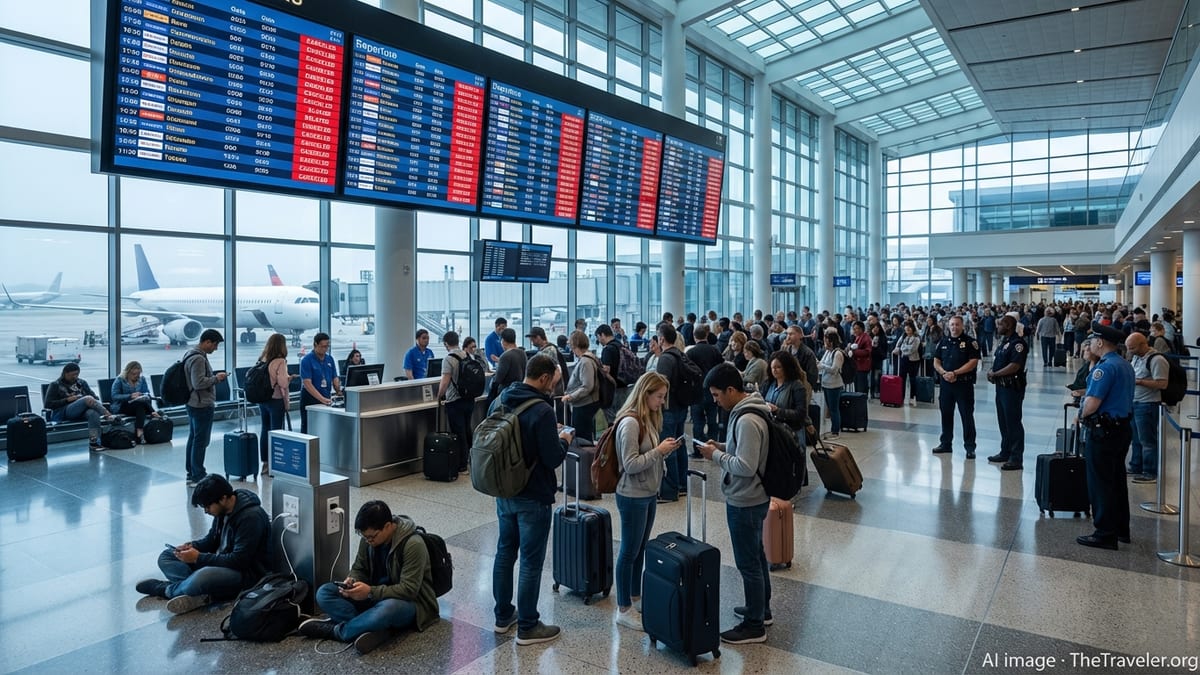
Airlines in North America, Europe and Asia have in turn trimmed or canceled scheduled services to cities across the Middle East, while long-haul flights already en route have been forced into midair course changes and unexpected landings in cities such as Istanbul and Rome. Travelers can expect a ripple effect of delays, missed connections and temporary strandings far from the actual combat zone.
Aviation and security experts say that decisions to divert or cancel flights are being made conservatively, with carriers avoiding even the possibility of missile or drone activity along their routes. Passengers are being advised to avoid nonessential airport visits in affected countries and to maintain direct contact with their airlines, which often have more up-to-date operational information than global booking platforms.
How US Travelers Should Adjust Plans and Prepare
In practical terms, the worldwide caution means that Americans planning overseas travel in the coming weeks should conduct a fresh risk review of every leg of their journey, even if their main destination lies outside the Middle East. Travelers are encouraged to check the State Department’s country pages for the latest advisory level, read any recent security alerts and understand how regional airspace closures might affect connections.
For those whose itineraries touch high-risk areas, travel security specialists recommend building extra flexibility into plans, such as longer layovers, fully refundable tickets where possible, and comprehensive travel insurance that explicitly covers war-related disruptions and evacuation support. It is also prudent to maintain a contingency plan for alternative routing, including different departure cities or modes of transport if air links are suddenly cut.
On the ground, travelers should be prepared for a heightened security presence, including armed patrols near embassies, hotels and tourist sites, and a lower tolerance from local authorities for large gatherings. Avoiding demonstrations, steering clear of sensitive government or military installations and adopting a low profile are central pieces of current expert guidance.
US citizens abroad are also being urged to keep family or friends informed of their movements, ensure that travel documents are easily accessible, and maintain redundant communication options such as local SIM cards or offline copies of important contact numbers in case networks are disrupted.
Staying Informed as the Situation Evolves
With events in Iran and the wider region changing by the day, officials emphasize that information and advice could shift quickly. Country advisories and security alerts are being updated on a rolling basis as the conflict and its spillover effects on aviation, protest activity and local security environments become clearer.
Embassies and consulates remain key sources of tailored guidance and assistance for US citizens, even as some missions reduce staff or temporarily limit services for security reasons. Travelers are advised to monitor local media, follow instructions from authorities on the ground and remain ready to alter plans if the threat environment deteriorates in their destination or transit points.
Security analysts note that while the new worldwide caution reflects a serious and evolving situation, it does not mean that all international travel has suddenly become unsafe. Instead, they describe it as a strong signal for travelers to upgrade their situational awareness, avoid unnecessary risk and factor geopolitical volatility into decisions that, only weeks ago, might have seemed routine.
For now, the message to Americans abroad is clear: stay informed, stay flexible and be prepared for a more unpredictable travel landscape as the Iran conflict reverberates through global tourism and aviation networks.