


I thought I had a solid grasp of the big players in online travel until I spent time digging into eDreams ODIGEO. I knew the eDreams name from late-night flight searches, but what surprised me most was how many people already use its brands without realizing they all belong to the same company. From Opodo in the UK to GO Voyages in France and Travellink in Scandinavia, this Barcelona-based group has quietly woven itself into everyday travel planning for millions of Europeans and a growing number of Americans.
Get the latest updates straight to your inbox!
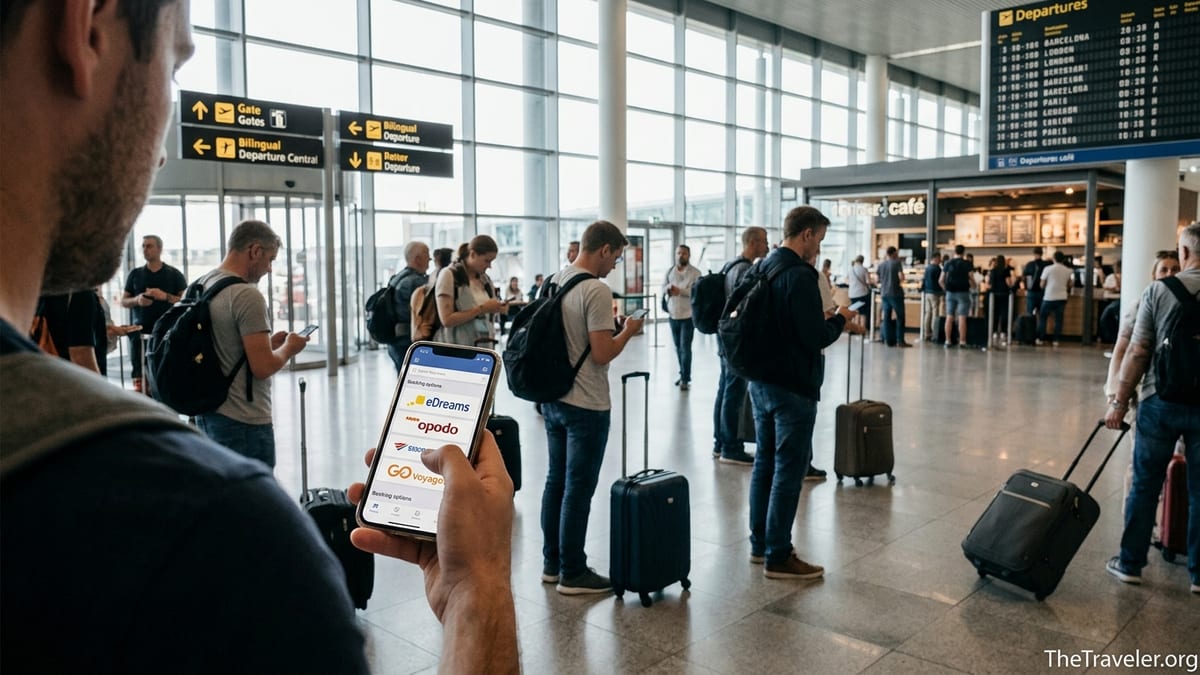
The Moment I Realized How Big eDreams ODIGEO Really Is
My wake-up call came at a small guesthouse in Porto. Over breakfast, a German couple mentioned they had booked through Opodo, a pair of French friends swore by GO Voyages, and a Spanish solo traveler talked about the deals she routinely found on eDreams. It sounded like three or four different companies, yet every confirmation email in their inbox traced back to the same parent: eDreams ODIGEO.
Back in my room, a quick search turned into a rabbit hole. eDreams ODIGEO is not just a niche European site but a group that includes eDreams, Opodo, GO Voyages, Travellink and the metasearch engine Liligo. The company operates in more than 40 countries and has built what it calls the world’s leading travel subscription platform through its Prime program. Recent company reports show millions of paying subscribers and many more occasional users booking flights, hotels, cars and packages across its various brands.
What struck me was how invisible the corporate identity is compared with the consumer brands. Travelers in London might talk about Opodo, Swedes book on Travellink, French travelers lean into GO Voyages, and Spaniards trust eDreams, each thinking they are using a local favorite. In reality, they are all part of the same machine, sharing technology, inventory and a common subscription backbone.
It reminded me of discovering that dozens of supermarket labels are owned by just a few conglomerates. In travel, however, the effect is more subtle, because you often arrive at these sites via a Google flight search, a metasearch engine or a friend’s recommendation, not knowing that the same algorithms and corporate strategy sit behind them.
From Local OTAs to a Subscription-Led Powerhouse
To understand how eDreams ODIGEO reached so many travelers, it helps to rewind to the early 2000s, when European airlines were liberalizing and online booking started to take off. eDreams, born in Spain, grew as a classic online travel agency focused on low fares. GO Voyages did something similar for the French market, while Opodo emerged from a consortium of European airlines trying to compete online.
In 2011 these businesses were brought together, and over time the group added Travellink in Scandinavia and Liligo, a metasearch engine known in France for fare comparison. Each brand kept its local flavor and language, but behind the scenes inventory, technology and commercial deals were unified. That is how the group can offer competitive prices on everything from a Madrid to Rome low cost hop to a complex multi-carrier itinerary from Stockholm to Buenos Aires.
The real pivot, though, came with the launch of Prime, eDreams ODIGEO’s subscription program. Instead of relying only on one-off booking commissions, the group set out to convince travelers to pay an annual fee in exchange for lower fares and member-only perks. By fiscal year 2024, the company was already reporting around 5.8 million Prime members, and by early 2025 it announced it had reached around 7.25 million subscribers worldwide. That is not a niche experiment; it is a scale on par with some mid-sized streaming platforms.
This subscription-first strategy means the brands are less about quick discounts and more about keeping customers in their ecosystem. For frequent travelers, especially those flying multiple times per year within Europe, that model starts to make real financial sense, which is one reason the subscriber base has grown so quickly.
How Many Travelers Already Use eDreams Brands in Everyday Life
Statistics tell part of the story: tens of millions of unique customers across 43 countries, millions of paid subscribers and a large share of online flight sales in markets like Spain, France and Scandinavia. But the scale is easier to grasp when you look at specific situations. Take a typical long weekend in Barcelona. A British couple might book their London Gatwick to Barcelona flights through Opodo after seeing a good fare in a comparison search. At the same time, a Paris-based traveler could use GO Voyages to piece together a low cost outbound with one carrier and a legacy airline on the way back, while a Spanish student grabs a cheap eDreams ticket from Madrid.
None of those travelers necessarily know or care that the same group is behind their bookings. What they notice is that they can filter for early departures, pick from a dense list of airlines and often shave a few euros off the price compared with booking directly with the carrier. If they are Prime members, they might see an extra discount applied to each leg or to their hotel stay for the same trip.
Consider another example: a family in Stockholm planning a summer holiday on the Greek island of Rhodes. In Sweden and neighboring countries, Travellink has long been a default search site, particularly for travelers who like to compare regular scheduled flights with low cost carriers. The parents might assemble flights on an airline like Aegean or a low cost competitor, add a mid-range beachfront hotel, plus a rental car for a few days. Behind the scenes, the search and booking is powered by the same systems used by eDreams and Opodo.
Travelers increasingly reach these brands on mobile. Company statements suggest that a significant proportion of bookings now come from apps, with eDreams ODIGEO highlighting that mobile booking penetration is higher than the industry average. For the traveler, that looks like an Opodo app with trip notifications, or an eDreams app displaying boarding times and gate updates, but they are all built on the same technology stack.
The Subscription Surprise: Prime and What It Actually Offers
The most surprising aspect for many travelers, including me at first, is that eDreams ODIGEO has leaned so heavily into a subscription model in an industry where most people are still used to paying per booking. Prime, which is available on brands like eDreams, Opodo and GO Voyages, offers members discounted fares on flights and often savings on hotels, cars and packages, in exchange for an annual fee that typically sits somewhere around the price of a budget one way ticket in Europe.
In practice, a Prime subscriber in Spain might see a Barcelona to Paris return flight priced 15 to 30 euros lower than a non-member, depending on the route and airline. Book two or three such trips in a year and the membership can more than pay for itself. Add a discounted hotel night in Lisbon or an airport car rental in Milan and the savings become tangible. That value proposition has clearly resonated: company disclosures show rapid compound growth in Prime members and a strategic goal to continue double-digit expansion in the coming years.
The subscription also comes with operational perks, at least on paper. Marketing materials highlight 24/7 priority customer service lines for Prime members and a more personalized booking experience. For example, frequent weekend travelers from Paris to Rome might start seeing tailored suggestions for flight times and carriers that match their past preferences, along with hotel recommendations in neighborhoods similar to where they have stayed before.
One important nuance is that Prime is not equally valuable for everyone. A traveler who flies long haul once every two years might not recoup the subscription cost, while a consultant commuting monthly between European capitals could see very meaningful savings. The model is built around repeat customers who are willing to trade a bit of loyalty for lower average prices over time.
The Other Side of Scale: Complaints, Confusion and Fine Print
No travel giant reaches tens of millions of customers without attracting criticism, and eDreams ODIGEO is no exception. Alongside impressive subscriber growth, there are also persistent complaints about how Prime is marketed and how customer service performs under stress. Browsing traveler forums and social media reveals a pattern of confusion around free trials that convert into paid subscriptions if not canceled within a set period.
Real-world accounts tell similar stories. A traveler might book a discounted Berlin to Athens ticket through eDreams after seeing a banner that mentions a Prime trial. The discount looks appealing, and amid the rush of adding baggage, choosing seats and entering passport details it is easy to miss a line in the checkout flow that enrolls the customer in a trial. Weeks later, a charge for an annual membership hits their card, and they only discover it when scanning a bank statement.
Cancelling can also be frustrating. Some customers report long call waits and difficulty finding the correct page within their account area to terminate the subscription. Others, however, note that once they reached the right phone line or navigated to the Prime section of their profile, cancellation was processed and, in some cases, recent charges were refunded within the cooling-off period allowed by local regulations.
This dual reality is important for travelers to understand. On one hand, Prime is clearly providing value to millions who use it intentionally and often. On the other, the enrollment and cancellation experiences have created enough friction that consumer advocates and online communities regularly advise travelers to read the fine print carefully, take screenshots of the booking flow and immediately check for any subscription confirmation emails after purchase.
Why So Many Travelers End Up in the eDreams Ecosystem
Part of eDreams ODIGEO’s reach comes from geography. By nurturing strong local brands in Spain, France, the UK, Germany and Scandinavia, the group covers many of Europe’s busiest travel corridors. Flight search behavior in these markets often begins on Google, on metasearch engines or via brand recall. Because eDreams, Opodo, GO Voyages and Travellink routinely appear among the top results, they capture a large share of people planning budget trips, weekend breaks and family holidays.
The group also benefits from its relationships with a broad range of airlines, from low cost carriers to full service network airlines. For example, a traveler looking for a one way Oslo to London ticket might see a mix of carriers like Norwegian, SAS and a low cost competitor on Travellink, while a Berlin to Lisbon search on eDreams could combine options from both a flag carrier and a budget airline. That flexibility allows travelers to focus on convenience and price rather than juggling multiple airline websites.
Another vector of growth is the steady expansion beyond flights into hotels, car rental and packages. Look up a weekend in Rome on Opodo, and after you choose flights from Manchester, you will quickly be offered a hotel near Termini station or in Trastevere, plus an airport transfer or car rental near Fiumicino. Because all of this sits inside one booking journey, many travelers accept the convenience, even if it means slightly less transparency on each individual component than booking everything separately.
Behind the scenes, eDreams ODIGEO leans heavily on data and machine learning to make these suggestions. Company statements over the years have highlighted how their systems generate huge numbers of real-time predictions about pricing and availability across brands. The end result is that travelers encounter itineraries that look custom assembled even when they were stitched together algorithmically from thousands of possibilities.
What This Means for Travelers Comparing eDreams to Rivals
Understanding just how many people already use eDreams ODIGEO brands can change how you compare your options. If you are weighing whether to join Prime or stick with one-off bookings on rival platforms such as Booking.com, Expedia or direct airline sites, it helps to view eDreams as one of a handful of global-scale ecosystems rather than just another small European OTA.
In practical terms, this means looking at your own travel patterns. If you typically book three or more return flights within Europe each year, plus the odd hotel or car rental, a subscription model like Prime can be worth exploring. You might, for example, fly Amsterdam to Madrid in spring, Milan to Mykonos in summer and Berlin to Lisbon in autumn. If each of those return trips comes with noticeable Prime discounts, and you also save on a couple of hotel nights, the total reduction can exceed the annual fee.
At the same time, travelers should factor in service expectations. Traditional pay-per-booking OTAs and airline sites rely more on direct ticket margins and less on recurring subscription revenue. eDreams ODIGEO positions Prime as a way to offer better customer support and more stable pricing over time, but experiences vary. If you are risk-averse or traveling on complex long haul itineraries with multiple connections, you may still prefer booking directly with airlines even if it costs a little more.
The biggest shift is psychological. As subscriptions seep into every corner of life, from video streaming to food delivery, the idea of “belonging” to a travel platform may start to feel normal. For now, though, travelers should treat it as a strategic tool: powerful when used mindfully, potentially frustrating if joined accidentally or without understanding the conditions.
The Takeaway
For me, the biggest surprise about eDreams ODIGEO was realizing that it is already everywhere in European travel. Whether you book on eDreams in Barcelona, Opodo in London, GO Voyages in Paris or Travellink in Stockholm, there is a decent chance you are interacting with the same underlying company. Its rapid shift toward a subscription-led model through Prime has turned millions of casual bookers into recurring customers, often without them fully recognizing the group behind the brand.
That scale brings real advantages: dense inventory across thousands of routes, competitive prices on popular city pairs and a growing range of hotels, cars and packages that can be added in just a few clicks. It also brings challenges, especially around transparency and customer support for subscription products that not everyone wants or understands.
If you travel frequently within Europe, it is worth taking a clear-eyed look at how often you already use eDreams ODIGEO brands. You may discover that you are effectively a loyal customer already, in which case a well-managed Prime membership could lower your overall travel costs. If you rarely travel, you might decide to continue using these brands on a pay-per-booking basis or to stick to airline and hotel sites instead.
In a landscape crowded with logos and interfaces, the true power of eDreams ODIGEO lies in its quiet ubiquity. Knowing that can help you make more informed choices about where, and how, you book your next trip.
FAQ
Q1. What is eDreams ODIGEO exactly?
eDreams ODIGEO is a Barcelona-based online travel group that owns several brands, including eDreams, Opodo, GO Voyages, Travellink and the metasearch engine Liligo.
Q2. Which brands belong to eDreams ODIGEO that travelers might already know?
The best-known consumer brands are eDreams in Southern Europe, Opodo in markets like the UK and Germany, GO Voyages in France, Travellink in Scandinavia and Liligo as a fare comparison site.
Q3. How many people use eDreams ODIGEO’s services?
Company information suggests tens of millions of travelers have booked through its brands worldwide, with operations spanning more than 40 countries and millions of repeat customers each year.
Q4. What is Prime and how does it work?
Prime is eDreams ODIGEO’s subscription program. Members pay an annual fee in exchange for discounted prices on flights and often on hotels, cars and package deals booked through participating brands.
Q5. Is Prime worth the money for occasional travelers?
Prime tends to be most valuable for frequent travelers who book multiple flights or trips per year. Occasional travelers who fly rarely may not save enough to justify the annual fee.
Q6. Why do some travelers complain about eDreams Prime?
Common complaints involve confusion over free trials that convert into paid subscriptions and difficulties cancelling. Many issues stem from travelers not spotting small-print details during the booking process.
Q7. Is it safe to book flights and hotels through eDreams ODIGEO brands?
eDreams ODIGEO is a large, established European travel company that works with major airlines and hotel providers. As with any intermediary, travelers should read conditions carefully and keep all confirmations.
Q8. How does eDreams ODIGEO compare to Booking.com or Expedia?
While Booking.com focuses heavily on accommodation and Expedia on a broad global mix, eDreams ODIGEO has particular strength in European flights and a subscription model that rewards frequent users of its brands.
Q9. Can I use Prime benefits across different eDreams ODIGEO brands?
Prime is tied to specific sites such as eDreams, Opodo or GO Voyages, but in practice members can often access benefits across those participating brands within the same overall ecosystem.
Q10. What should I check before completing a booking with eDreams or Opodo?
Before paying, carefully review whether a Prime trial or subscription is being added, confirm baggage and seat conditions, and verify that your booking shows as confirmed on the airline’s own website once issued.