


More news on this day
A strengthening coastal nor’easter tracking up the Eastern Seaboard this weekend is already disrupting air travel across the Northeast, with five major U.S. airlines rolling out weather waivers as hundreds of flights face delays and growing numbers of cancellations.
Get the latest news straight to your inbox!
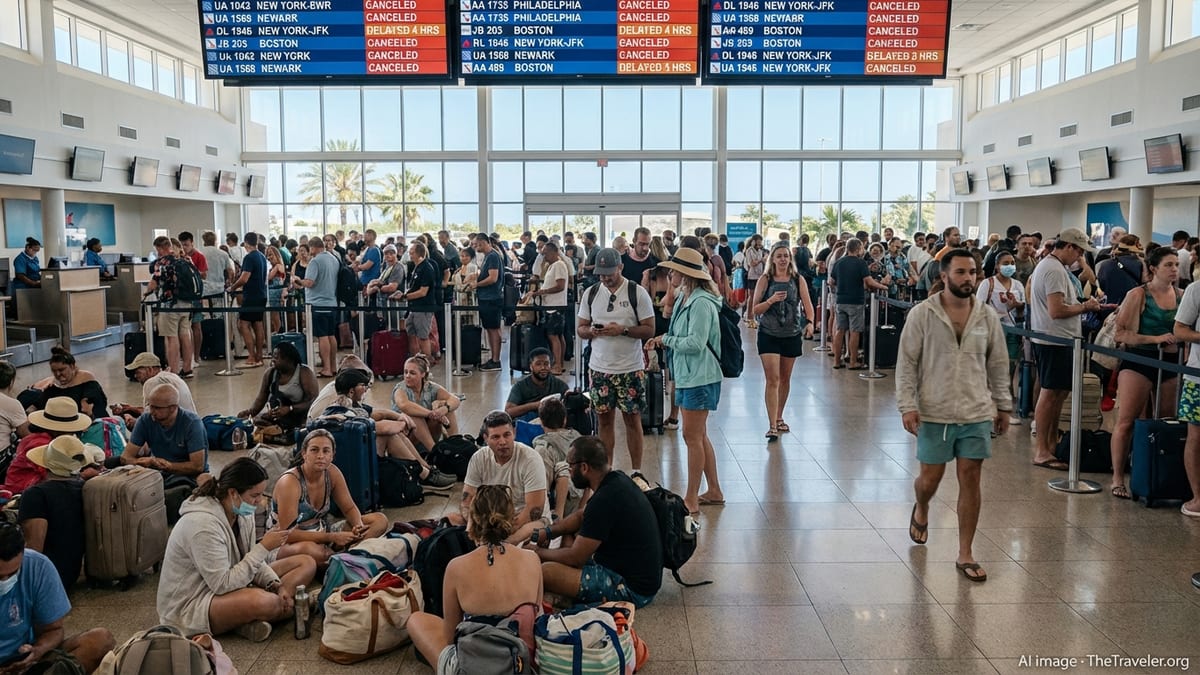
Storm Targets Key Northeast Hubs This Weekend
Forecast models show the developing nor’easter bringing periods of heavy rain, strong winds and low clouds to major population centers from Washington, D.C., to Boston through Sunday, concentrating the most significant aviation impacts on Saturday and early Sunday. According to published coverage focused on Boston, flights in and out of Logan International Airport are expected to be “significantly impacted” throughout the weekend as the system peaks over New England.
Publicly available flight-tracking data and recent storm case studies indicate that even a moderate nor’easter can quickly create bottlenecks at tightly scheduled East Coast hubs. Earlier this year, similar systems led to hundreds of delays and cancellations in Boston and New York, with ripple effects that extended across the national network as aircraft and crews were displaced from their planned rotations.
In this event, the corridor from Philadelphia through New York area airports to Boston is drawing particular concern. United’s Newark hub, American’s presence at Philadelphia, Delta’s operations at New York’s LaGuardia and JFK, and JetBlue’s focus city in Boston all sit squarely within the zone of strongest onshore winds and low ceilings that can reduce runway capacity and force extended spacing between arrivals.
Five Major Airlines Activate Weather Waivers
According to airline alerts and tracking posts on consumer forums, at least five major carriers have published weather waivers tied directly to this weekend’s nor’easter. United, American, JetBlue, Southwest and Spirit are all allowing some customers scheduled to fly through the Mid-Atlantic and Northeast to change plans without standard penalties during the peak of the storm.
United Airlines has issued one of the most clearly defined policies, listing a Nor’easter travel waiver that covers travel between Friday, September 25, and Sunday, September 27, 2026, for a swath of cities from Philadelphia to Portland, Maine. Publicly available information indicates that customers holding tickets purchased before the waiver date can move to new flights within a limited window, typically keeping the same origin, destination and cabin, without additional change fees.
American Airlines has layered its nor’easter flexibility on top of broader winter weather alerts already in place this month. A recent note from its customer operations team, addressing ongoing disruption from a separate winter system, urged travelers to use the airline’s app or website to review available rebooking options. Current nor’easter guidance is following the same model, emphasizing digital self-service rather than long lines at the airport.
Low cost and ultra-low-cost carriers are participating more selectively. Southwest and Spirit have each outlined storm-related change options on their customer information pages when particular airports meet forecast thresholds, but coverage can vary by route and date. Travelers booked on these airlines are being advised in public guidance to review the latest conditions for their specific flight number rather than assuming blanket protection.
Hundreds Of Flights Already Delayed, More Disruptions Expected
By Friday afternoon, publicly available data from recent comparable events suggests that hundreds of flights along the Northeast corridor can be affected even before the worst of the weather moves in. Reports from Boston in past storms have shown more than 60 flights canceled and more than 300 delayed on a single day when strong winds and low clouds limited operations, and forecasters are warning that this weekend’s nor’easter could produce a similar pattern of rolling slowdowns.
Newark, LaGuardia, JFK and Boston Logan are particularly vulnerable because they operate near capacity on a normal day. When controllers must increase the spacing between arrivals during low-visibility or gusty crosswind conditions, the number of flights that can land each hour drops sharply. Published flight operations analyses from previous nor’easters show that once a backlog forms in New York or Boston, delays can cascade to connecting flights across the country, even to destinations with clear skies.
Travelers are already reporting extended waits and rolling delay estimates at some Northeast airports as airlines reposition aircraft in advance of the worst conditions. Historic storm disruptions illustrate how the situation can change quickly: what begins as a 30-minute delay early in the day can stretch into hours as inbound aircraft arrive late and crews bump up against duty-time limits.
How Each Waiver Works And What It Covers
Although five major airlines have issued nor’easter-related waivers, the details differ by carrier, and publicly available examples show that terms can shift as forecasts evolve. Some waivers, including those highlighted by consumer travel sites for recent winter systems, allow passengers to move their trip forward or backward by several days without change fees or fare differences, provided they keep the same city pair and fare class.
Other policies are narrower, waiving only change fees while requiring travelers to pay any fare difference if the new flight is more expensive. Ultra-low-cost carriers may also limit eligibility to customers who purchased certain fare types or ancillary options, whereas the largest network airlines tend to apply waivers across most standard economy and premium cabins in the affected region.
One consistent element across current nor’easter waivers is the requirement that the original ticket be issued before a cutoff date, often the day the waiver is announced. That prevents travelers from buying new tickets after a storm is widely publicized and then attempting to rely on weather flexibility to make speculative travel plans. Published airline advisories emphasize that changes must usually be completed and new travel commenced within a defined window, often one week to ten days from the original departure.
For flights that are canceled outright, separate from waiver provisions, federal rules remain in force. Public guidance from the U.S. Department of Transportation states that passengers are entitled to a refund when an airline cancels a flight or makes a significant schedule change and the passenger chooses not to travel, regardless of the reason for the disruption.
Practical Steps For Travelers Facing The Nor’easter
Consumer advocacy groups and travel specialists reviewing this weekend’s forecast are urging passengers to act before queues build. The most consistent advice in publicly available guidance is to check flight status frequently and, where a waiver applies, rebook online or in an airline app instead of waiting for an airport agent. That approach not only avoids crowded customer service counters but can also secure scarce seats on earlier or later departures before they sell out.
Travelers with tight connections through Northeast hubs may want to look for routings that avoid the most exposed airports or build in longer layovers to absorb potential delays. Past nor’easter disruptions have shown that point-to-point flights into or out of the storm zone tend to recover more quickly than complex itineraries requiring multiple connections.
Experts who study weather-related aviation disruption also recommend that travelers monitor local forecasts, not just airline alerts. The combination of strong coastal winds, heavy precipitation and already congested airspace means conditions can degrade faster than schedule updates refresh. If a route looks especially vulnerable, using an available waiver to move travel to a different day or time can be a safer strategy than hoping to outrun the storm.
Finally, travelers are encouraged to retain receipts for any hotels, meals or ground transport purchased during extended delays. While U.S. regulations do not require airlines to cover these costs for weather-related disruptions, many carriers have voluntary customer service commitments that may offer vouchers or reimbursements in certain circumstances, particularly when irregular operations stretch over multiple days.