


More news on this day
A strengthening coastal nor’easter tracking up the Eastern Seaboard this weekend is already disrupting air travel across the Northeast, with five major U.S. airlines rolling out weather waivers as hundreds of flights face delays and rising cancellation risks.
Get the latest news straight to your inbox!
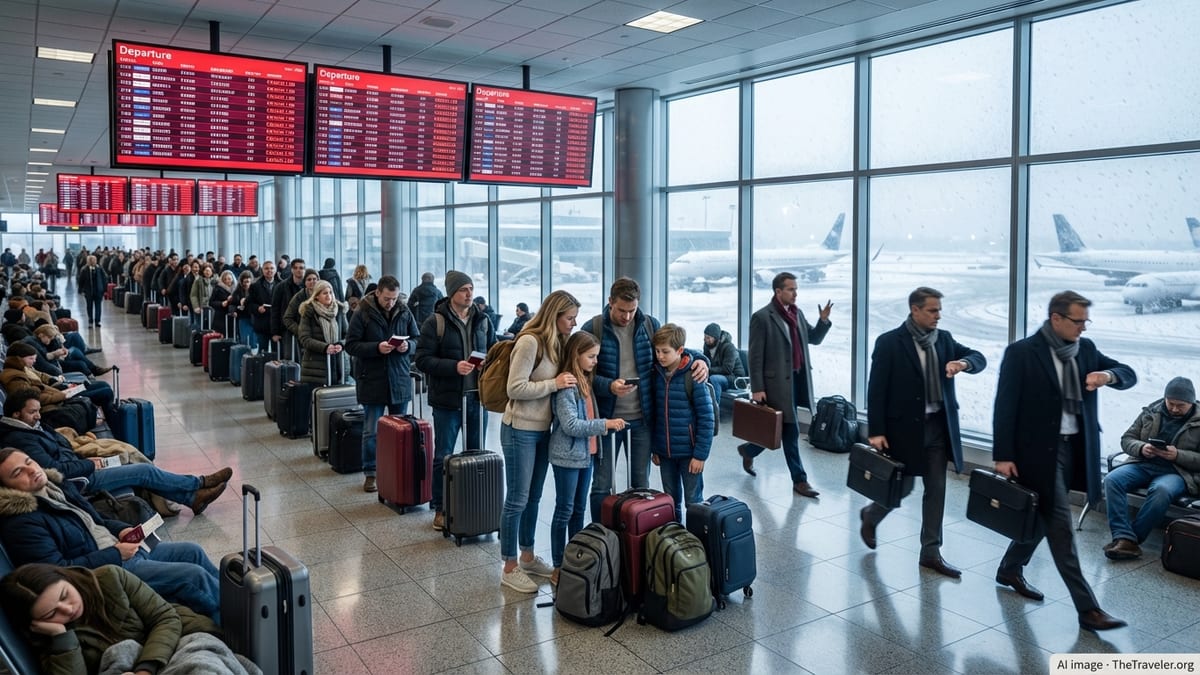
Storm Targets Northeast Hubs From Washington To Boston
Forecast models show a compact but powerful Atlantic storm moving into the Mid Atlantic and New England between Friday, September 25, and Sunday, September 27, bringing periods of heavy rain, strong winds and low cloud ceilings along the Interstate 95 corridor. Aviation forecasters are flagging particularly challenging conditions around New York City area airports and Boston Logan International Airport, where crosswinds and reduced visibility can quickly trigger ground stops and flow restrictions.
Publicly available flight tracking data on Saturday morning indicated several hundred delays across the Northeast, with growing knock-on effects at major hubs including Newark Liberty International, New York LaGuardia, John F. Kennedy, Philadelphia and Boston. Similar coastal storms in recent years have produced cascading disruptions through the day as early inbound flights arrive late and crews run up against duty time limits, leaving aircraft and staff out of position for later departures.
Airport operators in Boston and New York have issued broad advisories urging passengers to arrive early, monitor flight status closely and be prepared for gate or schedule changes throughout the weekend. While some flights are still operating near on time, experience from past nor’easters and winter storms shows that conditions and airline schedules can deteriorate quickly once bands of heavier rain and wind move through key approach corridors.
With the storm timed squarely over the peak Friday evening and Sunday return travel windows, the focus has shifted to how the largest carriers are using advance waivers to give passengers more flexibility to move trips out of the highest risk period.
Five Major Airlines Activate Weather Waivers
According to airline advisories and published coverage, at least five major U.S. carriers have now activated weather waivers linked to the nor’easter, allowing eligible passengers to change plans without the usual penalties. American Airlines, United Airlines and JetBlue were among the earliest to issue systemwide notices covering select Northeastern airports and travel dates through the weekend, followed by additional flexibility bulletins from Delta Air Lines and another large domestic carrier.
American’s waiver focuses on itineraries touching key Northeast gateways over the storm period, permitting one-time changes for qualifying tickets so long as travel is rebooked within a defined window and the origin and destination remain the same. JetBlue’s travel alerts page lists a “Northeast weather” fee waiver that allows customers to move affected trips through Wednesday, September 30, 2026, when rebooking online in the manage trips section, with fare differences waived in specific scenarios where the same cabin and city pair are maintained.
United has posted a dedicated Nor’easter travel waiver on its customer information portals, with tracking by independent airline watcher forums indicating coverage for trips scheduled between Friday and Sunday across a set of impacted airports. The carrier is permitting customers to change to alternative flights within a limited rebooking period without incurring change fees, subject to seat availability and routing rules, and is also layering this policy alongside separate ongoing waivers for tropical systems in other regions.
Delta has issued a Boston-focused “weather flexibility” bulletin and an internal exception policy coded for the nor’easter period. The airline is waiving standard change fees on qualifying tickets and, where flights are canceled and alternatives are not acceptable, is authorizing refunds of totally unused nonrefundable tickets through normal sales channels. Another large domestic airline with a strong Northeast footprint has also quietly added a weekend weather waiver for select city pairs, creating a patchwork of options across the country’s largest brands.
Where Waivers Apply And What They Typically Cover
The precise rules vary by airline, but the current waivers share several common elements that are important for travelers to understand. Most policies apply only to passengers holding tickets for specific travel dates and for flights that originate, connect through or arrive at designated airports in the storm-affected region. Commonly listed airports in these advisories include Boston Logan, New York’s JFK and LaGuardia, Newark Liberty, Philadelphia, Washington Reagan National and Baltimore/Washington, along with several secondary and regional fields.
For qualifying itineraries, the waivers usually allow a one-time change to a different flight on the same airline without a change fee, so long as the new trip departs within a defined rebooking window and the origin and destination remain the same. In many cases, any fare difference is also waived when passengers switch to another flight in the same cabin during that window, though higher fares can apply if travel is moved outside the permitted dates or to a different route.
Refunds are more tightly controlled. Airlines are generally not offering automatic refunds simply because a passenger wants to avoid the storm, but several policies state that if a flight is canceled by the carrier or significantly delayed and no acceptable alternatives are available, customers may request a refund for the unused portion of their ticket. This aligns with the U.S. Department of Transportation’s published guidance, which states that passengers are entitled to a refund when a flight is canceled or experiences a significant schedule change and the traveler chooses not to fly.
Basic economy or other highly restricted fares, which normally offer little or no flexibility, are often included in these weather waivers, but with the same limitations on date ranges and routing. Ancillary purchases such as seat assignments and baggage fees may not automatically transfer to the new itinerary, and travelers may need to review each carrier’s specific conditions to understand what will and will not carry over when rebooking.
Early Action Can Help Travelers Avoid The Worst Disruptions
Experience from previous nor’easters and major winter storms suggests that passengers who act early once a waiver is announced tend to have more and better options than those who wait until the worst of the disruption is underway. When a large weather system affects multiple hubs, the number of travelers seeking help can quickly overwhelm airport customer service counters and phone queues, particularly at peak times on Fridays and Sundays.
Publicly available guidance from both airlines and travel experts consistently recommends that eligible passengers use airline websites or mobile apps as their first choice for rebooking under a waiver. These digital channels often display available alternatives and self-service change options directly within an existing reservation, which can be faster than waiting in line for an agent and reduces the chance of missing out on limited seats on earlier or later flights.
For travelers who must fly during the heart of the storm period, monitoring day-of-travel notifications becomes critical. Many carriers offer opt in text or app alerts for gate changes, delays and cancellations, and some now provide estimated departure times based on internal operational models. Because conditions can shift rapidly as the storm moves along the coast, a flight that appears on time in the morning can be pushed back or canceled closer to departure if inbound aircraft or crews are delayed at other airports in the system.
Travelers connecting through the Northeast to other destinations should also build extra buffer time into their plans where possible. Even if the departure and final destination are outside the storm zone, a missed connection at a hub like Newark or Boston can strand passengers for hours if subsequent flights are already full, making same day rebooking more challenging once disruption peaks.
What Passengers Should Check Before Heading To The Airport
With multiple waivers in effect and forecast conditions still evolving, passengers booked on flights this weekend are being encouraged through public advisories and media coverage to take several practical steps before leaving for the airport. The first is to verify whether their specific flight falls under a published weather waiver by checking the airline’s travel alerts page or the notifications section of their reservation. If a booking is covered and the traveler has flexibility, moving to an earlier departure before the worst weather arrives, or shifting the trip to early next week, may significantly reduce the risk of a lengthy delay or cancellation.
Second, travelers can review their airline’s stated refund and hotel policies in case plans unravel despite best efforts. The U.S. Department of Transportation hosts an online customer service dashboard summarizing what major carriers commit to provide in situations involving controllable cancellations and significant delays, including rebooking standards, meal vouchers or hotel accommodations. While weather disruptions are generally considered outside an airline’s control, these published commitments, along with any additional goodwill measures a carrier chooses to apply during a severe event, can shape what support is offered to stranded passengers.
Finally, packing a small carry on with essential items such as medications, chargers and a change of clothes remains important when storms threaten to snarl operations. Reports from previous large disruptions, including winter blizzards and technology related outages, show that irregular operations can leave checked bags separated from passengers for extended periods. Keeping key items in hand gives travelers more options if an unexpected overnight stay becomes unavoidable because of the nor’easter related schedule changes.
As the weekend progresses, airline operations and waiver parameters may be updated to reflect the storm’s actual impact. Travelers planning to fly in or through the Northeast are therefore advised in public statements and media reporting to keep checking their itineraries and the carriers’ travel alert pages regularly, and to take advantage of any flexibility on offer before flights and seats become scarce.