


More news on this day
The United States has renewed its highest Level 4 “Do Not Travel” warning for six destinations across the Middle East, as fresh security alerts highlight the risk of armed attacks, kidnappings, regional spillover from conflict with Iran and the prospect of sudden flight disruptions affecting travelers transiting major hubs.
Get the latest news straight to your inbox!
Six Countries Under the Strictest US Travel Advisory
According to recent public advisories and media coverage drawing on the US State Department’s database of country notices, six territories in the broader Middle East and North Africa region remain under a Level 4 “Do Not Travel” warning: Iran, Iraq, Lebanon, Syria, Yemen and Libya. Level 4 is the highest category in the US system and is reserved for destinations where conflict, terrorism, civil unrest or the lack of reliable consular support present a serious and often unpredictable threat to visitors.
These destinations have appeared near the top of US risk rankings throughout 2026 as hostilities linked to Iran, Iranian-aligned groups and local militant factions continue to flare. Independent security digests that track the advisories note that the underlying level for Iran, Iraq, Syria and Lebanon has been consistently set at “Do Not Travel,” with Yemen and Libya similarly classified because of armed conflict, terrorism and fragmented control by state authorities.
Publicly available summaries of the advisories indicate that the warnings are not limited to traditional conflict zones or border areas. In several of the six countries, the Level 4 designation reflects nationwide security concerns, including the potential targeting of foreigners, restrictions on movement, and the possibility that commercial airlines could reduce or suspend service at short notice.
Travel risk analysts emphasize that a reissued advisory does not always signify a change in level, but rather that the text has been updated to reflect the latest developments. In the case of these six countries, recent reissues have kept the Level 4 classification in place while expanding language related to regional escalation, drone and missile activity, and the potential for attacks on infrastructure such as airports and energy facilities.
Worldwide Caution and Regionwide Security Alerts
The renewed country-specific warnings sit alongside a broader worldwide caution that the State Department updated in July 2026. That global notice advises Americans everywhere to exercise increased vigilance in light of heightened tensions centered on the Middle East, with particular emphasis on the potential for “unforeseen escalation” affecting airports, airspace and major transit corridors.
Subsequent security alerts circulated by US diplomatic missions in the region in late summer and autumn reiterated that message. Public statements reproduced in regional media outlets describe a complex security environment in which Iran and groups aligned with it are assessed as capable of targeting US-linked interests across multiple countries, not only in active conflict zones.
In early November, widely reported embassy alerts in Iraq, Saudi Arabia, the United Arab Emirates, Bahrain, Jordan, Kuwait and Israel flagged a heightened risk of armed attacks involving Iranian-supported Houthi forces and possible attempts to target US government personnel. The alerts also warned that travelers could face flight cancellations, periodic airspace closures and other disruptions, even in countries that remain at Level 3 “Reconsider Travel” rather than Level 4.
Coverage of these notices in international and regional press stressed that the alerts were precautionary in nature. They pointed out that while the advisories signaled concern about potential attacks and knock-on effects for aviation, they did not confirm that specific incidents had occurred in every location listed, nor did they automatically change each country’s underlying advisory level.
Practical Implications for Air Travel and Transit Itineraries
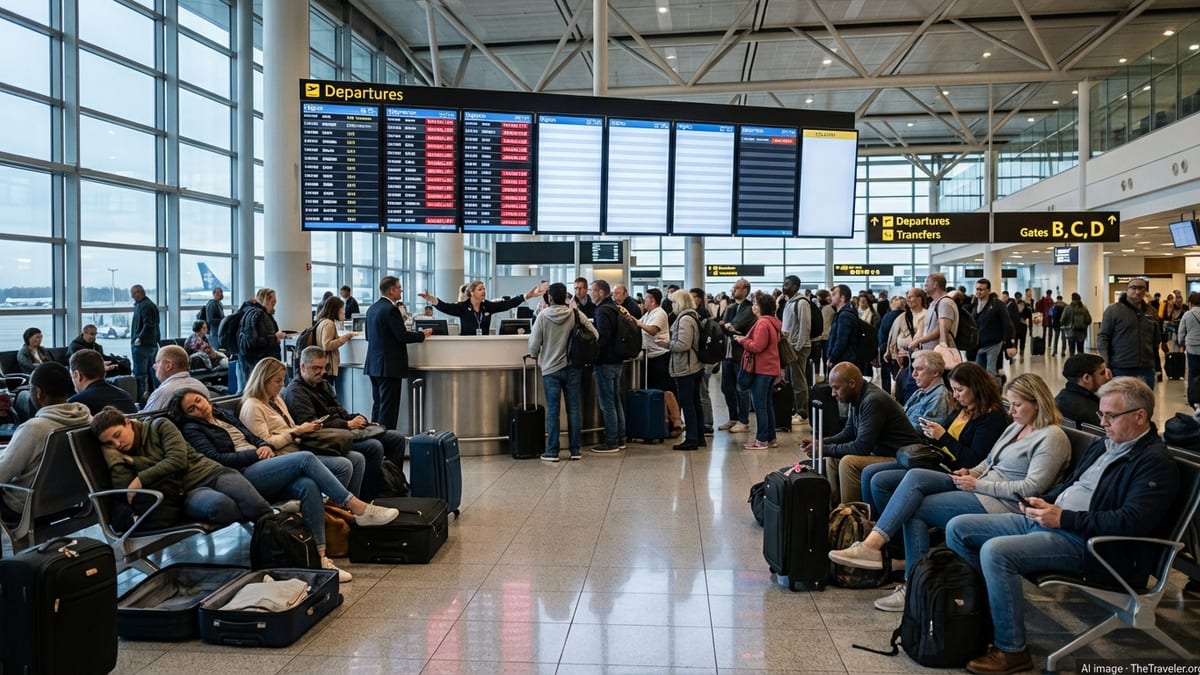
For many travelers, the most immediate effect of the renewed warnings is on air travel planning. The worldwide caution and successive Middle East alerts explicitly highlight the possibility of commercial flights being delayed, diverted or cancelled on short notice, as well as temporary closures of segments of regional airspace.
Reports compiled by travel-intelligence services in early November note that several major hubs in the Gulf and Levant remain operational, but airlines have adjusted schedules in response to evolving risk assessments. Some carriers have trimmed frequencies on routes that cross contested airspace, while others have left schedules intact but retained the option to reroute or suspend flights if threat levels rise.
Publicly available guidance directed at US citizens advises travelers who nevertheless transit the Middle East to monitor airline notifications closely, verify departure and arrival times with carriers before heading to the airport and build extra time into connections routed through hubs near conflict zones. Advisory material also underscores that travelers should be prepared for last-minute gate changes, extended layovers and the possibility that onward flights to certain cities could be cancelled entirely.
Insurance implications are another practical concern. Industry commentary suggests that some standard travel insurance policies may not cover trips to destinations under an official “Do Not Travel” warning or may exclude claims arising from war and terrorism. Travelers reviewing recent analyses are advised to check policy fine print carefully and, where available, consider specialized coverage that explicitly addresses evacuation support and security incidents in higher-risk regions.
What the Renewed Warnings Mean for Future Middle East Trips
For leisure travelers, the reaffirmed Level 4 listings for Iran, Iraq, Lebanon, Syria, Yemen and Libya effectively signal that tourism to these destinations is not recommended. Destination reports compiled by travel risk consultancies throughout 2026 show that organized leisure itineraries have largely disappeared from mainstream tour operator offerings, replaced instead by a focus on nearby countries with lower advisory levels but heightened vigilance.
In neighboring states that remain under Level 3 “Reconsider Travel” advisories, such as Saudi Arabia, the United Arab Emirates, Bahrain, Jordan, Kuwait, Qatar and Israel, publicly released embassy guidance emphasizes the need for contingency planning. Travelers are urged in open-source materials to maintain flexible itineraries, keep copies of important documents, and identify alternative routes out of the region should commercial flights be interrupted.
Security-focused digests also note that the pattern of alerts has implications for stopover planning. While some Gulf and Levantine hubs continue to market themselves as global connectors, the presence of multiple regional security notices suggests that travelers may wish to compare routings that avoid the Middle East altogether, particularly when visiting destinations where equivalent connections via Europe, Africa or Asia are available.
At the same time, the absence of a new, higher-level designation for several major transit countries indicates that, as of early November 2026, government risk assessments still distinguish between the six Level 4 “Do Not Travel” states and other regional destinations. Analysts caution, however, that rapidly changing conflict dynamics mean travelers should re-check advisories in the days leading up to departure rather than relying on information gathered weeks in advance.
How US Travelers Can Stay Informed as the Situation Evolves
With security conditions in parts of the Middle East shifting frequently, open-source guidance aimed at US travelers places heavy emphasis on staying informed. Public materials encourage Americans abroad to enroll in the Smart Traveler Enrollment Program (STEP), which allows embassies and consulates to send security alerts directly by email or text and helps officials locate US citizens in an emergency.
The same guidance recommends that travelers regularly consult the State Department’s destination pages for the latest advisory text on each country, paying close attention to the date of the most recent update or reissue. Security specialists point out that, in recent months, updated wording for Middle East destinations has often focused on new patterns of drone and missile activity, changes in protest dynamics or developments in the conflict involving Iran and Iranian-aligned groups.
Media monitoring also remains key. International and regional outlets have been quick to reproduce and analyze embassy alerts, helping travelers understand how general warnings translate into practical concerns such as curfews, checkpoints, restrictions around diplomatic facilities, and disruptions at specific airports or border crossings.
As the renewed “Do Not Travel” notices for Iran, Iraq, Lebanon, Syria, Yemen and Libya make clear, the bar for reversing a Level 4 classification in the Middle East remains high. For now, publicly available information suggests that Americans contemplating trips anywhere in the region should weigh their plans carefully, check advisories repeatedly and be prepared to adjust or cancel itineraries at short notice if the security picture deteriorates further.