


More news on this day
About 200 residents of a yearslong “live at sea” cruise found themselves unexpectedly disembarking in Cambodia this week after the U.S.-flagged Villa Vie Odyssey suspended its three-year global voyage, citing soaring fuel costs linked to geopolitical tensions.
Get the latest news straight to your inbox!
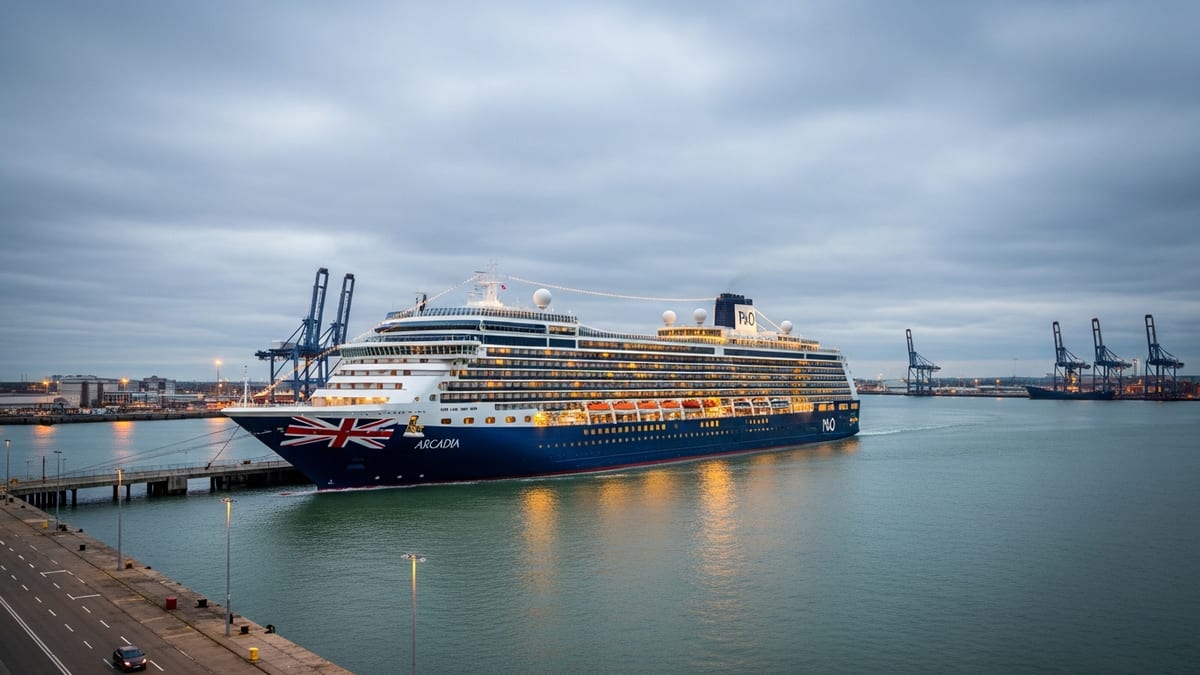
Three-year world cruise cut short in Cambodian port
The Villa Vie Odyssey, operated by Florida-based company Villa Vie Residences, had been marketed as a floating residential community offering multi-year itineraries to all seven continents. The ship departed on its world voyage in 2024 with plans to sail for roughly three years, allowing passengers to purchase or lease cabins as long-term homes at sea.
The journey came to an abrupt halt in late October 2026 when the ship docked at Sihanoukville Autonomous Port in southern Cambodia and the company announced the suspension of the global itinerary. Published coverage describes around 200 passengers being asked to leave the vessel and make their own onward arrangements after the operator said it could no longer safely absorb operating costs on the planned route.
Cambodian tourism officials visited the ship and a nearby hotel where many guests were relocated, highlighting the country’s role as an unplanned but crucial waypoint in what was intended to be a seamless multi-year voyage. Local authorities facilitated disembarkation and transit formalities, helping clear the way for passengers to travel onward to other destinations.
Reports indicate that the vessel, which has a capacity similar to other small residential-style cruise ships, will remain laid up in Cambodia while the company evaluates its options. Passengers, many of whom had sold or rented out land-based homes to join the voyage, now face uncertainty about both their maritime residence and future travel plans.
Fuel shock and the ripple effects of geopolitical conflict
According to publicly available statements from Villa Vie Residences and news coverage of the incident, the suspension was driven by a sharp and unexpected surge in fuel costs across parts of Asia. The operator reported that monthly fuel expenses per cabin, which had historically averaged about 1,800 dollars, had risen to an estimated 6,000 to 8,000 dollars on the ship’s planned route.
The spike has been linked in coverage to the conflict involving Iran and resulting disruptions in regional shipping and energy markets. The Strait of Hormuz crisis earlier in 2026 led major commercial carriers to reroute vessels and contributed to elevated fuel prices and insurance costs along key maritime corridors. Those pressures have gradually filtered through to passenger shipping, including niche segments such as residential cruising.
For a traditional seven- or ten-night sailing, operators can sometimes respond to volatility by trimming itineraries, adjusting speeds or imposing temporary fuel surcharges. For a three-year residential voyage, where passengers expect a relatively stable cost structure over a long timeframe, a sudden tripling or quadrupling of fuel expenses is far more difficult to absorb without fundamentally altering the business model.
Cruise industry financial reports released in recent years have consistently flagged fuel price volatility and regional instability as key operational risks. The Villa Vie Odyssey episode underscores how quickly those risks can move from abstract line items to real-world disruption for travelers who commit to long-term at-sea lifestyles.
Passengers left juggling housing, finances and onward travel
Accounts from affected travelers in international media describe a scramble to secure new accommodation, book flights and reassess life plans that had been built around the ship’s multi-year itinerary. Some residents had reportedly sold primary homes, downsized possessions and structured their finances to treat the Odyssey as a full-time residence rather than a temporary cruise.
While the operator has publicly referenced compensation and refund arrangements, detailed terms have not been fully disclosed across all passenger categories. Travelers holding longer-term cabin leases and those on shorter segments may face different financial outcomes, and some have indicated they are still waiting for clarity on how much of their investment will be returned and how quickly.
In the immediate term, passengers had to navigate the practicalities of being set ashore in a country many had not expected to use as a transit hub. Sihanoukville, better known as a beach and port city for regional tourism, suddenly became a staging point for emergency travel planning, with visitors seeking hotel rooms, international flights and storage for luggage while they decided on next steps.
For long-term cruisers who chose residential life at sea as an alternative to conventional retirement communities or frequent long-haul flying, the disruption also carries emotional weight. Reports from the port city describe a mood that combines disappointment at the lost itinerary with concern over the future of a lifestyle they had hoped would continue for years.
Residential cruising model faces fresh scrutiny
The Villa Vie Odyssey is part of a small but growing niche of residential cruise and “live aboard” products that promise apartment-style living with rotating global scenery. Similar concepts, including purpose-built residential ships and multi-year world cruises offered by larger lines, have attracted retirees, remote workers and digital nomads seeking a stable base that still moves between ports.
The abrupt halt in Cambodia may prompt potential buyers and residents to take a closer look at the fine print of such offerings, particularly around guarantees, contingency plans and financial protections. Prospective passengers are likely to pay more attention to how operators hedge fuel costs, what happens if an itinerary is curtailed for geopolitical or economic reasons, and whether funds are held in protected accounts or subject to the financial health of a single company.
Travel industry analysts have previously noted that residential cruising depends on a delicate balance of predictable operating costs, steady occupancy and continued access to global ports. Prolonged regional conflict, new maritime security risks or rapid cost inflation can quickly erode that balance, especially for smaller operators without the financial reserves of major cruise conglomerates.
Existing and future residents may respond by demanding stronger contractual protections, insisting on clearer contingency routing options, or favoring larger brands with diversified fleets and fuel hedging strategies. For now, many in the travel sector are watching to see whether Villa Vie manages to restructure and restart its program or whether the Odyssey becomes a cautionary tale for an emerging segment.
What this means for future long-haul and world cruise travelers
For travelers considering extended voyages, from 100-day world cruises to multi-year residencies, the situation in Sihanoukville serves as a reminder that long-range itineraries can be vulnerable to events far from the ship itself. Geopolitical shocks, sudden regulatory changes and energy market swings can all reshape routes, costs and even the basic viability of a program.
Consumer advocates often suggest that would-be world cruisers examine cancellation and interruption clauses, investigate whether payments are protected by trust accounts or insurance, and diversify travel plans rather than committing all housing and financial resources to a single multi-year product. The Villa Vie Odyssey’s passengers illustrate the potential impact when those protections are limited or untested.
At the same time, the demand for extended and residential cruising remains robust, driven by aging but travel-focused populations and new classes of remote workers. If operators can adapt their business models to a more volatile era, future offerings may incorporate more flexible routing and pricing mechanisms designed to weather shocks such as the one currently rippling through the Odyssey’s community.
In the short term, travelers who dream of circling the globe by sea will be watching how Villa Vie’s guests are treated and what precedents are set for compensation, rebooking and long-term security. For the roughly 200 passengers currently piecing together new plans from hotel rooms in Cambodia and beyond, the immediate priority is far simpler: finding a new place to call home after their floating one unexpectedly ran out of fuel.