

More news on this day
Air travelers across the United States faced another difficult day on April 11 as major airlines including Delta Air Lines, United Airlines, Spirit Airlines and SkyWest recorded 79 cancelled flights and 1,759 delays nationwide, disrupting schedules at key hubs such as Chicago, Atlanta, New York, Los Angeles and St. Louis.
Get the latest news straight to your inbox!
Nationwide Disruptions Concentrated at Major Hubs
Publicly available flight-tracking data for April 11 indicates that operational disruptions were spread across the U.S. network but felt most acutely at the country’s busiest airports. Chicago, Atlanta, New York and Los Angeles all reported elevated levels of delayed departures and arrivals, with schedule knock-on effects rippling into secondary cities including St. Louis.
Reports summarizing the day’s performance show that, while the total of 79 cancellations was relatively modest compared with severe-weather events, the tally of 1,759 delayed flights created extensive congestion in terminals and on tarmacs. Travel industry coverage notes that such delay-heavy days often prove more frustrating for passengers than outright cancellations, as rolling schedule changes complicate connections and ground transport planning.
Data compiled from national trackers also suggest that the disruptions were not confined to any single region. Flights linking the Midwest and East Coast with the West Coast, including transcontinental routes through New York and Los Angeles, experienced recurrent delays, while connections through Atlanta and Chicago funneled the impact into smaller markets across the Southeast and central United States.
Travel-focused outlets describe this pattern as consistent with early spring in the United States, when unsettled weather and tightly packed schedules can expose weaknesses in airline and airport operations, amplifying what might otherwise be manageable disruptions into a nationwide challenge.
Delta, United, Spirit and SkyWest Among Most Affected Carriers
The latest figures show that the impact was distributed across a broad mix of large network carriers, low-cost airlines and regional operators. Delta Air Lines and United Airlines, two of the country’s largest carriers by passenger volume, both registered notable shares of the 79 cancellations and 1,759 delays, reflecting their extensive domestic and international networks.
Spirit Airlines, a major ultra-low-cost carrier with a high concentration of leisure routes, also featured in the disruption tally. Travel industry reporting in recent months has highlighted how low-cost carriers can be particularly exposed when delays compound, as tighter aircraft and crew utilization leaves limited margin to absorb schedule shocks.
SkyWest, one of the largest regional operators in the United States, was again prominent in the data. The airline operates flights under the brands of several major carriers, including Delta and United, meaning disruptions on SkyWest-operated segments can feed directly into wider network issues. Analyses of federal on-time performance data have previously pointed to regional carriers as disproportionately represented in cancellation statistics, reflecting their role in feeding major hubs with shorter, higher-frequency routes.
Other carriers, including American Airlines, Southwest and a range of regional partners, also experienced delays, though the latest coverage emphasizes that the day’s totals were driven by a broad cross-section of the industry rather than a single outlier.
Weather, Congestion and Operational Strain Behind the Numbers
While no single extreme-weather headline dominated April 11, reports indicate that a combination of scattered storms, low clouds and congestion in busy air corridors contributed to delays. Aviation data summaries for early April point to recurring bouts of unsettled spring weather affecting key hubs from Atlanta and Chicago to the West Coast, periodically slowing takeoffs and landings and forcing air traffic control programs that limit capacity.
Industry commentary also points to structural pressures within airline operations. High aircraft utilization, tight crew schedules and packed spring travel demand can leave carriers with limited flexibility when conditions deteriorate. Once a morning wave of flights is delayed, knock-on effects can cascade across the day’s schedule, with each subsequent departure leaving slightly later than planned.
Federal data on delays and cancellations for recent years show that a significant share of disruptions in the United States are attributed to factors described as within airline control, such as maintenance, crew availability and aircraft rotation. However, these internal challenges often intersect with broader constraints in the national aviation system, including airport congestion and en route traffic management, creating complex chains of causation that are difficult for travelers to untangle.
Analysts note that this latest episode fits a wider pattern seen in recent seasons, in which moderate cancellation counts coexist with high volumes of delayed flights, suggesting that carriers are increasingly focusing on operating flights later rather than scrapping them outright to preserve completion metrics.
Impact on Passengers in Chicago, Atlanta, New York, Los Angeles and St. Louis
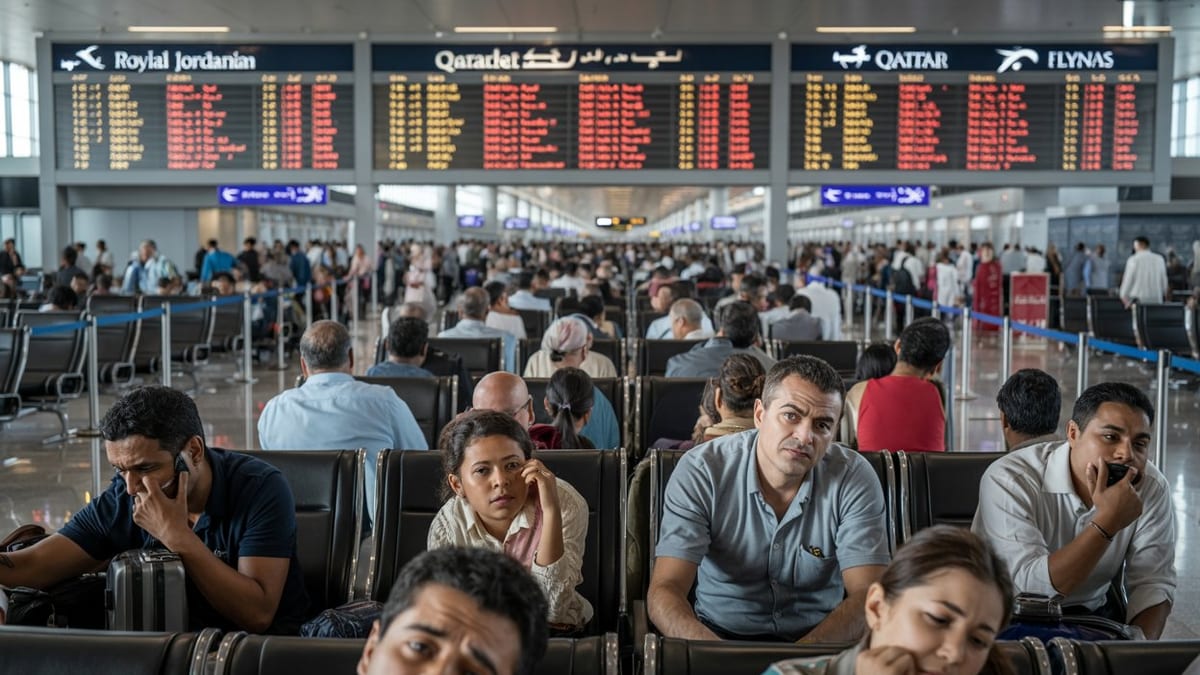
For passengers, the operational picture translated into long lines at check-in and security, extended waits at gates and last-minute scrambles to rebook missed connections. Airports serving Chicago, Atlanta, New York and Los Angeles reported particularly busy terminals as rolling delays compressed departure banks into narrower time windows.
Travel reporting indicates that travelers in Chicago and Atlanta, both critical connecting hubs, faced some of the most complex rebooking challenges. Delays on feeder flights operated by regional carriers such as SkyWest made it harder for passengers to reach major hubs in time for onward connections, especially on evening departures with fewer later alternatives.
In New York and Los Angeles, markets with dense schedules and heavy activity from multiple carriers, some passengers were able to switch to alternative flights on competing airlines, though often at higher last-minute fares. Others opted to reroute through secondary airports or accept overnight stays when missed connections could not be recovered the same day.
In smaller but strategically important markets such as St. Louis, the impact was magnified by fewer available departures. A single cancellation or extended delay on a key trunk route could leave travelers with limited options, particularly on routes dominated by one or two airlines.
What Travelers Can Do as Spring Disruptions Continue
With early spring travel in full swing and similar disruption patterns reported on adjacent days, travel experts are advising passengers to treat the April 11 figures as a reminder of ongoing volatility rather than an isolated spike. Industry analyses and consumer guidance materials consistently recommend building additional buffer time into itineraries, especially when connecting through busy hubs like Atlanta, Chicago, New York and Los Angeles.
Morning departures are often highlighted as less vulnerable to cascading delays that build later in the day. Publicly available performance data show that once the first wave of flights is pushed back, recovery becomes increasingly difficult, meaning travelers booked on midday or evening services face higher disruption risk.
Travel information services also stress the importance of monitoring flights closely through airline apps and airport displays, as schedules can change multiple times before departure. Same-day rebooking options, standby lists and alternative routings can sometimes be arranged more easily when passengers respond quickly to the first signs of disruption rather than waiting for a formal cancellation.
As airlines adjust staffing and capacity plans for the weeks ahead, observers note that the combination of seasonal weather, strong demand and tight operational margins is likely to persist. For many U.S. travelers, the figures from April 11 serve as another indication that flexibility and preparation remain essential parts of air travel in the current environment.