

Paying by card in Austria is increasingly convenient, but it is not as universal or frictionless as many visitors from North America or the UK might expect. Understanding how credit cards are used, what fees can appear on your statement, and when cash still matters will help you avoid unwelcome surprises and keep your travel budget on track.
The Big Picture: Card Culture in Austria
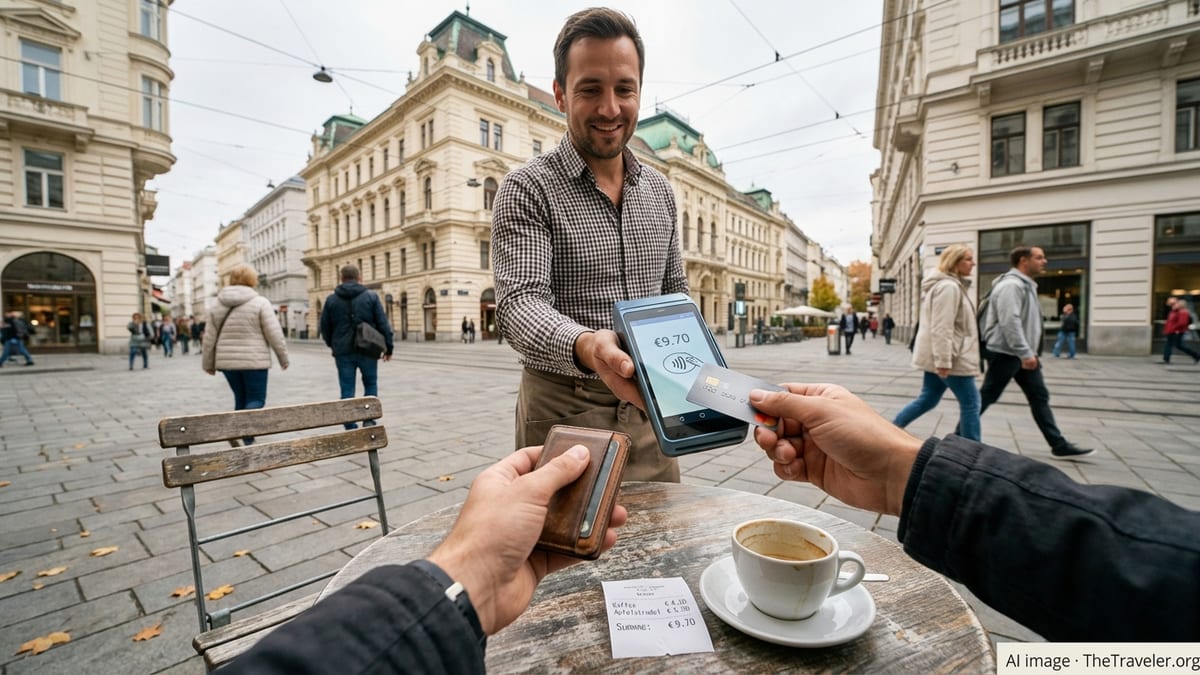
Austria is part of the euro area, and everyday payments are anchored firmly in the euro. Over the past decade, card and contactless payments have spread quickly, especially in cities such as Vienna, Salzburg, Innsbruck and Graz. Most hotels, chain supermarkets, larger restaurants and international retailers accept major credit cards, and contactless terminals are now routine.
Even so, Austria retains a strong cash culture compared with some northern European countries. Tourism boards and local travel guides still recommend carrying at least a modest amount of cash because smaller cafes, family‑run guesthouses, village shops and market stalls may either prefer cash or not take cards at all. In practice, travelers report being able to pay by card most of the time in urban areas, but running into occasional “cash only” signs or minimum spend requirements in more traditional venues.
For visitors, this mixed environment means credit cards are very useful but cannot be your only payment method. Treat them as a primary tool in cities and for larger purchases, while keeping enough cash in reserve to cover a meal, museum tickets, local transport or an unexpected cash‑only situation.
Visa and Mastercard are the most widely accepted networks, followed by debit cards linked to these schemes. Cards on smaller networks, including some American Express and Diners Club products, see patchier acceptance and should not be relied on as a sole option outside higher‑end hotels, car rentals and select restaurants.
Where Credit Cards Are Accepted – And Where They Are Not
In Austria’s major cities and resort areas, credit cards are well integrated into the payment landscape. International and business‑oriented hotels, chain restaurants, supermarket groups, department stores, rail ticket counters and big tourist attractions typically accept Visa and Mastercard without issue. Self‑service machines for metro or tram tickets in large cities increasingly support contactless card and wallet payments, though you should always confirm at the kiosk before queuing.
Smaller, independent businesses can be more variable. Local coffee houses, traditional inns, neighborhood bakeries, mountain huts, Christmas market stalls and some family‑run souvenir shops may either prefer cash or set a minimum spend for card transactions, often around 10 to 20 euros. Sometimes terminals are present but staff will explain that the reader is out of service or that card is not accepted for small bills. This is less common than it used to be, but still frequent enough that traveling without cash is not advisable.
Outside major urban centers, card acceptance tends to thin out. In rural villages, hiking regions and ski areas, you will find a mix of modern card‑friendly operations and long‑established venues that have never adopted card terminals or only accept domestic debit cards. Before sitting down for a meal or ordering a round of drinks in a remote inn, it is sensible to ask discreetly whether “Karte” is accepted. If staff hesitate, assume you will need cash.
Public services and infrastructure are more predictable. Most motorway fuel stations, chain parking garages and intercity train services now accept international credit cards. However, parking meters in smaller towns, public toilets at stations and some coin‑operated lockers still require cash, often in coins. Keeping a stash of one and two euro coins in your wallet will save you from frustrating hunts for change.
Foreign Transaction Fees: What Your Bank May Charge
Even if a purchase in Austria seems straightforward at the terminal, your home bank may add extra costs behind the scenes. Many credit cards issued in North America and the UK still apply a foreign transaction fee when you pay in a currency other than your card’s home currency. This fee is typically in the region of 1 to 3 percent of each transaction amount, applied automatically on your statement.
Over the course of a trip, these charges add up quickly. A few restaurant meals, museum tickets, lift passes and hotel bills can easily reach thousands of euros, and a 3 percent fee on that spending can become a noticeable line item. The fee does not depend on the specific Austrian merchant; it is part of your card’s pricing and is charged even when you pay in euros, which you will do throughout Austria.
If you hold multiple cards, check the terms for each before you travel. Many travel‑oriented cards and premium products now waive foreign transaction fees entirely, making them far more efficient for overseas use. Others may charge a lower‑than‑average fee or offer superior exchange rates, which can partially offset the cost. If you cannot avoid such fees, at least be aware of them and prioritize using your cheapest card for foreign purchases.
In addition to foreign transaction fees, your card issuer may treat cash withdrawals from Austrian ATMs as cash advances. This often triggers both a service fee and a higher interest rate from the day of withdrawal, even if you normally pay your balance in full. While ATMs are convenient, withdrawing cash on a credit card is almost always more expensive than using a debit card linked to your home bank.
Dynamic Currency Conversion and Local Surcharges
One of the most confusing and expensive pitfalls for travelers in Austria is dynamic currency conversion, often abbreviated as DCC. At some card terminals and ATMs, particularly in highly touristed areas, you may be offered a choice to pay in your home currency instead of in euros. The on‑screen prompt might suggest this is more transparent because you will “see the final amount” in familiar currency, but the exchange rate used tends to be significantly worse than the rate your bank would apply if you paid in euros.
The mark‑up on dynamic currency conversion can easily run several percentage points above the interbank rate, on top of any foreign transaction fee your card already charges. In other words, choosing to pay in your home currency can mean paying twice: once through a padded exchange rate and once through your card issuer’s own fee. To avoid this hidden cost, it is usually wisest to insist on being charged in euros whenever you see an option.
Local surcharges are another area to watch, though they are less common in Austria than in some other destinations. A small number of merchants may add a service fee for card payments, especially on very small purchases, or may offer a discount for cash. This practice is often explained at the counter or on a sign, but can occasionally appear only on the receipt. If you are concerned about extra fees, ask before paying whether there is an additional charge for using a credit card.
Because Austria is part of the European Union, merchants themselves pay regulated interchange and processing fees on card transactions, which limits how high their own costs can be. This framework helps keep consumer prices more stable, but does not prevent individual businesses from setting their own rules around minimum spends or modest surcharges. Staying alert at the terminal and reading screens before you tap will help you catch any surprise options or extra fees.
Choosing the Right Card and Setting It Up Before You Go
The best time to save money on card use in Austria is before you leave home. Start by reviewing the cards you already hold. Identify which ones charge foreign transaction fees, what those fees are, and whether any provide travel‑friendly benefits such as zero foreign fees, travel insurance, rental car coverage or airport lounge access. In many cases, a no‑foreign‑fee credit card will quickly justify its annual fee with savings on a single longer trip.
It is sensible to travel with at least two different cards from separate issuers, ideally on the Visa and Mastercard networks. This gives you redundancy if one card is declined, temporarily blocked for suspected fraud or simply not accepted by a particular merchant. Some travelers also carry a debit card that can be used at Austrian ATMs for cash withdrawals under more favorable terms than a credit card cash advance.
Before departure, notify your bank or card issuer of your travel dates if they recommend doing so. Many modern systems are sophisticated enough not to require advance notice, but some issuers still prefer it, and it can reduce the chance of an over‑zealous fraud system declining a legitimate purchase in Vienna or Innsbruck. Also confirm your card’s PIN, as chip‑and‑PIN is the standard in Austria and chip‑and‑signature cards may not always be handled smoothly by unattended machines.
If you plan to rely heavily on mobile wallets such as Apple Pay or Google Pay, verify that your cards are loaded and functioning correctly in the apps before you travel. Contactless and mobile payments are broadly accepted in Austria, but having the physical card with you as a backup is still important in case of technical glitches or a terminal that does not support wallet payments.
Smart Everyday Habits to Minimize Fees
Once you are on the ground in Austria, small payment habits will make a noticeable difference to your costs. The most important rule is to always choose to pay in euros when the terminal or ATM offers a currency choice. Politely declining any “pay in home currency” prompts avoids the extra mark‑up built into dynamic currency conversion.
Whenever possible, favor a card with no foreign transaction fees for purchases in Austria, and reserve cards with higher fees for situations where you have no alternative, such as a pre‑authorization at a hotel that requires a specific card brand. For cash needs, use a debit card at reputable bank ATMs rather than withdrawing cash on a credit card, unless you are fully familiar with your issuer’s cash advance conditions and are comfortable with the potential interest and fees.
Be observant at smaller venues, especially outside big cities. Before ordering in a traditional cafe or independent restaurant, a quick “Kreditkarte?” or “Karte ok?” can clarify whether cards are accepted and whether there is a minimum spend. If a minimum exists and your bill falls below it, consider adding an extra item you genuinely want or simply paying in cash to avoid friction at the end of the meal.
Keeping your spending organized also helps. Many travelers find it useful to dedicate one card solely to travel purchases. This makes it easier to review your statement after the trip for any incorrect charges, unfamiliar fees or suspicious transactions. Because disputes with foreign merchants can be more complex, catching problems early and contacting your issuer promptly is particularly important.
Security, Fraud Prevention and Emergency Backups
Austria has a reputation for being a safe destination with relatively low rates of petty crime compared with some other European capitals. Nevertheless, any place that attracts large numbers of visitors, from Christmas markets to crowded metro stations, provides opportunities for pickpockets and card theft. Basic precautions will reduce your risks considerably.
Carry your primary card in a secure wallet or money belt, and keep a backup card separate, for instance locked in your hotel safe or stored elsewhere on your person. Avoid carrying all your cards in a single pocket or bag that could be easily lost or stolen. When using ATMs, choose machines attached to bank branches or inside well‑lit areas, shield your PIN with your hand, and walk away if anything about the terminal looks tampered with or unusual.
If your card is lost or stolen in Austria, contact your issuer immediately using the international number on the back of the card or on your banking app. Many banks can send a replacement card to your hotel or provide an emergency cash advance. It is wise to store card contact numbers and the last four digits of each card in a secure note or password manager before you travel, so you can act quickly even if your physical wallet disappears.
Monitor your transactions regularly through your banking app while you are abroad. Small test charges or unfamiliar micro‑transactions can be early signs of card compromise. Reporting these promptly improves your chances of a quick refund and allows your bank to block further fraudulent activity before it escalates.
The Takeaway
Using credit cards in Austria is generally straightforward and increasingly convenient, especially in larger cities and tourist centers. Visa and Mastercard are widely accepted, contactless payments are common, and many travelers now navigate entire trips with cards and mobile wallets as their main tools. However, Austria’s lingering preference for cash, particularly in small and rural businesses, means you cannot safely leave cash behind altogether.
The main financial risks do not come from Austrian merchants themselves but from how your own bank handles foreign transactions, as well as from dynamic currency conversion offers at terminals and ATMs. By understanding your card’s fees, choosing products designed for international use, insisting on being charged in euros and avoiding credit card cash advances where possible, you can keep these hidden costs under control.
Approach payments in Austria with a blend of preparation and flexibility. Travel with at least two cards, know your PINs, carry some cash as a backup, and review your statements with a critical eye. With those safeguards in place, your credit cards can work quietly and efficiently in the background while you concentrate on alpine scenery, historic cities and excellent coffee instead of on transaction fees.
FAQ
Q1. Are credit cards widely accepted in Austria?
Credit cards are widely accepted in cities, chain hotels, supermarkets and many restaurants, but smaller businesses and rural venues still often prefer cash, so you should carry both.
Q2. Which credit card networks work best in Austria?
Visa and Mastercard offer the most reliable acceptance across Austria. American Express and other smaller networks are accepted in some hotels and higher‑end establishments but are less universal.
Q3. Will I be charged extra fees for using my credit card in Austria?
You may face foreign transaction fees from your home bank, typically a small percentage of each purchase, and you can encounter poor exchange rates if you choose to pay in your home currency instead of euros.
Q4. How can I avoid paying dynamic currency conversion charges?
Whenever a terminal or ATM asks whether you want to pay in your home currency, decline that option and choose to pay in euros. This usually results in a fairer exchange rate.
Q5. Is it safe to withdraw cash from ATMs in Austria with a credit card?
It is generally safe from a security perspective, but your issuer may treat withdrawals as cash advances, with extra fees and interest from the day of withdrawal, so a debit card is usually cheaper.
Q6. Do I need a PIN to use my credit card in Austria?
Yes, Austria uses chip‑and‑PIN for most card transactions, especially at unattended machines. Make sure you know your PIN before traveling, even if your card is usually signature‑based at home.
Q7. Can I rely solely on contactless or mobile payments in Austria?
Contactless and mobile wallet payments are widely supported, particularly in cities, but you should still carry the physical card and some cash in case of technical issues or cash‑only businesses.
Q8. Are there minimum purchase amounts for card payments?
Some smaller shops, cafes and bars impose a minimum spend for card use, often around 10 to 20 euros. If your bill is lower, you may be asked to pay in cash.
Q9. What should I do if my credit card is lost or stolen in Austria?
Contact your card issuer immediately to block the card and request a replacement or emergency cash. Keeping a backup card stored separately will minimize disruption to your trip.
Q10. Is it better to use a credit card or debit card in Austria?
For purchases, a credit card with no foreign transaction fees is often best. For cash withdrawals, a debit card with reasonable ATM terms usually works out cheaper than using a credit card.