


The Scotiabank Passport Visa Infinite is one of the most popular Canadian credit cards for frequent travelers, thanks to its no foreign transaction fees, airport lounge access and solid travel insurance. If you have just been approved and are planning to use it on an upcoming trip for the first time, understanding how it actually works in real life will help you squeeze out more value and avoid surprises. This guide walks you through what to know before you leave, how to use the card on the road and what to watch for when you get home.
Get the latest updates straight to your inbox!
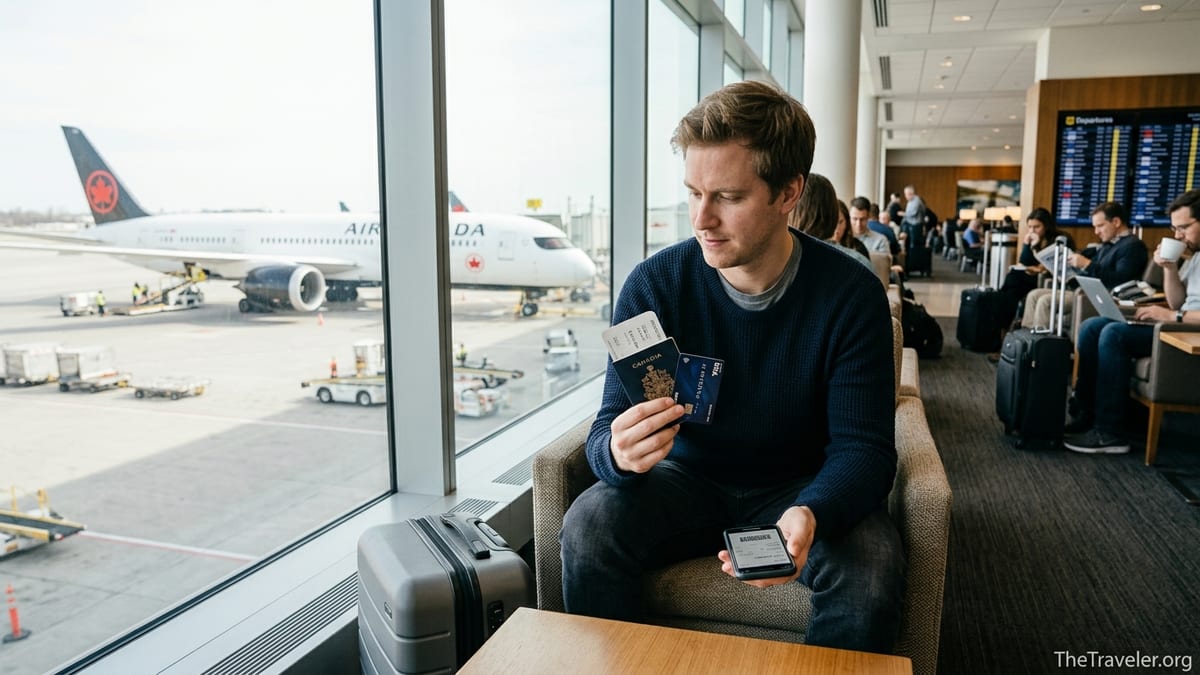
Key features at a glance when you first get the card
For a Canadian traveler, the core attraction of the Scotiabank Passport Visa Infinite is that it does not charge the typical 2.5 percent foreign transaction fee on purchases in other currencies. When you tap your card to pay a 50 euro café bill in Lisbon or 8,000 Japanese yen at a Tokyo ramen shop, you pay only the Visa exchange rate, without the extra markup that most Canadian credit cards still add on top. Over a two week trip where you spend roughly 3,000 Canadian dollars equivalent in foreign currency, skipping that 2.5 percent fee can save you about 75 dollars compared with a standard card.
The card also comes with a Scene+ rewards structure. At the time of writing, you earn 3 Scene+ points per dollar at participating Sobeys family grocery brands in Canada, 2 points per dollar on other eligible grocery, dining, entertainment and daily transit purchases, and 1 point per dollar everywhere else, including most foreign currency purchases. That means your hotel stay in Spain, train tickets in Italy and museum passes in France will typically earn the base 1 point per dollar when charged directly to the card.
Another headline feature is airport lounge access. As a primary cardholder, you receive complimentary membership in the Visa Airport Companion program, along with six free lounge visits per 12 month period once you enroll. These visits can be used at participating lounges around the world, such as Plaza Premium lounges in Toronto Pearson, London Heathrow or Hong Kong, where walk up access for one person can often cost 40 to 60 US dollars per visit.
Finally, the card includes a package of travel insurance benefits typical of a premium travel card, such as emergency medical coverage for eligible out of province or out of country trips, trip cancellation and interruption coverage when you charge eligible travel costs to the card, and rental car collision and loss damage insurance. Exact coverages, age limits and conditions are defined in the current certificate of insurance, which you should download or request from Scotiabank before relying on the card as your primary protection.
Setting up your Passport Visa Infinite before your first trip
Once your physical card arrives, take time to set everything up well before departure. Start by activating the card through Scotiabank’s mobile app or by phone, and choose a PIN that you can comfortably remember even when jet lagged. In many European countries, unattended train ticket kiosks and gas pumps require a chip and PIN card; having your four digit PIN memorized can be the difference between catching a regional train in France or standing on the platform watching it leave.
Next, enroll in the Visa Airport Companion program that is linked to your Passport Visa Infinite. This usually involves following a link from Scotiabank’s site or searching for the Visa Airport Companion app, then registering with the same name that appears on your card. Once enrolled, you should see your six complimentary lounge visits in the app. For example, if you are flying from Vancouver to Tokyo with a connection in Calgary, you could plan to use a lounge visit in Calgary on the outbound trip and another in Tokyo on the way home.
It is also worth reviewing your Scene+ account details before you travel. If you already had a Scene+ account from movie or grocery purchases, make sure it is properly linked to your new credit card so points pool into the same profile. Take a look at the current redemption options for travel, groceries or statement credits, so you know roughly how many points you would need for a typical reward, such as offsetting a 350 dollar domestic flight or a 120 dollar hotel night.
Finally, read through at least the summary pages of the travel insurance booklet. For instance, note whether you must charge 75 percent or more of the full trip cost to the card in order for trip cancellation benefits to apply, and check the medical coverage limits and pre existing condition clauses for your age bracket. If you are planning a 4,000 dollar family trip to the United Kingdom and want to rely on the included cancellation insurance, confirm whether paying your airfare with a different card would knock you out of eligibility.
Using the card abroad: payments, exchange rates and cash
On your trip, using the Scotiabank Passport Visa Infinite is straightforward, but a few habits can protect you from extra costs. When a card terminal abroad asks if you want to be charged in your home currency (Canadian dollars) instead of the local currency, always select the local currency. That option, called dynamic currency conversion, usually comes with its own unfavorable exchange rate, which can quietly add 3 to 7 percent to your bill. Since your Passport card already waives the foreign transaction fee, you want Visa to perform the conversion at its rate, not the merchant’s.
Consider a real world example. You are in Rome having dinner, and the bill comes to 80 euros. The restaurant’s terminal offers to charge you either 80 euros or about 130 Canadian dollars using its own conversion. If you accept the 130 Canadian dollar conversion and your Passport card posts that exact amount, you have likely overpaid compared with simply choosing 80 euros and letting Visa convert at the day’s rate, which might have produced, for instance, a 120 to 124 dollar charge instead. Over a week of meals and small purchases, that difference adds up.
For ATM withdrawals, remember that the card is a credit card, not a debit card, so cash advances will incur interest from the date of withdrawal and may carry additional fees. If you anticipate needing local cash, it is typically cheaper to use a bank debit card that belongs to a low fee global ATM network, or to withdraw larger, less frequent amounts with full awareness of the costs. For example, pulling 40 euros at a tourist area ATM in Barcelona with a credit card can trigger a fixed machine fee plus a cash advance fee from the issuer; doing that three times in a day to cover small snacks and museum tickets is an expensive habit.
Keep in mind that not every small merchant will accept Visa, particularly in parts of Germany, smaller towns in Japan or local markets in Southeast Asia that may prefer domestic debit systems or cash. It is wise to pair your Passport Visa Infinite with a backup card from a different network, such as Mastercard or American Express, and to carry a small amount of local currency for situations where cards are declined or terminals are offline.
Maximizing Scene+ rewards on everyday and travel spending
Although many travelers choose the Passport Visa Infinite mainly for no foreign transaction fees and lounge access, the ongoing rewards can meaningfully offset costs when you understand how they work day to day. In Canada, focusing your grocery shopping at participating Sobeys affiliated supermarkets, where you earn 3 Scene+ points per dollar, can accelerate your balance. For example, a 200 dollar weekly grocery bill at a participating store would earn around 600 points from the credit card, plus any extra Scene+ points offered by the grocer through in store promotions.
Dining, entertainment and daily transit purchases that earn 2 points per dollar are also an easy way to build rewards without changing your routine. Think of a 60 dollar Friday night restaurant meal, a 30 dollar set of movie tickets and a 20 dollar week of transit fares on your city’s tap on system. Charging all of these to the Passport Visa Infinite instead of a non rewards debit card would earn roughly 220 Scene+ points from those transactions alone, in addition to points from grocery and other spending.
When it comes to travel redemptions, Scene+ generally values points at about one cent per point when redeemed against eligible travel purchases, though the exact value can vary slightly by channel and offer. If you have 40,000 Scene+ points saved up from a year of grocery, dining and travel spending, you could offset around 400 dollars of your winter flight to Mexico or summer hotel stay in Vancouver. For a family trying to control vacation costs, treating points as a travel savings bucket can make a noticeable difference.
You can also combine Scene+ earning through multiple avenues. For instance, booking a hotel through the Scene+ travel portal may earn you both credit card points and additional Scene+ points through the portal itself. Stacking these with base rewards from participating partners like Canadian movie theatres or grocery chains can speed up your path to that free flight or hotel night much faster than relying on one source of points alone.
Airport lounge access: how it works in practice
One of the most tangible perks you will notice on your first trip with the Passport Visa Infinite is airport lounge access via the Visa Airport Companion program. After enrolling, your six annual complimentary visits are tracked within the app. Each visit typically counts per person, per lounge. That means if you enter a lounge alone once, you have used one visit; if you bring one guest into the same lounge, that usually counts as two visits.
Imagine you are flying from Toronto to London on an overnight economy ticket. With a three hour layover, you might use the Visa Airport Companion app to find a Plaza Premium lounge in your terminal. Upon arrival, you show your digital membership card in the app, present your physical Scotiabank Passport Visa Infinite, and confirm that you want to use one of your complimentary visits. Instead of spending 40 to 50 US dollars for walk up access or sitting at a crowded gate, you get a quieter space with snacks, coffee, sometimes hot food and showers, all included in your annual card fee.
On a family trip, planning lounge visits strategically matters. Suppose two adults and one teenager are flying from Montreal to Paris with a connection in Halifax. If you use lounge access in both Canadian airports and admit all three family members each time, you could burn through six visits on the outbound journey alone. In that case, you might decide to use lounge access only on the longest layover or pay for one guest out of pocket when needed, saving remaining complimentary visits for the return trip or for a solo business trip later in the year.
It is important to confirm which cardholders are eligible. For the personal Passport Visa Infinite, the six complimentary visits are generally tied to the primary cardholder after enrollment. Supplementary cardholders can often access lounges as guests, but their entry will draw from the same pool of six visits and may require the primary cardholder’s presence or membership credentials. Before relying on lounge access for a spouse or child traveling separately, check the most current terms in your welcome kit or in the app.
Understanding the travel insurance that comes with the card
The Passport Visa Infinite includes a package of travel insurance, but the details matter, especially on your first trip. Typically, there is emergency medical coverage when you are traveling outside your home province for trips up to a certain length, subject to age limits and pre existing condition clauses. For example, a traveler in their 30s on a 10 day trip to Portugal will often be eligible for full emergency medical coverage, while an older traveler on an extended multi month stay should check whether their age and trip duration fall within the covered range.
Trip cancellation and trip interruption insurance can be valuable when booking expensive flights or prepaid tours. To be covered, you usually need to charge a specified proportion of the trip cost to your Passport Visa Infinite, and the reason for cancellation must fall under the defined list of insured risks, such as sudden illness, severe weather or certain job related events. If you book a 2,500 dollar non refundable safari tour in South Africa and pay in full with your Passport card, and then have to cancel for a covered medical reason, the card’s insurer may reimburse your prepaid costs within the limits of the policy.
Rental car collision and loss damage insurance is another major benefit, particularly in destinations where rental agencies aggressively upsell their own coverage at the counter. When you decline the rental company’s collision damage waiver and pay for the rental in full with your Passport Visa Infinite, the card’s insurance can cover damage or theft of the vehicle up to specified limits. In practice, that might save you 20 to 30 US dollars per day on a week long car rental in California or France, though you still remain responsible for liability coverage according to local law.
Because insurance policies and coverage limits can change, you should always verify the current certificate of insurance on Scotiabank’s site or through the documents sent with your card. Pay attention to exclusions, such as high risk activities or pre existing medical conditions, and consider topping up with standalone travel insurance if your trip is unusually expensive, long or complex. Treat the included coverage as a strong baseline, not a blanket guarantee for every possible scenario.
Fees, annual costs and when the card is worth it
The Scotiabank Passport Visa Infinite carries an annual fee that has recently been around 150 Canadian dollars for the primary cardholder, with additional fees for supplementary cards unless waived through promotions or bundled banking packages. For a traveler who takes at least one international trip per year and uses the card for regular grocery and dining spending, it is often possible to offset this fee through a combination of foreign fee savings, lounge visits and rewards.
To see how this plays out, consider a traveler who spends 4,000 Canadian dollars per year in foreign currency while abroad, plus 8,000 dollars in eligible grocery, dining, entertainment and transit in Canada. Avoiding the 2.5 percent foreign transaction fee on the 4,000 dollars saves about 100 dollars. Earning an average of around 1.5 Scene+ points per dollar across all their spending might generate roughly 18,000 points, which could offset about 180 dollars of travel. If they also use three lounge visits in a year that would otherwise cost 40 US dollars each at the airport, the total annual value can easily surpass 300 to 400 dollars, more than double the annual fee.
On the other hand, if you rarely leave Canada, do not value airport lounges and prefer cash back over travel rewards, the Passport Visa Infinite may not be the best fit. A domestic focused cash back card with a lower or waived annual fee could leave you better off. Before your first renewal, look back at your year of card usage: How many foreign currency purchases did you make, how many lounge visits did you use, and how many Scene+ points did you redeem? That snapshot will tell you whether to keep the card, downgrade or switch to another product in Scotiabank’s lineup.
Also pay attention to interest rates. Like most premium rewards cards, the Passport Visa Infinite carries standard purchase and cash advance interest rates that can be around or above 20 percent annually. The value of rewards and perks is quickly erased if you routinely carry a balance. For most travelers, the optimal strategy is to automate full balance payments from a chequing account every month so the card functions as a fee free payment tool with upside, rather than as a borrowing vehicle.
The Takeaway
Using the Scotiabank Passport Visa Infinite for the first time on an international trip is smoother when you understand how its features translate into real world situations. No foreign transaction fees mean your euro café bills, yen train tickets and US hotel stays avoid the extra 2.5 percent cost that many Canadian cards still charge. Lounge access, when set up in advance via the Visa Airport Companion app, can turn long layovers into quieter, more comfortable breaks without paying out of pocket for access each time.
The card’s Scene+ rewards can offset a meaningful portion of your future travel when you lean into its strengths for Canadian grocery, dining, entertainment and transit spending, then top up with everyday purchases abroad. Meanwhile, the built in travel insurance and rental car protections provide a safety net, as long as you know the rules and charge eligible trip costs to the card.
Before you board your next flight, take an hour to activate and enroll your benefits, review your insurance booklet and plan how you will use your six lounge visits over the coming year. Used thoughtfully, the Scotiabank Passport Visa Infinite can be more than just a payment method; it can become a core part of how you plan, protect and enjoy your travels.
FAQ
Q1. Does the Scotiabank Passport Visa Infinite really have no foreign transaction fees?
Yes, for purchases made in foreign currencies the card does not add the typical 2.5 percent foreign transaction fee that many Canadian cards charge. You still pay the Visa exchange rate in effect on the posting date, and cash advances or other special transactions may involve separate fees.
Q2. How do I use my six complimentary airport lounge visits?
You must first enroll in the Visa Airport Companion program linked to your Passport Visa Infinite. Once enrolled, your six annual complimentary visits are tracked in the app and are usually applied when you present your membership and card at a participating lounge. Each person entering normally counts as one visit, so bringing a guest will use two.
Q3. Do I earn Scene+ points on foreign currency purchases?
Yes, ordinary purchases in foreign currencies typically earn Scene+ points at the base rate of 1 point per dollar spent, provided the transaction qualifies as an eligible purchase under the program rules. Category multipliers, such as higher earn rates at specific Canadian grocery partners, usually apply only to merchants that fit those categories.
Q4. Is travel medical insurance automatic when I travel abroad?
Emergency medical insurance is generally automatic for eligible out of province or out of country trips, subject to age limits, trip length limits and pre existing condition rules. You do not need to pay for the trip with the card to trigger medical coverage, but you must meet all conditions in the current certificate of insurance.
Q5. What do I need to do for trip cancellation coverage to apply?
For trip cancellation and trip interruption insurance, you usually must charge a required portion of the prepaid, non refundable trip costs to your Passport Visa Infinite. Covered reasons for cancellation are defined in the policy, such as eligible illness or severe weather. Always read the latest insurance booklet to understand the thresholds and exclusions.
Q6. Can supplementary cardholders access airport lounges?
Supplementary cardholders can typically enter lounges as guests of the primary cardholder, but the complimentary visits are tied to the primary account and draw from the same pool of six visits. Policies on whether supplementary cardholders can have their own membership credentials may change, so check the most recent terms in your welcome materials and app.
Q7. Will using this card at ATMs abroad avoid all fees?
No. While the card waives the foreign transaction fee on purchases, ATM withdrawals with a credit card are treated as cash advances. They usually incur interest from the date of withdrawal and may face additional fees from both the card issuer and the ATM operator. A debit card linked to a low fee bank account is generally better for cash.
Q8. How much are Scene+ points worth for travel redemptions?
Values can vary slightly, but a common benchmark is about one cent per point when you redeem Scene+ points toward eligible travel purchases. That means 10,000 points might offset roughly 100 dollars of travel. Check current redemption options and promotional offers, as some partners or travel bookings may deliver slightly higher or lower value.
Q9. What happens if I do not pay my statement balance in full?
If you carry a balance, interest accrues on the unpaid portion at the card’s purchase interest rate, which is typically above 20 percent annually. Interest charges can quickly erase the value of rewards and benefits, so most travelers aim to pay their statement balance in full every month, ideally through automatic payments from a chequing account.
Q10. How do I know if keeping the card after the first year is worth it?
Before your annual fee posts for the second year, review how you used the card: add up foreign currency purchases, lounge visits used and Scene+ points earned and redeemed. Compare the dollar value of foreign fee savings, lounge access and rewards against the annual fee. If the total value you received meaningfully exceeds the cost, the card is likely worth keeping; if not, consider downgrading or switching to a different product.