


The Scotiabank Passport Visa Infinite, recently refreshed as the Scotiabank Passport Visa Infinite +, is heavily marketed as a must-have travel card for Canadians. With no foreign transaction fees, airport lounge access and a big welcome bonus, it can look like an obvious choice. Yet many cardholders quietly overpay for benefits they barely use. Understanding the card’s real value in dollars, not just in features, is the key to deciding whether it deserves a place in your wallet or whether a cheaper alternative will do the job just as well.
Get the latest updates straight to your inbox!
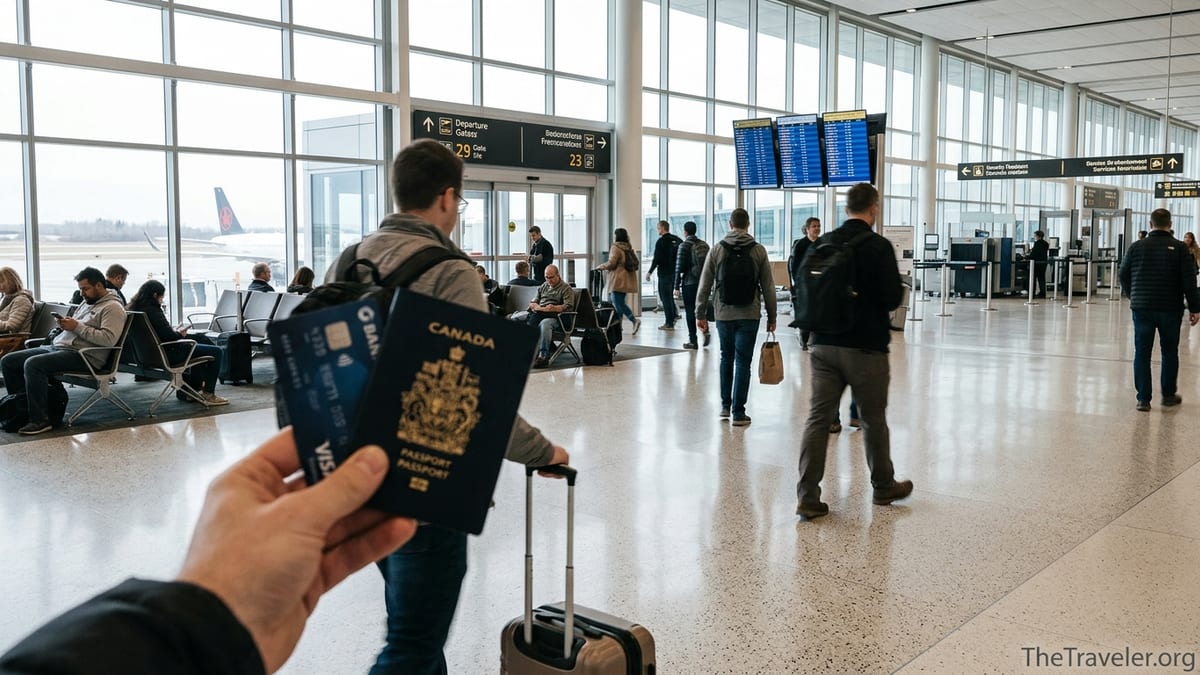
What the Scotiabank Passport Visa Infinite Actually Offers
The Scotiabank Passport Visa Infinite + is positioned as a mid-tier premium travel card. The annual fee for the primary cardholder is about $150, with no fee for the first supplementary card and around $50 for each additional user after that. The standard purchase interest rate is roughly 20.99 percent, with a slightly higher rate for cash advances. Income or asset requirements apply, typically in the range associated with Visa Infinite products, which effectively targets middle and higher income travelers.
The card’s headline benefit is the elimination of foreign transaction fees on purchases in currencies other than Canadian dollars. Where most Canadian credit cards charge a 2.5 percent markup on top of the exchange rate, this card charges 0 percent, so only the network exchange rate applies. For someone who spends 4,000 Canadian dollars equivalent per year in foreign currencies on hotels, restaurants and online subscriptions priced in United States dollars or euros, this alone avoids roughly 100 dollars in fees each year.
On the rewards side, the Passport Visa Infinite + earns Scene+ points. Recent offers have promoted up to 50,000 to 60,000 bonus Scene+ points in the first year, typically structured as 40,000 points after a few thousand dollars in spending within three months and an additional 10,000 to 20,000 points after a higher spend threshold within six months. In practical terms, 60,000 Scene+ points are generally worth about 600 Canadian dollars when redeemed toward travel purchases such as flights on Air Canada, hotel stays booked through major chains or vacation packages.
The card also includes six complimentary airport lounge visits per year through the Visa Airport Companion program. These passes can be used by the primary cardholder and guests at participating lounges worldwide. Single-use access at many lounges often costs around 40 to 50 United States dollars when purchased at the door, so fully using all six visits could represent a nominal value in the range of 300 United States dollars annually, assuming the lounges you visit participate and have space when you arrive.
No-Fee FX: When It Saves You Real Money
The no foreign transaction fee feature is often the single most valuable ongoing benefit for frequent travelers. To appreciate its real-world impact, compare it to using a standard card that charges a 2.5 percent foreign currency markup. Suppose you spend the equivalent of 2,000 Canadian dollars on a week in Lisbon, covering your hotel, meals, local transport and museum tickets. With a regular card, the 2.5 percent surcharge quietly adds about 50 dollars to the cost of your trip. With the Passport Visa Infinite +, you avoid that fee entirely and pay only the Visa exchange rate.
Extend that example to a traveler who takes two similar trips per year, perhaps one to Europe and another to Mexico, and also pays for several online services priced in United States dollars, such as cloud storage or streaming platforms. If the combined non-Canadian dollar spending reaches 6,000 dollars per year, the avoided foreign transaction fees equal roughly 150 dollars, almost exactly offsetting the card’s annual fee even before counting rewards and lounge visits. In that scenario, the card’s cost is effectively neutral as long as you pay your balance in full.
By contrast, consider a traveler who takes a short cross-border shopping trip to Buffalo, spends 800 Canadian dollars equivalent, and otherwise rarely uses the card outside Canada. At that spending level, avoiding the 2.5 percent markup only saves about 20 dollars per year. In this case, the no-fee FX feature does not come close to justifying a 150 dollar annual fee on its own. Unless that cardholder derives significant value from Scene+ redemptions or lounge visits, they are likely overpaying for the product relative to their travel habits.
This logic also applies to small business owners evaluating the related Scotiabank Passport Visa Infinite Business card. A company spending around 8,000 dollars per year in foreign currencies on software subscriptions and advertising would avoid roughly 200 dollars in FX fees compared with a regular card, more than covering that product’s higher annual fee of about 199 dollars. For a business, the math can work dramatically in its favor; for casual personal travelers, it may not.
Lounge Access and Insurance: Perks With Conditions
Airport lounge access is another headline feature used to sell the Passport Visa Infinite +. Cardholders receive six complimentary lounge visits per membership year through the Visa Airport Companion program, usable at more than a thousand lounges worldwide. In practice, the value you receive can vary significantly. On a long layover in Toronto, Vancouver, London or Hong Kong, a lounge visit might easily replace two restaurant meals and drinks. If you would otherwise spend 40 to 50 dollars per person at the airport, a single visit can more than cover the cost of the visit if purchased separately.
However, the benefit is subject to real-world limitations. Many lounges restrict entry during peak times, and some Canadian travelers have reported being turned away in Toronto or Montreal during busy hours because the lounge was full, even with a valid pass. Others discover that their short layover does not justify the walk to a distant lounge. The value also depends on how you travel. A family of four departing on one international trip per year might use four of the six visits at once, gaining excellent value from a single pre-flight stay. A solo traveler who mostly takes domestic flights on low-cost carriers might not pass through many participating lounges at all.
The card also comes with a suite of travel insurance benefits that can be substantial if used correctly. These typically include emergency medical coverage for out-of-province or international travel, trip interruption and cancellation insurance when you charge the trip to the card, delayed and lost baggage coverage, flight delay benefits, rental car collision damage waiver and sometimes mobile device insurance. For example, if your 2,500 dollar ski trip to Whistler must be cancelled due to a sudden illness in the family, qualifying trip cancellation insurance might reimburse non-refundable expenses. Similarly, if your checked luggage with 1,200 dollars worth of clothing and gear does not arrive for two days on a flight to Paris, delayed baggage coverage may help you purchase replacement essentials.
Yet not all travelers need redundant coverage. If you already have extensive emergency medical insurance through your employer and rarely prepay non-refundable trips, you might not extract full value from the card’s travel protections. Additionally, every insurance benefit has restrictions regarding age limits, maximum trip length, pre-existing medical conditions and the requirement to pay for the trip using the card. Reading the certificate of insurance before relying on coverage is essential so that you do not overestimate its value for your specific situation.
Crunching the Numbers: When the Card Is Worth the Fee
A simple framework can help you determine whether you are overpaying for the Scotiabank Passport Visa Infinite +. Start by estimating your annual foreign currency spending, your likely use of lounge visits and your realistic Scene+ redemptions. For instance, imagine a traveler who spends 5,000 Canadian dollars equivalent per year outside Canada, redeems 45,000 Scene+ points annually for flights and uses four lounge visits per year. At a 2.5 percent avoided FX fee, foreign spending saves about 125 dollars. If 45,000 points conservatively provide 450 dollars in travel value and each lounge visit replaces 35 dollars of airport food and drinks, four visits add another 140 dollars of value.
In that example, the total annual benefit is roughly 715 dollars against a 150 dollar fee, which appears generous. However, that assumes the traveler would realistically pay out of pocket for equivalent flights and airport meals. For someone who only redeemed points for trips they might not have taken otherwise, or who rarely eats at airports, the value should be adjusted downward. Additionally, the first year often looks unusually attractive because of a large welcome bonus worth about 600 dollars. The important question is whether the math still works by the second and third years.
Now consider a different profile: a cardholder who spends just 1,500 dollars per year in foreign currencies, redeems 10,000 Scene+ points for an occasional hotel night worth around 100 dollars and only uses one lounge visit. Avoided FX fees here total about 37 dollars. Adding 100 dollars in rewards and 35 dollars of lounge value brings the total benefit close to 172 dollars. Once the 150 dollar annual fee is subtracted, the net gain is tiny, especially if the cardholder occasionally pays interest on their balance. In reality, a cheaper no-fee card paired with occasional paid lounge access might make more sense for this traveler.
This type of analysis shows why you should calculate your likely value per year instead of focusing solely on first-year bonuses. Credit cards are long-term financial tools. If walking yourself through these numbers reveals that the Passport Visa Infinite + only breaks even for you in an exceptionally busy travel year, consider whether it is worth keeping once your travel returns to normal levels.
Comparing Alternatives and Avoiding Marketing Traps
One way travelers overpay for the Passport Visa Infinite + is by holding it alongside overlapping cards that already cover their key needs. For example, a traveler might already carry another Canadian card that offers strong travel rewards and some travel insurance but charges foreign transaction fees. If they only travel internationally once every two years, occasionally using cash or a debit card abroad, the savings from avoiding FX fees on a small portion of their spending may not justify adding another 150 dollar annual fee.
It can also be useful to compare the Passport Visa Infinite + to other cards in Scotiabank’s own lineup and to competitors. For instance, certain no-fee or low-fee cash back cards provide strong rewards on everyday grocery and gas purchases in Canada, easily returning 100 to 200 dollars per year in statement credits for many households. A traveler who primarily vacations within Canada and rarely makes purchases in foreign currencies might find that a straightforward cash back card delivers better net value than a specialized travel product, once fees are considered.
On the other end of the spectrum, the Scotiabank Passport Visa Infinite Privilege card and some competing premium cards charge annual fees in the 500 to 600 dollar range in exchange for airport lounge memberships, higher Scene+ earn rates and larger welcome bonuses. For a family that flies multiple times each year, values priority check-in and regularly pays for lounge access, those richer products may actually represent better value per dollar of fee. For a moderate traveler, however, upgrading from the regular Passport Visa Infinite + to a top-tier premium card often results in overpaying for features like dedicated concierge service, hotel elite status or extra lounge passes that go unused.
Marketing can also create the illusion of value by emphasizing “up to” figures that assume perfect use. Promotional material that touts “up to 1,500 dollars in value in the first year” typically assumes that you earn the full welcome bonus, redeem every point toward high-value travel, use all complimentary lounge visits, avoid FX fees on a large volume of foreign spending and hold the card in good standing. Many cardholders fall short of this usage pattern. If you know you are unlikely to hit the highest spending thresholds or to take multiple international trips, downgrade the claimed value in your personal calculation.
Strategies to Maximize Value and Avoid Overpaying
If you decide the Scotiabank Passport Visa Infinite + fits your travel pattern, a few strategies can help ensure you are not leaving value on the table. First, plan your welcome bonus spending carefully. If the promotion requires 2,000 dollars in purchases in the first three months and another 8,000 dollars in the first six months to unlock the full bonus, time your application so those months coincide with large unavoidable expenses. Examples include booking a family vacation package, paying annual insurance premiums or covering a planned home project. Charging daily expenses like groceries and gas on top of those bigger items can help you cross the threshold without unnecessary purchases.
Second, route all foreign currency spending through the card. That includes purchases made on trips to the United States, Europe or Asia, and also online subscriptions billed in United States dollars such as professional software, cloud storage and international news publications. Even relatively modest monthly online charges can add up: a 25 United States dollar monthly subscription is about 300 United States dollars per year. On a typical card with a 2.5 percent FX fee, that alone would generate around 10 dollars in annual fees. Combine several such subscriptions plus occasional cross-border shopping and restaurant bills, and the avoided fees become meaningful.
Third, track and deliberately use your lounge visits and travel insurance benefits. If you know you have six annual lounge passes, check participating lounges in advance for your departure airports and connection points. For example, if you are flying from Calgary to London with a layover in Toronto, identify lounges in both airports that accept the Visa Airport Companion program and plan to arrive early enough to enjoy at least one visit. When booking travel, use the card for flights and prepaid hotels to trigger trip interruption and cancellation coverage, then keep digital copies of receipts and itineraries so you can claim benefits if needed.
Finally, revisit the card’s value every year before your anniversary date. List how many points you earned and redeemed, how much you spent in foreign currencies, how many lounge visits you used and whether you made any travel insurance claims. If your actual benefit falls significantly below the annual fee, it may be time to negotiate a retention offer, downgrade to a no-fee card or cancel altogether. Treating the card as a tool to be evaluated annually, rather than a permanent fixture, helps prevent slow, unnoticed overpayment.
The Takeaway
The Scotiabank Passport Visa Infinite + can be an outstanding travel companion for the right kind of cardholder. Its combination of no foreign transaction fees, a solid Scene+ earning structure, generous welcome bonuses and six annual lounge visits gives it clear advantages over many standard Canadian credit cards. For frequent international travelers and small business owners with significant foreign currency expenses, the card’s annual fee can be easily offset and even surpassed by the savings and rewards it generates.
Yet the same card can be an unnecessary expense for more casual travelers. If your foreign spending is low, you rarely visit airport lounges, or you already have overlapping coverage through employer benefits and other credit cards, the 150 dollar annual fee may exceed the real value you receive. In such cases, a simpler cash back or low-fee travel card might make more financial sense, even if it lacks the marketing sheen of a premium travel product.
Ultimately, avoiding overpaying for the Scotiabank Passport Visa Infinite + comes down to running your own numbers rather than accepting promotional valuations at face value. Estimate how many dollars in foreign currency you realistically spend each year, how many lounge visits you will genuinely use and how often you will redeem Scene+ points for trips you would have taken anyway. If the total value you calculate comfortably beats the annual fee, the card may be a keeper. If not, consider alternatives and remember that no travel card, however polished, is worth more than it gives back to you in the real world.
FAQ
Q1. Is the Scotiabank Passport Visa Infinite + worth the annual fee for an average traveler?
The card is usually worth the fee only if you travel internationally at least once a year, spend several thousand dollars in foreign currencies and make good use of the welcome bonus or ongoing Scene+ redemptions. Casual travelers with limited foreign spending often gain little beyond what lower-fee cards can provide.
Q2. How much do I really save with the no foreign transaction fee feature?
You typically save about 2.5 percent on all foreign currency purchases compared to most Canadian credit cards. For example, if you spend 4,000 Canadian dollars equivalent abroad in a year, you avoid roughly 100 dollars in FX fees.
Q3. Do the six airport lounge visits reset every calendar year?
Lounge visits are generally allocated per membership or card year, not per calendar year. They typically reset on the anniversary of your enrollment in the Visa Airport Companion program or your card’s anniversary date, depending on how the benefit is administered.
Q4. What is the real value of the welcome bonus on this card?
Recent offers have promoted bonuses of around 50,000 to 60,000 Scene+ points. In practice, that is worth roughly 500 to 600 Canadian dollars toward travel when redeemed efficiently, usually in the first year if you meet the specified spending thresholds.
Q5. How can I tell if I am overpaying for the card?
Compare your annual benefits to the fee. Add up avoided FX fees, the cash value of points you actually redeem for trips you would have taken anyway, the value of lounge visits you truly use and any insurance claims you receive. If this total routinely falls below the 150 dollar annual fee, you are likely overpaying.
Q6. Does this card make sense if I already have strong travel insurance elsewhere?
If you have comprehensive emergency medical and trip cancellation coverage through work or another premium card, the incremental insurance value of the Passport Visa Infinite + may be small. In that case, the decision should rest mainly on FX savings, rewards and lounge access.
Q7. Are Scene+ points flexible enough for frequent travelers?
Scene+ points are generally versatile for Canadian travelers, as they can be applied against many travel purchases on your statement, including flights, hotels and vacation packages. However, they do not always offer the outsized premium cabin value that specialized airline programs sometimes provide.
Q8. Can a small business owner benefit from the personal Passport Visa Infinite rather than the business version?
A small business owner who mixes personal and business travel might use the personal card effectively, but the business version is designed for higher foreign spending and business-friendly features. If most of your non-Canadian dollar expenses are tied to your company, the business card’s structure may be easier to manage and justify.
Q9. What are some warning signs that another card might be a better fit?
Warning signs include rarely traveling outside Canada, holding unused lounge passes year after year, redeeming very few points, or feeling pressured to spend just to meet bonus thresholds. If those apply, a lower-fee cash back or simple rewards card may align better with your real habits.
Q10. How often should I reevaluate whether to keep the Scotiabank Passport Visa Infinite +?
Review the card annually around your fee renewal date. Look back at a full year of travel, spending and redemptions, and calculate the net value. If the card no longer clearly pays for itself, consider downgrading, switching to another product or negotiating a retention offer.