

More news on this day
More than 50 delays and at least seven cancellations at Vancouver International Airport on April 9 are disrupting travel across Canada, the United States, Europe and Asia, as Air Canada, WestJet, Lufthansa, American Airlines and other carriers struggle to keep long haul and transcontinental schedules on track.
Get the latest news straight to your inbox!
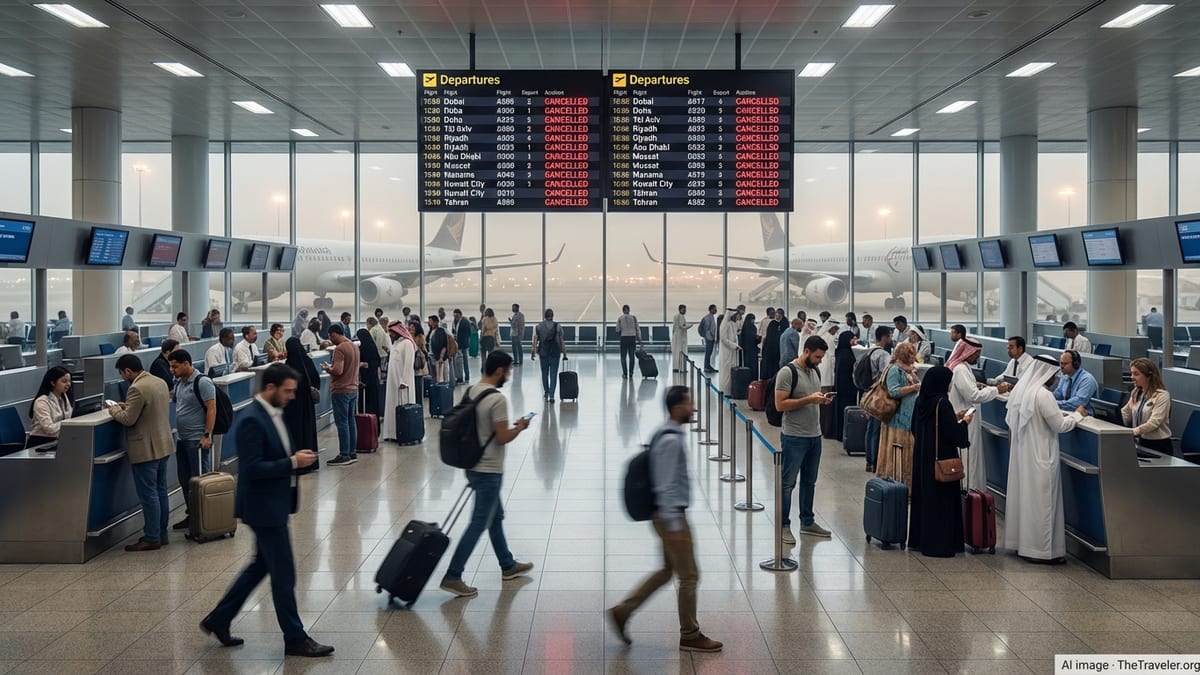
Heavy Delays Hit Major Domestic and International Connections
Operational data and public flight trackers for April 9 indicate that Vancouver International Airport is facing a dense cluster of delayed departures and arrivals, with the tally surpassing 50 affected flights by mid-day. The disruption spans key domestic links such as Vancouver to Toronto as well as long haul sectors to Asia, Europe and the United States, creating knock-on impacts for passengers with onward connections.
Flights between Vancouver and Toronto Pearson are among the most exposed, with multiple services running significantly behind schedule. Similar patterns are visible on westbound and eastbound rotations involving Calgary, Edmonton and other Canadian hubs, tightening connection windows for travelers heading on to transatlantic or transpacific departures. Publicly available performance data shows that even modest initial delays on these trunk routes can cascade quickly once aircraft and crews fall out of position.
Internationally, services from Vancouver to Hong Kong and other Asian gateways are also seeing extended departure and arrival times. Long haul flights are particularly vulnerable because operational buffers are limited and aircraft utilization is tightly scheduled. When a widebody aircraft leaves late from Vancouver, the return rotation and subsequent legs across the network often inherit the delay, complicating recovery efforts well beyond the Canadian West Coast.
Airport information pages highlight that the current wave of disruption has developed against a backdrop of already stretched schedules in early April, a period that frequently combines spring weather variability with rising leisure and business demand. For travelers moving through Vancouver today, this translates into crowded departure halls, longer lines at check in and security, and a heightened risk of missed connections on tightly timed itineraries.
Impact on Air Canada, WestJet and International Partners
Air Canada appears among the most significantly affected operators at Vancouver, reflecting its role as the dominant carrier on domestic trunk routes and on many of the long haul services out of the airport. Travel operations guidance and historical performance data suggest that the airline’s network is particularly sensitive to disruption when delays strike multiple hubs at once, as aircraft and crew availability can deteriorate rapidly once irregular operations set in.
WestJet services are also experiencing delays on key domestic and cross-border routes. The carrier has already been managing ongoing schedule adjustments in early 2026, including changes to some international and U.S. services, which can reduce operational flexibility when fresh disruption arises. Publicly available discussions of WestJet’s recent on time performance point to a pattern in which weather, ground handling constraints and crew duty limits have all contributed to earlier waves of cancellations and extended delays.
On the international side, alliance and codeshare partners such as Lufthansa and other European carriers play a central role in connecting Vancouver with Frankfurt, Munich and additional continental hubs. Flight-planning tools show that widebody departures to Germany and beyond are linked to complex interline itineraries, meaning that delays in Vancouver can ripple onward into missed connections in Europe for travelers heading to secondary cities.
U.S. carriers including American Airlines are similarly exposed on transborder services between Vancouver and major American hubs such as San Francisco and other West Coast and Midwest gateways. These routes often provide feeder traffic for onward long haul departures to Latin America, Europe and the eastern United States, magnifying the effect when a single delayed leg from Vancouver disrupts an entire day’s itinerary for connecting passengers.
Knock On Effects Across Global Travel Networks
The Vancouver situation unfolds as airports across North America and Europe report recurring disruption in early April. Recent coverage of other Canadian hubs has highlighted large numbers of delays and cancellations at Toronto Pearson, Montréal Trudeau, Calgary and Québec City, reinforcing the sense that the wider network is already under strain. When multiple airports experience irregular operations at the same time, the pool of spare aircraft and crews that can be repositioned to stabilize schedules becomes much smaller.
In the United States, published data for this week shows thousands of delayed flights and hundreds of cancellations on peak travel days at major hubs from Atlanta and Chicago to New York and Los Angeles. This broader backdrop matters for Vancouver because many transborder flights rely on aircraft and crew that cycle through U.S. bases. If those resources are delayed or grounded earlier in the day, knock on effects often appear hours later in Canadian cities.
Across the Atlantic, European travel media have been tracking their own wave of delays and cancellations linked to adverse weather and airspace issues. Airports such as Amsterdam Schiphol and Athens have reported dozens of delayed flights and several cancellations on recent days, underlining how quickly disruption can propagate through densely interconnected schedules. For Vancouver bound or Vancouver originating flights that connect through these hubs, any disturbance en route can compound local issues on the Canadian side.
The result is a travel environment in which individual passengers at Vancouver may be dealing with delays that originate far from British Columbia. A late arriving aircraft from Europe or the United States can trigger a missed departure slot in Vancouver, while crew scheduling rules and maintenance windows impose further constraints on how quickly airlines can reset their operations once problems arise.
What Travelers at Vancouver International Are Experiencing
For passengers on the ground at Vancouver International Airport, today’s disruption translates into a mix of rolling departure boards, gate changes and extended waiting times. On heavily booked routes to Toronto, Hong Kong, San Francisco, Frankfurt and Munich, seats on subsequent flights may be limited, making it harder to secure same day rebooking when earlier services are delayed or canceled.
Travel advisories from major Canadian and international airlines consistently recommend that customers monitor their flight status through official channels before leaving for the airport, and continue to check for updates while en route. With more than 50 flights delayed at Vancouver and at least seven fully canceled, the likelihood of last minute gate or schedule changes remains elevated, particularly for evening departures that rely on aircraft arriving late from other hubs.
Consumer guidance published in recent months also underscores the importance of understanding each carrier’s policies on rebooking, refunds and care during irregular operations. In Canada, federal air passenger protection rules distinguish between disruptions that are within an airline’s control and those that stem from weather or air traffic control constraints, and this difference can affect eligibility for compensation, meal vouchers or hotel accommodation.
Passengers connecting through Vancouver on international itineraries can be particularly vulnerable if minimum connection times are tight. Past experiences shared by travelers show that even a delay of less than an hour on an inbound flight can be enough to jeopardize an onward long haul leg, especially when additional time is needed for immigration, security screening or terminal changes. As today’s disruption continues to unfold, many travelers are likely reassessing their connection windows and backup options for upcoming trips.
Outlook for the Remainder of the Day and Coming Weeks
Based on patterns seen at other Canadian and international hubs in early April, travel watchers suggest that it may take several hours, and in some cases several days, for airlines to fully restore normal operations once a wave of delays and cancellations reaches the scale observed at Vancouver. Even after the most severely delayed flights have departed, aircraft and crews can remain out of their intended positions, leading to residual schedule adjustments.
Published operational guidance from airlines such as Air Canada and WestJet points to a continued focus on proactive schedule changes when forecasts indicate adverse weather or air traffic control constraints. This approach is intended to reduce the likelihood of last minute cancellations, but it also means that some future flights may be altered or consolidated in advance if network pressures remain elevated.
For travelers planning to pass through Vancouver in the coming days, recent coverage from aviation and travel industry outlets consistently emphasizes building more flexibility into itineraries. Recommendations include choosing earlier departures where possible, allowing longer connection times, traveling with carry on luggage to simplify rebooking and being prepared for schedule changes even close to departure.
With the spring travel season gathering pace, Vancouver International Airport’s current disruption offers a snapshot of how fragile global aviation networks can be when multiple hubs face pressure at the same time. The experience of passengers bound for Toronto, Hong Kong, San Francisco, Frankfurt, Munich and other destinations today highlights the importance of real time information, flexible planning and clear communication from carriers as airlines navigate another challenging operational period.