

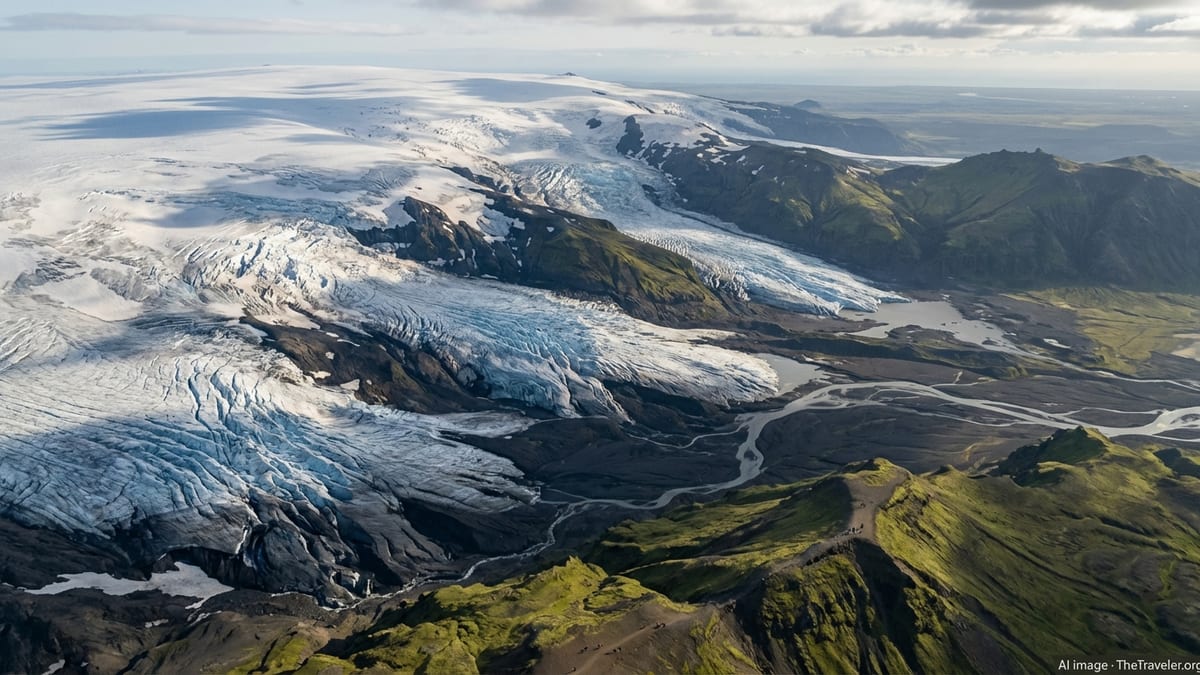
Standing on Iceland’s south coast and looking inland, the sheer white bulk of Vatnajökull fills the horizon. Europe’s largest ice cap spills down in dozens of glaciers, cut by rivers, volcanoes and black sand plains. Somewhere beneath that ice lies Skaftafell, one small yet spectacular corner of Vatnajökull National Park that has become a favorite base for hikers and glacier lovers. If you have only a day or two in the region, the choice is not really between Vatnajökull or Skaftafell, but between exploring the wider park or focusing your time in this one highly accessible area. This guide breaks down the differences so you can decide where to base yourself and how to plan your visit.
Understanding Vatnajökull and Skaftafell
Vatnajökull National Park is one of Europe’s largest protected areas, covering more than 13 percent of Iceland’s landmass and a vast ice cap surrounded by volcanoes, canyons and glacial lagoons. It brings together older protected regions, including the former Skaftafell National Park in the south and Jökulsárgljúfur in the north, under a single designation that in 2019 became a UNESCO World Heritage Site. The park stretches from coastal black sand plains to remote highlands, and its size means that most travelers only ever see one or two key areas.
Skaftafell is one of those areas, a compact slice of the park on the south side of Vatnajökull where outlet glaciers descend almost to sea level. Once its own national park, Skaftafell is now managed as part of Vatnajökull but functions in practice as a distinct visitor hub. It has an all‑year visitor center, a large campground, marked hiking network and easy access from Iceland’s Ring Road, which makes it particularly attractive to road trippers and first-time visitors.
When travelers talk about “visiting Vatnajökull,” they may mean a broad sweep of the south coast that includes Skaftafell, glacier lagoons such as Jökulsárlón, and sometimes longer excursions into the highlands. When they say “visiting Skaftafell,” they usually mean parking once, walking directly into the ice-carved landscape and using the area as a base for day hikes or guided glacier tours. Understanding that distinction is key to deciding how to allocate your time.
In simple terms, Vatnajökull is the vast national park and glacier system, while Skaftafell is a convenient and scenic gateway to experience it. If your schedule is tight and you value straightforward logistics, Skaftafell often makes the most sense. If you have more days and are comfortable driving longer distances on varying roads and weather, exploring a wider swath of Vatnajökull can deliver bigger contrasts and a deeper sense of scale.
Scenery and Hiking: Compact Classic vs Wide-Ranging Drama
Skaftafell is known for its concentrated mix of landscapes within a relatively small area. From the visitor center, well-marked trails fan out to birch-clad slopes, glacier viewpoints and one of Iceland’s most distinctive waterfalls, Svartifoss, where a narrow cascade drops over a dark amphitheater of columnar basalt. Several routes, from short family-friendly circuits to full-day mountain hikes, can be combined to create an immersive day in the field without ever moving your car. For many visitors, this concentrated variety is Skaftafell’s greatest strength.
The wider Vatnajökull region, though, offers a broader canvas of scenery that extends beyond what you can reach on foot in a single day. To the east and west of Skaftafell along the Ring Road lie major glacial lagoons, long outwash plains and distant views of volcanic peaks such as Öræfajökull. North of the ice, different park sectors reveal canyons, highland lakes and geothermal areas, although these are typically summer-only destinations that require more time and planning. If you are willing to cover distance by car and join local tours where needed, the range of viewpoints and landscapes you can experience across the park is far greater than within Skaftafell alone.
For hikers, the key question is depth versus breadth. Skaftafell’s network of trails includes easy loops to Svartifoss and to the snout of Skaftafellsjökull, plus longer routes to viewpoints such as Sjónarnípa and up to the ridges around Kristínartindar. These routes offer lush vegetation, glacier vistas and glimpses of the lowlands in relatively quick succession. In other parts of Vatnajökull, hiking can be wilder and more committing, with longer approaches, rougher tracks and limited infrastructure. Those areas reward experienced trekkers but are less suited to travelers with only a few hours to spare.
If your vision of Iceland involves spending a whole day on foot among glaciers and green slopes, Skaftafell provides that experience with minimal complexity. If you want to weave hiking into a larger road trip that also includes canyons, lagoons and maybe a highland detour in summer, then treating Skaftafell as one stop within a multi-day Vatnajökull itinerary will likely be more satisfying.
Access, Logistics and Visitor Services
Skaftafell’s main advantage is how simple it is to reach and navigate. The area sits just off Route 1, the Ring Road, approximately 70 kilometers east of Kirkjubæjarklaustur and 130 kilometers west of Höfn. That makes it a natural pause on a two- or three-day drive between Reykjavík and the east. The park’s Skaftafellsstofa visitor center is open year-round with varying seasonal hours, providing maps, ranger advice, basic exhibits and a small shop. From the large parking area, all main walking trails begin on footpaths that are clearly marked and maintained.
Facilities at Skaftafell are more developed than in most other parts of Vatnajökull. A sizable campground operates all year, with areas for tents, campervans and motorhomes, plus flush toilets and showers. In the main season you will usually find at least one café or restaurant and several local operators running guided glacier walks and other excursions directly from the parking area. This concentration of services makes Skaftafell particularly convenient for independent travelers who prefer to arrive without a fixed tour plan and piece together activities on arrival, subject to availability and conditions.
The wider Vatnajökull National Park is more dispersed in terms of services. There are multiple visitor centers around the park, but many operate only from late spring through early autumn, and highland ranger stations often open for just a few summer months. Away from the Ring Road, access can involve gravel tracks, mountain roads and seasonally closed routes, which demands more planning, local knowledge and flexibility. Accommodation and food are typically clustered in nearby towns and villages rather than inside the park, so you may find yourself commuting by car to reach different sectors.
For travelers on a tight schedule, this difference in logistics is crucial. Spending a night at or near Skaftafell allows you to maximize your time on trails and ice rather than on the road, with clear information on hand from rangers. By contrast, using the broader Vatnajökull region as your playground makes most sense when you have multiple days, a rented car, and either pre-booked tours or a high tolerance for adapting plans around weather and road reports.
Glacier Experiences and Guided Activities
Glaciers are central to any comparison between Skaftafell and the wider Vatnajökull area. Skaftafell is one of the most popular bases in Iceland for guided glacier walks because outlet glaciers such as Skaftafellsjökull and nearby tongues are easily reached from the Ring Road corridor. Several local tour companies operate from the Skaftafell parking area, offering half-day hikes on the ice, occasionally with options that combine basic ice climbing or visits to seasonal ice formations. Equipment and safety gear are provided, and the walks are designed for travelers with no prior glacier experience, making this one of the most approachable ways to step onto Vatnajökull itself.
Beyond Skaftafell, other parts of Vatnajökull offer different flavors of glacier travel. The famous Jökulsárlón and nearby lagoons provide close-up views of icebergs calving from the Breiðamerkurjökull glacier into a tidal lagoon, with boat and zodiac tours in season that get you out among the floating ice. In winter, specialized tours in several sectors of the park visit natural ice caves formed within the glacier, though access changes from year to year as the ice evolves. Snowmobile and super-jeep trips also operate from various bases around the ice cap, appealing to those who prefer motorized exploration to roped hiking.
If your priority is to physically walk on a glacier in a controlled, beginner-friendly way, Skaftafell is one of the most straightforward choices in Iceland, combining short drive times with established tour infrastructure. If you are equally, or more, excited by the idea of seeing icebergs and perhaps venturing into ice caves or onto high glacier plateaus, then looking beyond Skaftafell to other access points in the park may better match your interests. In many itineraries it is entirely feasible to do both, for example joining a glacier walk in Skaftafell one day and visiting a glacial lagoon on another.
It is important to remember that independent glacier travel without a guide is strongly discouraged across the park due to hidden crevasses, unstable ice and rapidly changing conditions. Whether you base yourself in Skaftafell or explore further afield, plan to join guided activities for any on-ice or ice cave experiences, and build flexibility into your schedule in case tours need to adapt to weather and safety assessments.
Weather, Seasons and Crowd Levels
Weather and seasonal patterns can heavily influence whether Skaftafell or a wider Vatnajökull itinerary will work best for you. Skaftafell enjoys relatively favorable local conditions for Iceland, with the slopes of Öræfajökull often providing shelter that makes the microclimate somewhat milder than neighboring areas. That does not guarantee sunshine, but it does mean that on some days when conditions are harsher along the open plains, Skaftafell may feel calmer and more inviting on the ground.
The main hiking season in Skaftafell typically runs from late spring to early autumn, when trails are largely free of snow and daylight is long. During this period, ranger-led interpretive walks are usually offered on a daily schedule, and all commercial services operate at their fullest. Outside of summer, the paths remain open, but snow, ice and limited daylight can make even short routes more demanding, so visitors need appropriate clothing, footwear and an added margin of caution. By contrast, highland sectors of Vatnajökull away from the Ring Road are mostly inaccessible or closed in winter, narrowing the practical options for exploration.
Summer is also the busiest period, and this is where Skaftafell’s popularity becomes a double-edged sword. The combination of a large campground, easy access and famous attractions such as Svartifoss draws substantial numbers of travelers, especially during peak daytime hours when tour buses arrive. Trails near the visitor center can feel crowded, car parks fill early, and the overall sense is of a lively outdoor hub rather than a remote wilderness. In shoulder seasons such as May or September, you may find a better balance between manageable conditions and thinner crowds.
A broader Vatnajökull itinerary allows you to spread your time over a range of sites, which can naturally ease crowding if you are willing to rise early, travel later in the day or prioritize less-visited viewpoints. Glacial lagoons and well-known roadside stops will still be busy at peak times, but with more days in hand you can plan for early-morning photo sessions, linger in smaller settlements and accept that some sectors, particularly in the north and interior, are summer-only destinations best suited to repeat visitors or those comfortable with remote travel.
Costs, Time and Trip Styles
Budget and time constraints often shape the choice between focusing on Skaftafell or exploring Vatnajökull more widely. Skaftafell works particularly well for travelers with limited time who want a concentrated experience: one or two nights at the campsite or in nearby guesthouses can deliver a solid mix of hiking, glacier viewing and perhaps a half-day guided tour. Because everything is in one place, there is less fuel burned on daily transfers, and you avoid the need for repeated packing and unpacking.
On the other hand, accommodation close to the park can be in high demand during the main season and may carry premium prices, especially for hotels and guesthouses in the narrow stretch of coast between Kirkjubæjarklaustur and Höfn. Camping is usually the more economical option at Skaftafell, although you must factor in the cost of campground facilities and any necessary gear rentals. Guided glacier walks and other activities generally have standardized pricing across the region, so choosing Skaftafell over another Vatnajökull access point will not necessarily change your activity budget, but it can simplify logistics and therefore reduce incidental costs.
Planning a broader Vatnajökull exploration often means a longer rental period for a car, more nights in paid accommodation and a higher overall spend on fuel and food. The upside is greater variety: you can distribute your nights between different towns, combine south coast highlights with northern or eastern sectors of the park in summer, and adapt your days to chase clearer weather. This approach tends to appeal to travelers on extended trips or those for whom Vatnajökull is a main focus of an Iceland journey rather than a brief detour.
Your travel style also matters. If you prefer relatively spontaneous days built around short hikes and viewpoints close to the road, Skaftafell provides a ready-made framework. If you like to pre-book complex itineraries, link several guided activities and commit to longer driving days, you may find that using Skaftafell as just one anchor point within a multiday Vatnajökull loop makes better use of your time and resources.
The Takeaway
Choosing between Skaftafell and the wider Vatnajökull region is less a question of which is better and more a matter of how you like to travel. Vatnajökull National Park is the vast glaciated heart of Iceland, while Skaftafell is a compact, well-serviced window into that world. Each offers a different balance of convenience, variety and sense of wilderness, and for many visitors the best answer is to combine them in proportion to the days available.
If you have only one full day in the south-east, centering that day on Skaftafell is likely to be the most rewarding option. You will have clear trails to follow, ranger information at hand, and a chance to see some of the park’s classic sights with minimal logistical friction. A glacier walk, a visit to Svartifoss and an evening stroll from the campground can easily fill your time without feeling rushed, and you will leave with a strong impression of ice meeting green slopes and black sands.
With several days to work with, consider using Skaftafell as one base among several, linking it with glacial lagoons, coastal viewpoints and, in summer, perhaps a foray into the park’s quieter northern or highland sectors. This approach offers a fuller sense of Vatnajökull’s scale and diversity, from iceberg-choked lagoons to broad sandur plains and volcanic ridges. It requires more planning and flexibility but can turn a simple south coast drive into a richer exploration of Iceland’s interior forces.
In the end, you are not choosing between seeing Skaftafell or seeing Vatnajökull. By stepping onto a trail at Skaftafell, joining a glacier walk or watching the light change on the ice cap from the Ring Road, you are already standing within Vatnajökull’s domain. The real choice is how deeply you want to venture into that realm and how much time and energy you are ready to invest. Answer that honestly, and the decision about where to base yourself will fall naturally into place.
FAQ
Q1. Is Skaftafell part of Vatnajökull National Park?
Skaftafell is a southern sector of Vatnajökull National Park and was originally a separate national park before being incorporated into the larger protected area.
Q2. If I only have one day, should I spend it in Skaftafell or drive around Vatnajökull?
With just one day, focusing on Skaftafell usually makes more sense because you can walk straight into varied scenery and join glacier tours without long extra drives.
Q3. Do I need a guide to hike in Skaftafell?
You can hike the marked walking trails independently in normal summer conditions, but any travel on glaciers or into ice caves should always be with a qualified guide.
Q4. Is Skaftafell accessible year-round?
Yes, Skaftafell is generally accessible via the Ring Road all year, although winter weather and road conditions can temporarily affect access and make trails more demanding.
Q5. How many days do I need to explore Vatnajökull beyond Skaftafell?
To see Skaftafell plus nearby glacial lagoons and a few additional viewpoints at an unhurried pace, plan at least two to three days in the wider Vatnajökull region.
Q6. Are there campsites and services inside Skaftafell?
Skaftafell has a large all‑year campground, toilets and seasonal services such as a café, visitor center exhibits and booking points for guided activities.
Q7. Can I see glaciers without joining a tour?
Yes, you can walk to viewpoints of outlet glaciers such as Skaftafellsjökull from marked trails, but stepping onto the ice itself safely requires joining a guided tour.
Q8. Is the wider Vatnajökull region suitable for winter travel?
Sections along the Ring Road, including Skaftafell and some lagoons, can be visited in winter, but many highland and remote sectors are effectively closed until late spring.
Q9. Which area is better for avoiding crowds, Skaftafell or other parts of Vatnajökull?
Skaftafell is convenient but busy in peak season, while quieter experiences are more likely in less visited sectors of Vatnajökull that require longer drives and summer access.
Q10. Do I need a 4x4 to visit Skaftafell and Vatnajökull?
For Skaftafell and main south coast sights along the Ring Road, a regular car is usually enough, but a 4x4 is recommended for highland roads and rougher summer tracks elsewhere in the park.