

More news on this day
Weekend travel through Las Vegas plunged into disarray on April 11 as more than 250 flight delays at Harry Reid International Airport disrupted a key U.S. air hub and stranded passengers across multiple airlines.
Get the latest news straight to your inbox!
Heavy Disruption Hits a Major Southwest Gateway
Publicly available flight-tracking data for April 11 indicates that Harry Reid International Airport recorded one of its most challenging days of 2026 so far, with over 250 flights arriving or departing behind schedule and a smaller number canceled. The disruption affected both domestic and international services, touching a broad mix of carriers that rely on Las Vegas as a high-volume leisure and connection point.
Reports from aviation-data platforms describe a day of rolling delays rather than a short, contained outage. Early-morning slippages cascaded into the afternoon and evening as aircraft and crews fell out of position, leaving airlines with limited flexibility to recover punctual operations. Flights bound for major markets such as Los Angeles, Denver, Chicago and New York were among those affected, contributing to knock-on schedule issues beyond Nevada.
Travel and tourism publications note that the April 11 delays followed an already busy start to the month, when Harry Reid International had recorded elevated disruption on several earlier days in April. The latest episode added fresh strain to airline networks heading into the heart of the spring travel period, when load factors are typically high and spare seats for reaccommodation are limited.
The timing also underscored the airport’s role as a critical gateway for the broader Las Vegas economy. With visitor numbers and convention traffic rebounding in recent seasons, even a single day of severe gridlock at Harry Reid International can ripple through hotel occupancy, ground transport demand and visitor spending patterns.
Benign Weather, Complex Operational Pressures
Weather reports for Las Vegas on April 11 pointed to relatively favorable local conditions, with mild spring temperatures, a few clouds and no widespread accounts of storms or low visibility affecting the airfield. Federal aviation data for the day reflected typical wind patterns and routine operational advisories, without the kind of prolonged ground stops usually associated with systemwide chaos.
The absence of dramatic local weather has directed attention to broader operational pressures that can drive delays even under clear skies. Industry analyses point to factors such as tight aircraft scheduling, ongoing crew-availability challenges and congestion elsewhere in the national airspace system as potential contributors when a high-volume airport like Harry Reid experiences a surge in late departures and arrivals.
Recent months have also seen intermittent strain across multiple large U.S. hubs, where seasonal storms, air traffic control constraints and staffing imbalances have created rolling pockets of disruption. Coverage in travel-industry outlets notes that airports including Las Vegas, Atlanta, Denver, Houston and Phoenix all reported above-average delay levels in early April, suggesting that network-wide conditions may have amplified the impact of any localized bottlenecks.
While granular, per-flight causes are not publicly detailed in real time, aggregated delay statistics and national performance trends point to a complex blend of factors rather than a single trigger. For passengers on April 11, the distinction mattered little, as missed connections and hours-long waits became the defining experience of the day.
Scenes of Congestion Inside the Terminals
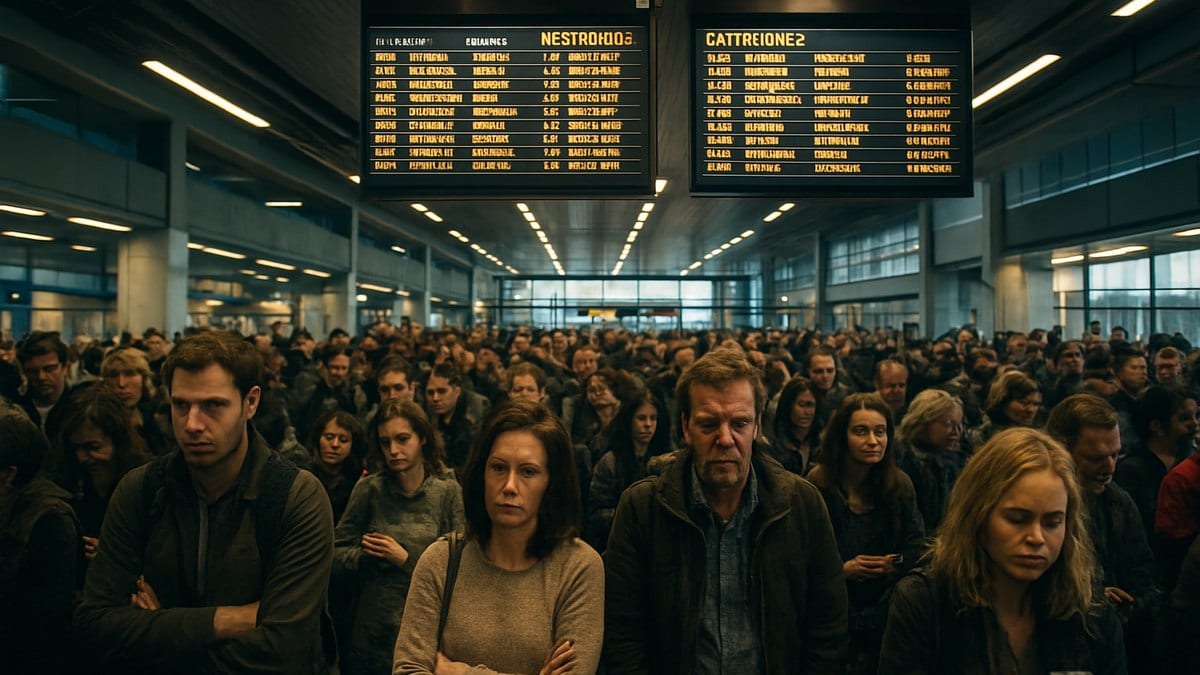
Accounts compiled in travel forums and local coverage depict crowded concourses and busy gate areas throughout April 11 as growing numbers of flights slid beyond their scheduled departure times. Travelers reported repeated schedule adjustments on airport information boards, as well as extended waits at customer-service counters as they sought rerouting options or hotel vouchers.
Published reports describe particularly heavy congestion during the late morning and midday peaks, when banks of departures are usually tightly scheduled to feed connections and accommodate hotel checkout patterns on the Strip. With planes arriving late and boarding delayed, passengers often remained at the gates for far longer than planned, straining seating and amenities in some parts of the terminal complex.
Security and check-in operations also faced additional pressure as travelers responded to news of delays with last-minute timing changes. Airport guidance continues to advise arriving at least two hours before domestic departures and three hours before international flights, a recommendation that took on fresh relevance as April’s disruptions underscored the risk of assuming smooth, just-in-time journeys through the terminal.
New tools are being added to help travelers navigate such days. In recent updates, Harry Reid International has introduced online displays of estimated TSA checkpoint wait times, allowing departing passengers to gauge security conditions before leaving for the airport. On a day marked by widespread flight delays, that kind of real-time information can help travelers adjust their arrival plans and reduce the stress of navigating busy checkpoints.
Impact on Airlines, Tourism and the Wider Network
According to data summarized in aviation and travel trade publications, the April 11 disruption touched a wide slice of the airline industry at Harry Reid International, from ultra-low-cost carriers to large network airlines. Delayed flights linked Las Vegas to key domestic destinations as well as international cities, complicating crew rotations and aircraft availability for subsequent legs.
The heavy delay count came on the heels of a strong traffic performance at the airport. Las Vegas concluded 2025 with nearly 55 million passengers and entered 2026 on a growth trajectory, supported by robust leisure demand and a steady calendar of meetings and special events. That momentum means aircraft are often flying near capacity, which can make it harder for airlines to find spare seats when irregular operations unfold.
For the tourism sector, the operational hiccups highlight the sensitivity of Las Vegas to aviation reliability. A large share of visitors arrive by air, and disruptions at Harry Reid International can translate into lost nights in hotels, missed show reservations and curtailed time on casino floors. Local business coverage has repeatedly emphasized that maintaining steady air connectivity is central to the region’s long-term growth plans.
Nationally, April 11 at Las Vegas fits into a broader pattern of episodic strain as airlines, airports and regulators work to balance rising demand with infrastructure and staffing levels calibrated during a more volatile recovery period. Performance metrics compiled by travel analysts indicate that spring weekends in particular have been vulnerable to spikes in delays, with limited slack in schedules to absorb even modest disturbances.
How Travelers Can Navigate Future Disruptions
Travel advisers and passenger advocacy groups responding to the April 11 chaos are reiterating familiar but increasingly vital strategies for flying through busy hubs like Harry Reid International. Among the most frequently cited steps are building longer connection times into itineraries, especially when traveling through multiple weather-prone or high-traffic airports on the same day.
Public guidance also places renewed emphasis on monitoring flight status across multiple channels, including airline apps, airport information feeds and independent tracking services. On days when delays begin to mount, early awareness can give travelers more options to rebook, adjust ground transport or shift to alternate routings before the most desirable alternatives are taken.
For those starting their journey in Las Vegas, current recommendations suggest arriving at the airport well ahead of departure, particularly during weekend peaks and holiday periods. With Harry Reid International now publishing estimated TSA wait times online, passengers have an additional data point to decide when to leave their hotel or home.
While the April 11 wave of delays underscores the challenges facing the U.S. air travel system, it also highlights an emerging focus on real-time information and contingency planning. For travelers moving through Las Vegas and other busy hubs, adopting those tools and habits may increasingly be the difference between a manageable schedule change and a day defined by chaos.