

More news on this day
Spring getaway plans unraveled for thousands of travelers on April 11 as Las Vegas’ Harry Reid International Airport logged more than 250 delayed flights, briefly turning one of the nation’s busiest leisure hubs into a maze of missed connections and overnight waits.
Get the latest news straight to your inbox!
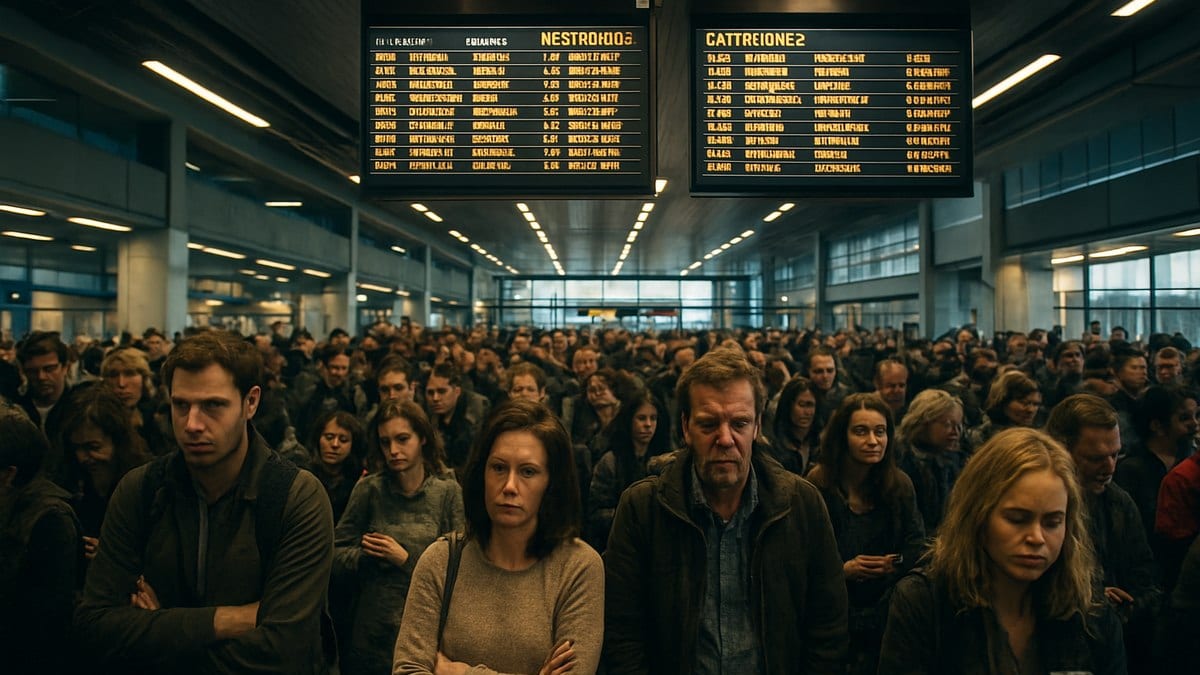
A Sprawling Web of Delays Across the Harry Reid Hub
Flight-tracking dashboards and travel-industry reports indicate that Harry Reid International recorded more than 250 delayed flights on April 11, along with a small number of cancellations affecting both arrivals and departures. The disruption hit a range of domestic and international routes, amplifying queues at gates and customer service counters as the day progressed.
Publicly available data compiled by travel outlets shows that the disruption touched services operated by major U.S. carriers, including Delta Air Lines, United Airlines, American Airlines and low-cost competitors serving the Las Vegas market. Routes linking Las Vegas with core hubs such as Los Angeles, Chicago, Denver, New York and Toronto featured prominently among the affected services, intensifying the impact for passengers attempting to connect onward.
While Harry Reid did not report a full airport closure on April 11, the cumulative effect of rolling delays created what observers described as one of the most difficult operational days of the spring travel period at the airport. Passengers arriving early in the day frequently encountered aircraft that were late inbound from other cities, starting a chain reaction that continued into the evening.
Travel-focused news coverage characterizes the April 11 disruption as part of a broader pattern of strain at U.S. hubs during peak weekends, in which even modest schedule irregularities can trigger widespread knock-on effects. At Harry Reid, heavy demand tied to leisure travel, conventions and weekend events in Las Vegas added a layer of complexity to already tight schedules.
National Strain Meets a Packed Las Vegas Schedule
The April 11 delays at Harry Reid unfolded against a wider backdrop of pressure on the U.S. aviation system. Industry roundups of same-day operations highlight high volumes of delays and cancellations across multiple major airports, with weather and traffic congestion combining to slow aircraft movements nationwide.
Las Vegas, a key connecting point for several carriers in the western United States, sits on many itineraries linking regional airports to larger coastal and Midwestern hubs. As delays stacked up at other airports, late-arriving aircraft and crew rotations fed into Harry Reid’s own schedule, limiting the airport’s ability to recover quickly from early disruptions.
Published coverage notes that weekend leisure traffic further intensified the challenge. April is traditionally a strong month for Las Vegas tourism, with milder desert temperatures, special events and sports calendars drawing visitors. Under such conditions, even small mismatches between scheduled and actual departure times can lead to crowded concourses, packed standby lists and difficulty rebooking on later departures.
Operational snapshots on April 11 also point to uneven disruption levels by carrier and route, with some airlines able to maintain relatively stable schedules while others experienced clusters of delays. For travelers, this translated into a patchwork experience: some flights left close to on time, while others were pushed back repeatedly before eventually departing late in the day or, in a minority of cases, not at all.
Inside the Passenger Experience: Long Queues and Uncertain Timelines
Travel blogs, social posts and passenger accounts describe scenes of crowded departure lounges and long lines at customer service desks throughout April 11 as travelers at Harry Reid attempted to navigate the evolving situation. With hundreds of flights posting late departure times, many passengers faced missed connections, disrupted hotel plans and, for some, the need to secure unexpected overnight stays in Las Vegas.
Reports from that day indicate that passengers frequently received revised departure estimates in short increments, reflecting the difficulty airlines faced in forecasting exact turnaround times while aircraft and crews remained out of position. In several instances, travelers described waiting through multiple rolling delays before boarding, a pattern that contributed to fatigue and frustration across the terminals.
Publicly available information also points to pressure on baggage operations, as delayed departures and late inbound flights complicated the flow of checked luggage. While large-scale baggage breakdowns were not widely reported, travelers described longer waits at carousels and challenges retrieving bags when they opted to abandon itineraries or rebook on alternative flights.
For those already in Las Vegas, the disruption created uncertainty about return plans following weekend stays, concerts and sporting events. Some travel guides advised passengers to monitor flight status closely through airline apps and airport information screens, and to arrive earlier than usual at Harry Reid in case large numbers of travelers converged on the airport at once.
Operational Factors and Limited Cancellations
Available airport-status information for Harry Reid on April 11 points to relatively favorable weather conditions, with no extensive ground stop reported at midafternoon. That suggests that the day’s disruption was driven less by a single dramatic weather event at Las Vegas and more by a web of operational factors, including late inbound aircraft from other affected cities and tight crew scheduling.
Data compiled by aviation trackers and travel-industry outlets, including summaries of national operations, show that a high volume of delays was recorded across the United States on April 11. In that context, the more than 250 delayed flights involving Harry Reid appear as one node in a broader patchwork of strain affecting multiple carriers and hubs.
Despite the scale of the disruption, publicly available breakdowns of Harry Reid’s April 11 performance indicate that cancellations remained relatively limited compared with the number of delayed flights. Several datasets reference two cancellations in connection with the airport’s operations that day, a very small fraction of the total scheduled movements. That pattern suggests airlines focused on preserving as much of the schedule as possible while accepting significant delays.
Travel analysts note that a preference for delay over cancellation can reduce the need to reaccommodate entire planeloads of passengers onto future flights, but it often prolongs the time travelers spend in terminals. At a busy leisure gateway like Las Vegas, this can translate into crowded restaurants and concessions, longer waits for customer service assistance and heavy demand for airport transport late into the night.
What Travelers Can Learn from April 11’s Disruption
The events of April 11 at Harry Reid International underline how quickly a dense flight schedule can unravel when external pressures build elsewhere in the aviation system. Even in the absence of severe local weather, downstream delays at other airports can lead to large numbers of late departures in Las Vegas within a matter of hours.
Travel publications reviewing the incident emphasize several practical lessons for passengers planning trips through Harry Reid during busy seasons. Among the most frequently cited recommendations are building extra connection time into itineraries, especially when flying through multiple hubs on a single day, and favoring earlier departures, which are less exposed to the cumulative effects of nationwide delays.
Observers also point to the value of monitoring both airline and airport information channels in real time. Harry Reid recently introduced online tools showing estimated security checkpoint wait times, and travelers who combine that information with up-to-date flight status are often better positioned to adjust plans quickly when disruption begins to build.
As airlines and airports continue to refine schedules for the spring and summer travel peaks, industry reports suggest that April 11 will serve as a reminder of how interconnected the U.S. route network has become. For Las Vegas, a city that depends heavily on reliable air links, the day’s chaos highlights both the resilience of its aviation infrastructure and the vulnerabilities that surface when the broader system comes under strain.