

More news on this day
Las Vegas’ Harry Reid International Airport endured one of its most disrupted days of the spring travel period on April 11, with publicly available tracking data showing more than 250 delayed flights and a smaller number of cancellations rippling across the network.
Get the latest news straight to your inbox!
Heavy Delays Hit Key Las Vegas Gateway
Data compiled from multiple flight-tracking services for Saturday, April 11, indicate that Harry Reid International saw an unusually high volume of late departures and arrivals compared with typical weekend patterns. Reports describe at least 250 flights running behind schedule over the course of the day, affecting both domestic and limited international routes into and out of the Nevada hub.
The disruption built gradually through the morning before becoming more visible in the early afternoon, when rolling delays began to stack up across several major carriers. Services to and from large connecting airports such as Los Angeles, Denver, Chicago, Phoenix and various East Coast cities were among those impacted, as tight turnarounds and aircraft rotations left little margin once the first wave of late operations took hold.
While the number of outright cancellations remained relatively small compared with the scale of delays, even a modest set of scrubbed flights contributed to crowding around departure gates and baggage areas. Travel-focused outlets tracking nationwide performance characterized Harry Reid’s April 11 operation as one of the more strained of the season, even as other hubs across the country also reported elevated disruption.
Broader U.S. System Strain Sets the Stage
The problems in Las Vegas did not occur in isolation. Aviation-industry summaries for April 11 point to widespread operational stress across the United States, with well over 1,700 delays and dozens of cancellations logged nationally that day. In that context, the disruptions at Harry Reid reflect a broader pattern of fragile spring schedules meeting strong passenger demand.
Published coverage notes that major carriers including American, Delta, United and Southwest all faced punctuality challenges around the same period, particularly at busy connecting hubs. When upstream flights into Las Vegas departed late from cities such as Chicago, Atlanta or New York, the effects frequently cascaded into subsequent departures from Harry Reid, creating knock-on delays for passengers bound for secondary markets.
Spring travel pressures are also layered onto lingering staffing and resource constraints that have persisted across parts of the aviation sector. Even modest weather issues or airspace flow programs in one region can now push airports like Las Vegas into periods of congestion, especially on weekends when schedules are dense and aircraft utilization is high.
Possible Drivers: Weather, Volume and Tight Turnarounds
Publicly accessible Federal Aviation Administration status information for Harry Reid on April 11 points to changing conditions during the late afternoon and evening, including weather updates that can trigger spacing requirements or traffic management initiatives. Even when not accompanied by a formal, long-lasting ground stop, these measures can slow the rate at which flights are able to land or depart, feeding directly into delay tallies.
Travel-industry analysis published after the disruption also highlights the role of heavy passenger volumes and tight turn times in amplifying relatively small operational shocks. Once an inbound aircraft reaches Las Vegas late, ground handling, cleaning and boarding have less time to be completed, making it more likely that the next departure will also leave behind schedule.
Harry Reid’s position as a key leisure gateway further complicates recovery. Many flights are timed to weekend resort check-ins and event schedules on the Strip, so carriers often operate near capacity, giving them limited flexibility to rebook passengers. A single heavily delayed bank of departures can therefore leave large groups of travelers waiting for rolling updates, even if weather over the airfield appears relatively benign.
Passenger Experience: Crowded Gates and Fraying Connections
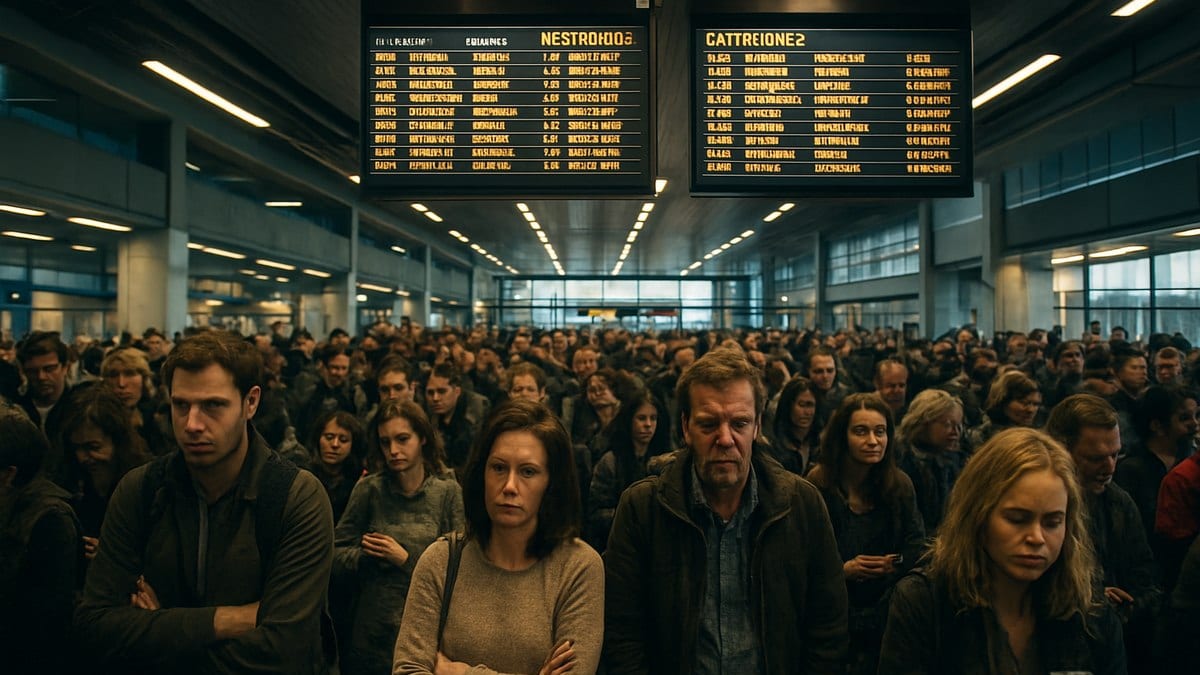
Although detailed passenger counts are not publicly broken out by delay status, images and descriptions circulated by travelers on social platforms on April 11 referenced crowded departure lounges, congested boarding areas and long waits near information counters. With multiple flights posting revised departure times, some customers faced extended periods in the terminal as they waited for updated boarding calls.
The concentration of disruption around busy domestic banks raised the risk of missed connections for travelers linking through Las Vegas. According to aggregated flight-data summaries, a number of delayed arrivals from regional markets reached Harry Reid close to or after the scheduled departure of onward services, particularly those heading to late-evening East Coast arrivals.
Airlines operating through Las Vegas deployed standard tools such as rolling text alerts and mobile rebooking options to manage the backlog. Even so, public accounts from the day describe lines at customer-service desks and gate podiums as travelers sought alternative routings or same-day standby options once it became clear that original itineraries could not be met.
Guidance for Travelers Heading to Las Vegas
While April 11 stands out as a particularly challenging day, recent months have shown that even well-managed airports can experience rapid swings in operating conditions. The official Harry Reid International website continues to advise passengers to arrive at least two hours before domestic flights and three hours before international departures, noting that security wait times and gate operations can change with little notice.
Travel experts reviewing the April 11 performance encourage passengers to build extra padding into travel plans when flying through Las Vegas during busy spring and summer weekends. Strategies often recommended include choosing earlier departures, allowing longer connection windows and monitoring flight status throughout the day rather than waiting for final-hour updates.
Observers also point out that disruptions of the scale seen on April 11 frequently reflect a combination of factors rather than a single root cause. As airlines refine schedules and staffing for the remainder of the year, Harry Reid’s difficult Saturday serves as a reminder that high-demand leisure hubs remain particularly sensitive to pressure elsewhere in the aviation system.