

More news on this day
Air passengers in Vietnam will gain stronger protections from July as a new government decree comes into effect, requiring airlines to refund fares and provide additional support when flights are subject to long delays or cancellations attributable to the carrier.
Get the latest news straight to your inbox!
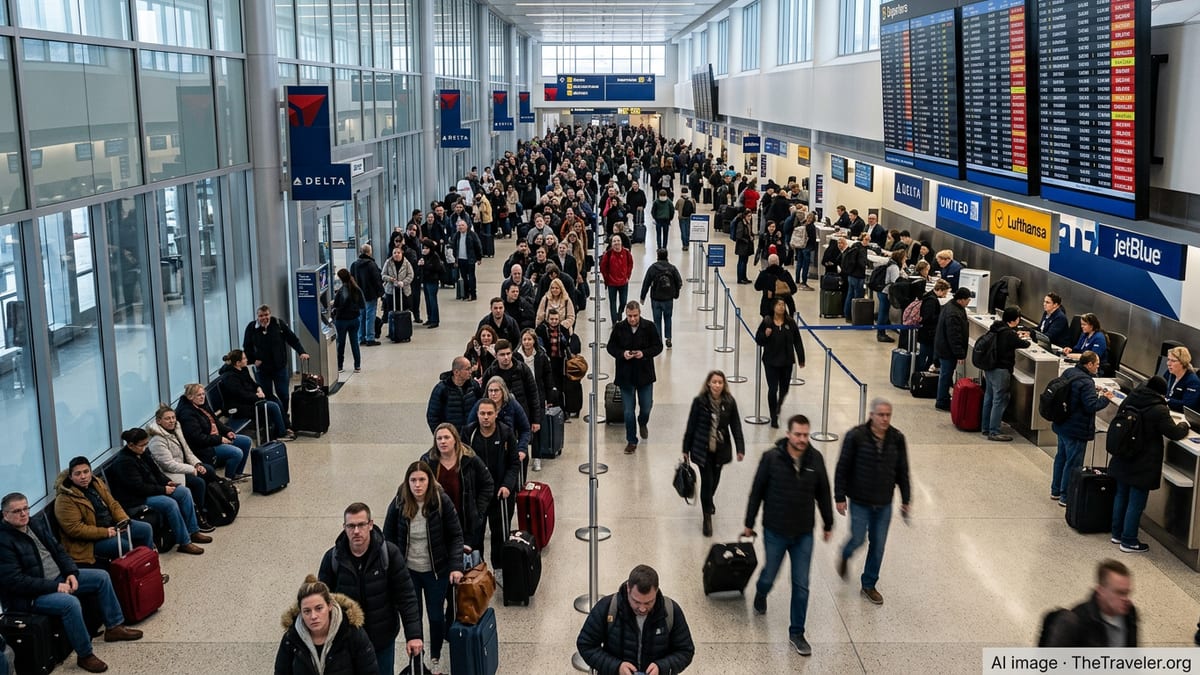
New decree tightens airline obligations from July 1
Vietnam has approved a new decree on air transport that significantly strengthens passenger rights in cases of disruption. The regulation, set to take effect on July 1, establishes clearer definitions of flight delays and spells out when travelers are entitled to refunds, care and compensation.
According to publicly available information on the decree, a flight is considered delayed when its actual departure time is at least 15 minutes later than the published schedule. The text details a scale of responsibilities that increase with the length of the delay, distinguishing between disruptions caused by the airline and those resulting from factors such as weather or air traffic control.
Crucially for travelers, the decree states that when a flight is delayed by four hours or more for reasons attributed to the airline, carriers must refund either the full ticket price or the unused portion of the journey if passengers do not accept a revised schedule or alternative routing. This represents a more explicit refund entitlement than older rules, which focused primarily on fixed, nonrefundable compensation and basic care obligations.
The regulation also covers cancellations and substantial schedule changes, aligning refund rights with those granted in long delay scenarios. Airlines will be expected to proactively inform passengers of their options, including rebooking, refunds or other arrangements, rather than leaving travelers to file ad hoc complaints after disruptions occur.
Refunds and support for delays of four hours or more
Under the new framework, the four hour mark is emerging as a key threshold for more extensive passenger rights. Public summaries of the decree indicate that once a delay reaches this duration and is deemed the airline’s responsibility, carriers must provide meals or meal vouchers and facilitate communication, while also honoring refund requests from travelers who choose not to continue their journey.
The refund obligation covers the fare as well as regulated taxes, fees and surcharges collected by airlines. Where only part of an itinerary is affected, passengers may opt to receive a refund for the unused segment rather than the entire ticket, an option that can be important for those with nonrefundable onward travel or hotel reservations.
Beyond refunds, advance, nonrefundable compensation remains part of the policy toolkit for extended delays and cancellations. Existing practice in Vietnam has included lump sum compensation in local currency for long delays, and the new decree is expected to clarify the interaction between this compensation and the right to a ticket refund. Travelers will generally be able to choose between accepting a rebooked flight with care services or requesting their money back if the disruption severely undermines their travel plans.
Shorter delays trigger more limited obligations, such as refreshments and assistance with information and rebooking. The intent is to reserve full refund rights for the most significant disruptions, while still pushing airlines to manage punctuality and customer care more actively across their schedules.
Response to persistent delay challenges in Vietnam’s skies
The move toward stronger refund entitlements comes against a backdrop of persistent punctuality issues in Vietnam’s domestic aviation market. Official statistics in recent years have shown that a sizable share of flights operated by Vietnamese carriers depart late, with late-arriving aircraft and airline-related factors cited as leading causes.
Industry coverage indicates that congestion at major hubs, rapid growth in air travel demand and operational bottlenecks have all contributed to delays. Low-cost carriers have expanded rapidly, and traditional airlines are still rebuilding networks and fleets in the wake of the pandemic and subsequent market shifts. As a result, travelers have frequently reported schedule changes, rolling delays at airports and limited on-the-spot remedies.
By codifying clearer duties around refunds and care, policymakers appear to be seeking both to protect consumers and to incentivize airlines to invest in more reliable operations. Stronger obligations in cases of long, controllable delays may encourage carriers to allocate more reserve aircraft and crew, improve maintenance planning and tighten turnaround procedures to avoid crossing the four hour threshold.
The changes also bring Vietnam’s consumer protection rules closer to frameworks seen in other markets, where lengthy delays attributable to airlines often trigger refund or compensation rights. While the specific conditions and monetary amounts differ by jurisdiction, Vietnam’s new approach follows a broader global trend toward more robust air passenger protections.
What passengers should expect and how to prepare
From early July, travelers flying within, to or from Vietnam should see airlines update their terms and customer information to reflect the new rules. Carriers are expected to revise their conditions of carriage, customer service plans and airport handling procedures so that frontline staff are aware of when to offer refunds, meals, accommodation or rerouting in the event of disruption.
Passengers may find it useful to keep written records of scheduled departure times, delay announcements and any written notices provided at the airport. When a delay passes the four hour mark and appears to stem from technical, operational or staffing issues at the airline rather than weather or air traffic restrictions, travelers can refer to the new decree when requesting a refund or alternative arrangements.
Travel insurance policies may also interact with the revised framework. While the decree governs what airlines must provide directly, many insurance products offer additional benefits for long delays, missed connections or overnight stays. With clearer official rules on airline responsibilities, insurers may update their own wording to avoid overlaps or gaps.
For international visitors, the new protections could influence airline choice and travel planning, particularly during peak holiday seasons when Vietnam’s airports are busiest. Clearer refund rights for severe delays may provide added reassurance when booking domestic connections from major gateways such as Hanoi, Ho Chi Minh City or Da Nang.
Implementation challenges and industry adjustment
Implementing the new requirements will likely pose operational and financial challenges for Vietnamese airlines, many of which operate on thin margins. Carriers will need to invest in training, customer communication systems and coordination with airport partners to ensure that refund and support obligations are met consistently from July onward.
Industry commentary suggests that airlines may respond by reviewing schedules and building in more realistic block times to reduce the risk of operational knock-on effects. Some carriers might adjust fleet deployment or reduce flight frequencies on congested routes to maintain reliability. There could also be a renewed focus on predictive maintenance and resource planning as operators seek to minimize controllable delays.
Regulators are expected to monitor how the new rules are applied in practice, including how airlines determine whether a delay is within their control and how quickly refunds are processed when requested. Consumer advocacy groups are likely to watch closely to see whether on-paper rights translate into practical improvements at check-in counters and boarding gates.
While the transition period may be complex, the July changes mark a notable shift in Vietnam’s approach to air passenger rights. Long delays and cancellations have historically been a source of frustration for travelers; from next month, those disruptions will carry clearer financial consequences for airlines and more defined remedies for affected passengers.