

Delaware is easy to overlook on a map, but it is surprisingly hard to forget once you have actually spent time there. On a recent journey through the First State, I traded interstates for coastal byways, boardwalks, and historic streets, discovering a place that feels at once classic East Coast and distinctly its own. This is a personal account of that trip, stitched together from mornings on quiet bayside trails, afternoons on the Atlantic, and evenings in small cities that are reinventing their waterfronts.
Arriving in a Small but Surprisingly Varied State
Crossing into Delaware, what struck me first was the sense of scale. This is a compact state, and that works entirely in a traveler’s favor. In a couple of hours you can drive from the industrial skyline near Wilmington to open farm fields in Kent County and on to wide Atlantic beaches in Sussex County. Distances are short enough that you can sleep in one place and still explore several very different communities in a single long weekend.
Driving in from the south, I followed the coastal routes toward the resort towns and then looped back north through quieter inland areas and finally into Wilmington. That circuit made it obvious how much Delaware revolves around water. The broad Delaware Bay, the Atlantic shoreline, tidal rivers, and small inlets shape the way people live and play here. Even when you are not directly on the water, you are usually only a short drive or bike ride away from it.
The other early impression was how relaxed everything felt compared with better-known East Coast destinations. Parking lots existed where I expected meters and parking battles, especially outside peak summer weekends. Locals talked about traffic “getting bad” in terms that would make drivers from New York or Washington, D.C., smile. For a traveler, this slightly gentler pace is part of Delaware’s appeal.
Because the state is small, you can also customize your experience easily. It can be a classic beach holiday, a quiet off-season retreat focused on nature and birdwatching, a food-and-brewery weekend, or a string of short cultural stops in historic towns. My own trip ended up being a bit of each.
Rehoboth Beach: Boardwalk Energy and Coastal Comfort
My base for much of the trip was Rehoboth Beach, the quintessential Delaware resort town on the Atlantic. Rehoboth’s mile-long wooden boardwalk, lined with arcades, snack stands, family-run Funland, and casual seafood spots, delivers exactly the nostalgic summer imagery many people have in mind when they think of the East Coast. In the evening, the sound of gulls blends with music from the bandstand and the distant whir of rides, and the smell of salt air mixes with funnel cakes and beach fries.
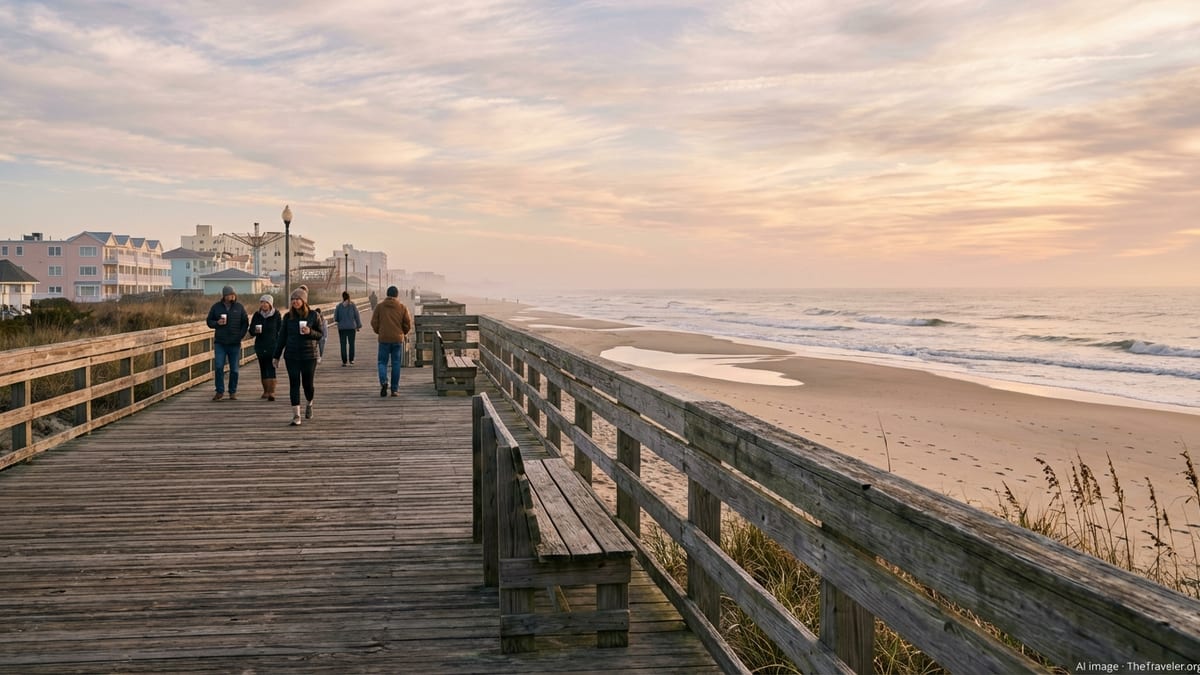
Early mornings there feel different. Before the crowds arrive, the boardwalk turns into a long, informal promenade for joggers, dog walkers in the shoulder seasons, and people with coffee in hand watching the sun clear the horizon. I found that slipping out just after dawn was the best way to appreciate the curve of the shoreline and the sense of openness that can be hard to notice once the beach umbrellas go up and the mid-day energy hits.
Rehoboth has grown increasingly sophisticated in its food scene, and that becomes obvious the moment you duck off the boardwalk and into the grid of streets behind it. Independent restaurants cluster around Rehoboth Avenue and nearby blocks, ranging from laid-back brewpubs connected to Delaware’s well-known craft beer culture to seafood-centric dining rooms and bakeries. Many operate year-round or close to it, which keeps the town feeling alive even outside the height of summer.
Logistically, Rehoboth is well set up for visitors. In busy months, a resort transit bus system links park-and-ride lots along the main highway with stops in town and at the beach, and a seasonal Jolly Trolley runs between Rehoboth and neighboring Dewey Beach. That means you can often leave the car parked and rely on shuttles, which makes evenings out and boardwalk wandering much more carefree.
Quiet Charm in Lewes and Cape Henlopen State Park
If Rehoboth is Delaware’s lively seaside stage, nearby Lewes is its quieter historic counterpart. A short drive up the road, Lewes sits where the Delaware Bay meets the Atlantic, on land that was part of some of the earliest European settlement in the region. Walking its streets, you feel that longer story. Restored houses, shade trees, and small museums make the town center feel more like a New England village than a classic beach resort.
I spent a morning exploring the compact downtown, stopping by the small maritime and local history sites and wandering the side streets lined with tidy homes and gardens. The Zwaanendael Museum, with its Dutch-inspired architecture, stands out immediately. Inside, exhibits interpret the early 17th century settlement that once stood nearby and the shifting colonial powers that shaped Delaware’s beginnings. The town is walkable, and it rewards slow exploration, especially if you enjoy architecture and local history.
Lewes is also the gateway to Cape Henlopen State Park, one of the most impressive natural areas in the state. The park protects thousands of acres of dunes, pine woods, marsh, and beach at the mouth of the bay, with a network of paved and unpaved trails that suit everyone from casual walkers to more committed cyclists. A favorite route of mine was the paved loop that threads through maritime forest and passes near World War II-era observation towers, relics from when this coastline was fortified to protect shipping lanes and industrial sites upriver.
Down at the beach, Cape Henlopen feels wilder than the resort-town sands. The dunes are higher, the horizon wider, and the atmosphere quieter. Anglers cast from a long fishing pier that operates day and night, families set up for the day near guarded swimming areas in warmer months, and birdwatchers scan the sky for raptors and migrating shorebirds, especially during spring and fall. On cooler days, the steady wind and rolling surf make it an excellent place simply to walk and watch the weather change over the water.
Wilmington and the Riverfront: Delaware’s Urban Side
After several days at the coast, I headed north to Wilmington, Delaware’s largest city. Approaching from the south, the first impressions are industrial and urban: bridges, rail lines, and a compact downtown skyline. It would be easy for a beach-focused traveler to skip Wilmington entirely, but that would be a mistake. The city provides an important counterpoint to the state’s resort image, and its waterfront redevelopment in particular is worth at least an afternoon.
The Christina Riverfront, once lined with warehouses and underused lots, has been reshaped into a pedestrian-friendly district of parks, pathways, restaurants, and attractions. I started at Tubman-Garrett Riverfront Park, a green space named for Harriet Tubman and abolitionist Thomas Garrett, whose work on the Underground Railroad helped many people escape slavery. Today the park functions as both memorial and gathering place, with lawns, public art, and views across the river to the busy Amtrak and regional rail station that now bears President Biden’s name.
From there, I followed the riverwalk path, which arcs along the water past residential buildings, dining patios, and small pocket parks. It is the sort of urban space that reveals itself best on foot. Joggers weave past office workers on lunch breaks, families pause to watch boats on the river, and seasonal festivals occasionally fill the open spaces with food vendors and live music. It is not a grand promenade on the scale of larger cities, but it fits Wilmington’s size and has a pleasant, human scale.
Beyond the riverfront, Wilmington offers a small but worthwhile collection of cultural stops: art museums, historic mansions and gardens on the outskirts of the city, and neighborhoods with long-standing communities and food traditions. Because the city is relatively compact, you can sample a bit of this in a single day before returning to the calmer pace of the coast or continuing on to nearby Pennsylvania or New Jersey.
Seasonality, Weather, and Practical Planning
One of the most important things to understand about visiting Delaware is seasonality. Summer, especially between late June and late August, is the prime beach season. On sunny weekends, Rehoboth, Dewey, Bethany Beach, and Fenwick Island fill quickly with visitors from surrounding states. Parking becomes more competitive, restaurant waits grow longer, and lodging prices rise accordingly. The payoff is classic boardwalk energy, warm ocean water, and a full calendar of concerts and events.
Shoulder seasons, particularly late spring and early fall, may be the sweet spot for many travelers. Air and water temperatures are often still comfortable, but crowds thin out noticeably after families return to school. Beach towns adopt a more relaxed rhythm, and walking the boardwalk or the trails at Cape Henlopen feels calmer. Some seasonal businesses do scale back hours outside peak periods, so it helps to check opening times if there are particular restaurants or attractions you want to visit.
Winter on the Delaware coast has its own stark charm. The Atlantic is grey and restless, the dunes are bare, and many boardwalk amusements sit quiet. But lodging rates drop, parking is simple, and stormy-weather walks become a feature rather than a drawback if you enjoy a more contemplative coastal experience. Inland, Wilmington and the surrounding Brandywine Valley museums continue to host exhibitions and events year-round, making this a viable season for culture-focused trips.
Regardless of season, weather can shift quickly along the coast. Summer thunderstorms can roll in with little warning on hot afternoons, and ocean breezes can make evenings feel cooler than interior temperatures suggest. Packing layers and checking local forecasts frequently is wise, particularly if your plans involve time on the water or longer bike rides. Sun protection is essential; even on hazy days, the combination of sand and water amplifies exposure.
Food, Drink, and Delaware’s Tax-Free Appeal
Across the state, food and drink play a larger role in the travel experience than Delaware’s modest size might suggest. Along the coast, seafood is naturally prominent: crabcakes served on toasted buns, fresh oysters in season, and casual dockside spots where you can watch the light fade over bays and canals. Many restaurants emphasize regional ingredients, from local produce and dairy to beers brewed a short drive away.
Delaware has also become known for its craft beer and small-batch spirits, and travelers will encounter this both in coastal towns and around Wilmington. Tasting rooms, brewpubs, and cocktail bars showcase an array of styles. Even if you are not an avid beer enthusiast, they often provide convivial places to spend a rainy afternoon or an evening away from the sand, with menus that range from wood-fired pizzas to inventive seafood dishes.
Beyond dining, shopping is a surprisingly prominent part of visiting Delaware, largely because the state does not charge sales tax on retail purchases. That policy has helped fuel clusters of outlet centers along the main highway near Rehoboth, as well as small boutiques in beach towns and city districts. For some visitors, particularly those coming from nearby states with higher taxes, this adds a subtle but noticeable incentive to combine a beach trip with some targeted shopping.
That said, it is still possible to keep spending under control here, especially outside peak season. Local markets, casual walk-up food stands, and small independent shops provide options at a range of price points. As always, avoiding the most obvious boardwalk-front or waterfront addresses when searching for meals can yield better value without sacrificing quality.
Nature, Wildlife, and Slower Moments
One of my favorite aspects of traveling through Delaware was how easy it was to slip from busy, built-up strips into quietly natural spaces. Within minutes of Rehoboth’s neon signs, you can find yourself in the dunes and low marshes of state parks or wildlife areas, listening to wind through grasses and the calls of shorebirds instead of arcade sounds.
Cape Henlopen State Park is the most obvious example on the coast, but not the only one. To the south, the Delaware Seashore State Park protects long stretches of barrier island between the ocean and inland bays. Here, parking areas and dune crossovers provide access to broad beaches that feel notably less crowded than resort strands, especially outside high season. Anglers set up along designated surf-fishing zones, kayakers and paddlers explore calmer bay waters on the inland side, and birdlife is abundant, particularly at dawn and dusk.
Inland, the state’s wetlands, farm fields, and small woodlands offer more opportunities for quiet exploration. While I only had time to sample a few short trails, it was enough to appreciate the patchwork nature of Delaware’s landscapes. Marsh boardwalks in some preserves allow close-up views of fiddler crabs, egrets, and herons, while simple country roads, often lined with old farmsteads and small churches, invite leisurely drives with frequent photo stops.
For travelers who prefer to mix activity with their downtime, Delaware is especially welcoming to cyclists and runners. Paved trails around the coast and near Wilmington, along with relatively flat terrain, make it easy to log miles without demanding climbs. Rental shops in beach towns provide bikes in a variety of styles, and many hotels are accustomed to storing them or recommending safe routes. Even a short spin on a rental cruiser through Rehoboth or Lewes can give you a different perspective on these communities.
The Takeaway
By the end of my trip, what stayed with me most about Delaware was not a single postcard-perfect scene but the balance of experiences. In a few days I had watched sunrise over the Atlantic from Rehoboth’s boardwalk, walked through centuries of history in Lewes, stood on windswept dunes at Cape Henlopen, and wandered a redeveloped riverfront in Wilmington where freight rail lines and modern apartments now coexist.
Delaware does not shout for attention in the way some destinations do. It is more understated, more local, and often more relaxed. That can be precisely what makes it appealing. If you arrive without expecting a theme-park version of a vacation and instead look for small interactions, quiet corners, and modest but well-tended pleasures, the state rewards you with an authentic and varied trip that feels both manageable and memorable.
For travelers in the Mid-Atlantic region, Delaware is particularly well suited to long weekends and spontaneous getaways. The drives are short, the options are diverse, and the logistics are rarely overwhelming. Whether you are interested in boardwalk nostalgia, tax-free shopping, maritime history, or coastal nature, you can fit a surprising amount into a single itinerary without feeling rushed.
As I left, crossing the state line once more, I found myself already planning a return, this time with a looser schedule and more days to linger in places I had only sampled. Delaware may be small, but as a travel destination, it is far larger than it looks on the map.
FAQ
Q1. When is the best time of year to visit Delaware’s beaches?
The most popular period is late June through August for warm water and full boardwalk activity, but late spring and early fall offer fewer crowds and milder weather.
Q2. How many days do I need for a first trip to Delaware?
A three to four day stay is enough to experience Rehoboth Beach, Lewes, Cape Henlopen State Park, and a brief visit to Wilmington without feeling rushed.
Q3. Is Delaware an expensive destination compared with nearby states?
Prices in peak summer can be high in resort towns, but the lack of sales tax and more moderate lodging in shoulder seasons help keep overall costs manageable.
Q4. Do I need a car to get around Delaware as a visitor?
A car offers the most flexibility, especially for exploring both the coast and Wilmington, but beach-area shuttles and trolleys make it possible to park once and rely on transit locally.
Q5. Are Delaware’s beaches family-friendly?
Yes, many beaches have lifeguards in season, shallow entry into the water, boardwalk amusements, and a generally relaxed atmosphere that suits families with children.
Q6. What should I pack for a trip to Delaware in the summer?
Light clothing, swimwear, comfortable walking shoes, layers for breezy evenings, and strong sun protection are essential, along with rain gear for occasional storms.
Q7. Is Delaware a good destination for outdoor activities beyond the beach?
Absolutely; state parks and wildlife areas offer biking, hiking, birdwatching, kayaking, and fishing, especially around Cape Henlopen and Delaware Seashore State Park.
Q8. Can I visit Delaware as a car-free traveler arriving by train or bus?
Yes, you can reach Wilmington by train and use rideshares or buses to connect to local attractions, though reaching the coastal towns without a car requires more planning.
Q9. Are there notable historical sites to see in Delaware?
Historic Lewes, Wilmington’s Underground Railroad landmarks, and small museums across the state provide insight into colonial history, maritime life, and civil rights.
Q10. Is Delaware suitable for a trip outside the summer months?
Yes, spring and fall are excellent for quieter coastal stays and outdoor activities, while winter works well for cultural visits to Wilmington and the Brandywine Valley.