

More news on this day
Months of escalating conflict across the wider Middle East are reshaping regional travel patterns, with reports of single digit hotel occupancy in once booming destinations from Dubai to Jordan, and mounting concern that a prolonged downturn could rewrite the tourism map for years to come.
Get the latest news straight to your inbox!
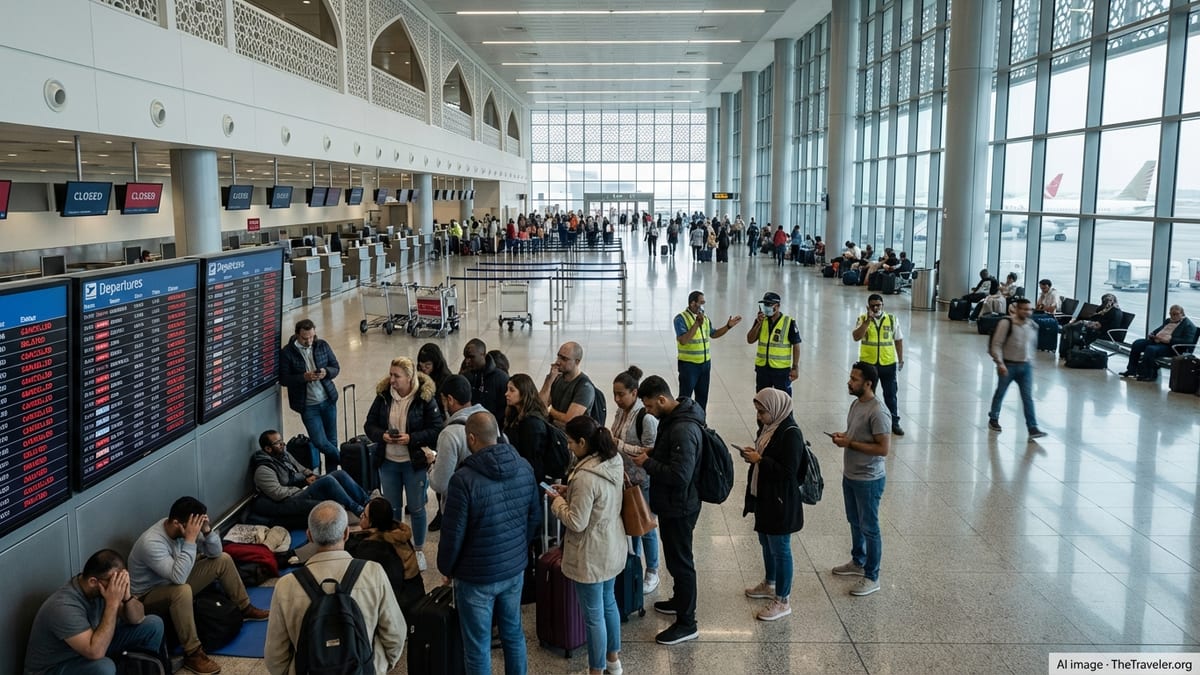
A Sudden Shock To A Region Built On Visitor Growth
Before the latest escalation, tourism had been one of the most dynamic engines of Middle Eastern growth. Dubai reported record visitor arrivals in both 2024 and 2025 and average hotel occupancy close to 80 percent, according to publicly available tourism statistics, while Bahrain and parts of Saudi Arabia were investing heavily to capture rising leisure demand. These gains came on top of long term efforts to diversify away from oil by turning cities and coastal areas into global visitor hubs.
The conflict corridor stretching from Gaza to the Gulf has abruptly altered that trajectory. Travel industry forums, local media and sector analyses now describe a sharp fall in new bookings, widespread cancellations from key long haul markets, and hotels that had been planning for a strong 2026 high season instead facing half empty lobbies. In some pockets, particularly where travel advisories have tightened, hoteliers describe occupancy figures in the single digits, a scenario more reminiscent of early pandemic shutdowns than of a peak travel year.
Published economic assessments link the latest war to a broader slowdown in regional service industries, with tourism singled out as especially exposed because of its dependence on traveller confidence and perceptions of safety. Analysts note that even when countries are not directly involved in the fighting, their proximity on a map can be enough to trigger a wave of cancellations from nervous visitors and tour operators, compounding the shock.
The result is an increasingly uneven picture. Some urban business districts still report moderate activity tied to corporate travel and long stay guests, while resort areas built around discretionary leisure spend are bearing the brunt of the pullback. Industry observers caution that if the conflict continues through the summer and into the next winter season, the damage could embed itself in pricing, staffing and investment decisions for years.
Dubai’s Hospitality Sector Swings From Record Highs To Rare Lows
Dubai illustrates the scale of the reversal. Official data for 2024 and 2025 shows that the city’s hotel market was operating near historical highs, with more than 150,000 rooms and apartments supported by occupancy approaching 80 percent on average. That level of demand typically translated into full beachfront resorts in peak months, premium daily rates and wait lists at many branded properties across Downtown, the Palm and newer island developments.
Since the latest conflict flare up, however, accounts shared by hospitality workers and local business commentary point to a severe short term contraction. Staff at upscale properties in central districts describe occupancy dropping into the low single digits on certain weekdays, a far cry from the 90 percent plus levels the city has grown accustomed to during major events and holiday periods. Restaurant groups tied to hotels are reportedly closing temporarily, reflecting how quickly food and beverage revenue falls when room nights disappear.
Sector specialists explain that Dubai’s reliance on advance bookings has limited the scope for emergency price cuts. With a significant share of winter and early spring stays locked in months ago, hotels face pressure not to undercut guests who booked at higher rates, even as walk in demand evaporates. That has left some properties in the unusual position of having relatively high advertised prices alongside sharply reduced occupancy.
At the same time, Dubai’s tourism authorities still point to the city’s strong fundamentals, diversified source markets and track record of rapid recovery from previous shocks such as the global financial crisis and the pandemic. Industry analysis suggests that if the security backdrop improves and air connectivity remains intact, the emirate could again be among the fastest in the region to bounce back, but for now many operators are focused on cutting costs and preserving cash.
Jordan’s Flagship Sites Confront Empty Rooms And Vanishing Tours
Jordan is experiencing one of the most acute tourism slumps linked to the conflict. Travel trade reporting and regional economic research highlight the country as a clear casualty of war related perception risks, even though it is not directly part of the fighting. Iconic sites such as Petra and Wadi Rum, which only recently surpassed pre pandemic visitor totals, have seen steep drops in arrivals since late 2023 and again with the more recent escalation.
Data cited by local outlets shows a collapse in visitor numbers to Petra, with annual arrivals falling from well over one million in 2023 to fewer than half that figure the following year. In parallel, hotel associations and tourism businesses describe occupancy levels plunging to as low as 10 percent in some areas and, during especially weak weeks, even into the low single digits. The impact is particularly harsh in towns where a large share of employment depends on tour groups, guides, transport providers and mid range hotels.
Capital Amman and the Dead Sea resorts have fared slightly better, but public statements from industry groups since late 2024 have repeatedly flagged occupancy below 30 percent in the city and around a quarter at the Dead Sea. Tour operators report near total cancellations from some long haul markets, including North America and parts of Asia, while European bookings have also fallen sharply. The resulting revenue shock is reverberating through the wider economy, from restaurant suppliers to souvenir sellers.
Policy debates in Amman increasingly focus on how to sustain tourism businesses through a downturn that has no clear end date. Proposals have included easing financing terms for hotel operators, ramping up marketing in nearby Gulf markets less sensitive to regional headlines, and speeding work on new regulations intended to support smaller guesthouses and adventure operators. For now, however, on the ground reports portray a sector in triage mode, hoping only to keep core staff and infrastructure intact until demand eventually returns.
Bahrain And Saudi Arabia Confront Setbacks To Ambitious Tourism Plans
The conflict shock has also complicated tourism strategies in Bahrain and Saudi Arabia, two countries that have invested heavily in new attractions, resorts and event led visitation. Prior to the latest escalation, Bahrain’s hotel sector was benefiting from strong weekend and holiday demand from neighbouring Gulf states, with occupancy during peak periods reportedly climbing above 90 percent in some properties. New coastal projects and an eco resort on Hawar Islands underscored confidence in continued growth.
Recent months have been more challenging. Regional media and business commentary describe softer booking trends, especially from international corporate and leisure segments, and a noticeable slowdown in large event and conference calendars. The situation was made more difficult by a drone strike that hit a hotel property in Manama, increasing anxiety among both residents and potential visitors even though casualties were avoided. Travel advisers say that such high profile incidents can have an outsized effect on perceptions, regardless of whether additional attacks follow.
Saudi Arabia, meanwhile, has positioned tourism as a core pillar of its economic transformation agenda, promoting new mega projects on the Red Sea and in the desert interior. Official targets envisage tens of millions of international visitors annually within the next decade. Analysts now warn that sustained regional instability could make those goals harder to achieve on the original timeline, as some travellers choose to postpone trips or shift to destinations perceived as further from conflict zones.
Domestic tourism and intra Gulf travel are providing some offset, with residents of the region continuing to move between neighbouring countries for short breaks, family visits and religious travel. Yet for large resort developments and branded urban hotels designed around high spending foreign guests, the loss of long haul demand is difficult to replace, particularly in the luxury and meetings segments.
What Travellers And The Industry Should Watch Next
For prospective visitors, the current environment presents a complex picture rather than a simple do not travel verdict. Many parts of Dubai, Saudi Arabia, Bahrain and Jordan remain calm, major airports are operating, and some travellers are taking advantage of lower crowd levels and promotional offers. At the same time, shifting security assessments, evolving airspace restrictions and fast changing booking conditions mean that plans can be upended at short notice.
Travel experts advise monitoring government advisories, airline schedules and hotel booking terms closely, with particular attention to cancellation and refund policies. Flexible tickets, comprehensive travel insurance and direct confirmation from accommodation providers about operating status can help mitigate some of the risks associated with planning trips into a volatile region. Visitors already on the ground are also encouraged in public guidance to stay informed through reliable news outlets and official channels.
For the industry, the key variables will be the duration and geographic spread of the conflict, the speed at which flight capacity is restored or expanded, and how quickly confidence returns in core source markets. If the war drags on, analysts anticipate further consolidation among smaller operators, delayed openings of new hotels and resorts, and a tilt toward value driven pricing as destinations compete for a smaller pool of international travellers.
Conversely, a relatively swift easing of tensions could set the stage for another rapid rebound, similar to the post pandemic recovery that pushed Dubai and other hubs to record visitor numbers. In that scenario, the properties that have managed to retain skilled staff, maintain their product standards and keep marketing channels active may be best placed to capture the first wave of returning demand. Until then, single digit occupancy in some of the Middle East’s most recognisable destinations stands as a stark reminder of how quickly conflict can erase years of tourism gains.