


More news on this day
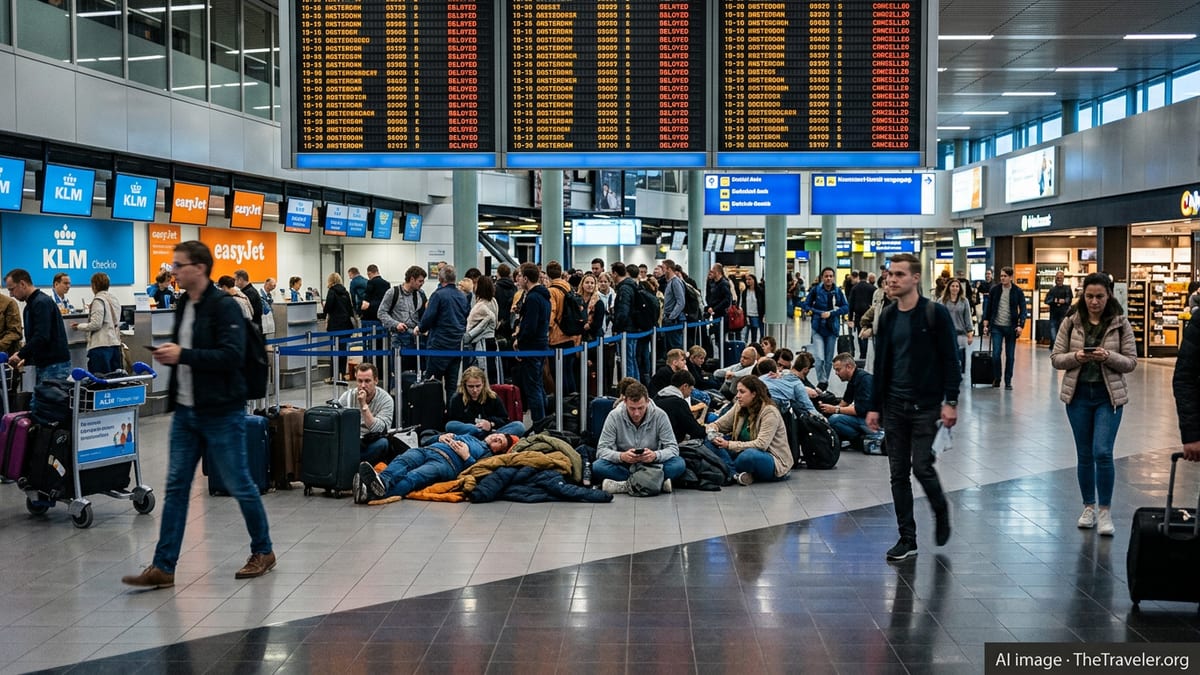
Air passengers across Europe faced another day of disruption as more than 50 flights were cancelled and close to 2,000 delayed on Tuesday, affecting major hubs in Germany, the United Kingdom, Austria, the Netherlands, Greece, Belgium and other countries, according to real time tracking data and airline operational updates.
Get the latest news straight to your inbox!
Major Hubs From London To Vienna Under Strain
The latest wave of disruption was concentrated at some of Europe’s busiest airports, where operational bottlenecks and tighter summer schedules left little room to absorb knock on delays. Airports serving London, Berlin, Vienna, Amsterdam, Athens and Brussels all reported elevated numbers of delayed departures and arrivals compared with an average June weekday.
Publicly available tracking dashboards indicated that 51 flights were cancelled across Europe during the morning and early afternoon, while approximately 1,978 services were delayed by at least 15 minutes. The figures cut across both short haul and medium haul routes, complicating travel plans for business travellers and holidaymakers at the start of the peak summer season.
Industry data for recent days suggests that Spain, France and Greece have been key pressure points for the wider European network, with congestion in Mediterranean airspace and at popular coastal destinations feeding back into schedules for airlines based in Germany, the UK, Austria and the Netherlands. This pattern has increased the likelihood that a delay originating in one country will cascade into missed connections and later departures elsewhere in Europe.
While the disruption on Tuesday did not reach the scale of a full scale strike or weather related shutdown, analysts note that even a relatively modest number of cancellations can ripple through Europe’s dense hub and spoke system, stranding aircraft and crews out of position for subsequent rotations.
Lufthansa, British Airways, Aegean And Austrian Among Airlines Hit
The impact was felt across several major European carriers, particularly those that rely on carefully timed connections through their primary hubs. Lufthansa, British Airways, Aegean Airlines and Austrian Airlines all reported schedule adjustments or individual cancellations affecting flights to and from cities including Frankfurt, Munich, London, Vienna and Athens.
Lufthansa has already been operating with a tighter network this summer after restructuring its short haul operations and withdrawing regional unit Lufthansa Cityline from service. Published planning documents show that the group has removed around 20,000 flights from its summer schedule and reduced frequencies on some domestic German and intra European routes to create more operational buffer, yet isolated cancellations and last minute changes are still occurring as demand peaks.
Austrian Airlines, the Vienna based member of the Lufthansa Group, is also managing ongoing adjustments. The carrier has extended the suspension of its Vienna to Tel Aviv route into mid June and is using Vienna as a key hub to help absorb some of the short haul traffic displaced by changes at other Lufthansa Group bases. This strategy has increased the importance of maintaining reliability on Vienna’s feeder routes from Germany, the Netherlands and elsewhere in central Europe.
In southern Europe, Greece’s largest carrier Aegean continues to balance strong demand on routes linking Athens with northern European capitals such as Berlin, Amsterdam and London with lingering disruption tied to security conditions on certain Middle East services. British Airways, meanwhile, has postponed the restart of some long haul routes in order to focus capacity on core transatlantic and European services from London Heathrow and Gatwick, where slot constraints make recovery from any disruption more challenging.
Weather, Network Congestion And Structural Cuts Converge
Several factors appear to be converging to produce the latest spike in delays and cancellations. Weather related restrictions and air traffic control flow measures over parts of western and southern Europe have reduced available capacity on some key corridors, particularly around the western Mediterranean. When combined with high seasonal traffic, these constraints have produced longer holding patterns and knock on delays.
At the same time, structural cuts implemented earlier in the season by some airline groups have left fewer spare aircraft and crews available to cover for unexpected issues. Lufthansa Group, for example, has reorganised its network for summer 2026 following the early end of operations at Lufthansa Cityline. Public announcements indicate that the group has consolidated certain German domestic and European routes through hubs in Vienna and Zurich, while trimming frequencies on others to reduce cost and fuel consumption.
Industry observers note that such network reshaping can improve efficiency over the medium term but may temporarily increase vulnerability to disruption, as airlines fine tune rotation plans and crew pairings. With peak season now under way, even small mismatches between capacity and demand can materialise as crowded departure boards and longer queues at customer service desks when irregular operations occur.
Low cost and leisure carriers operating into popular holiday destinations are making similar adjustments, with some airlines extending suspensions on selected routes to the Middle East and Gulf region through late summer and redeploying aircraft into high demand intra European markets. This has created pockets of very high load factors, leaving limited options for same day rebooking when flights are delayed or cancelled.
Passengers In Athens, Berlin And London Face Missed Connections
For travellers in affected cities, the most immediate consequence of Tuesday’s disruption has been missed connections and extended travel times. In hub airports such as Frankfurt, Munich, London Heathrow and Vienna, delayed inbound flights from regional points across Germany, the UK, Belgium and the Netherlands have resulted in tight or unworkable connection windows for onward journeys to Greece and other southern European destinations.
Social media posts and traveller reports describe passengers in Athens and Berlin dealing with rebooked itineraries that route them through alternative hubs or add overnight stops. In some cases, travellers connecting between Europe and long haul destinations have been forced into journeys stretching beyond 24 hours, depending on seat availability on later flights.
Operations in London have been further complicated by congestion at both Heathrow and Gatwick, where airlines including British Airways and partner carriers are operating close to capacity on key European trunk routes. Any single cancellation can quickly fill remaining seats on later departures, limiting the ability of airlines to accommodate disrupted passengers on the same day.
In Vienna and Amsterdam, airline schedules show that carriers are attempting to preserve core morning and evening banks of flights that feed long haul departures, sometimes by cancelling lower demand frequencies in the middle of the day. While this approach can protect connectivity for the largest number of passengers, it may result in disproportionate disruption on certain thinner routes to and from secondary cities in Germany, Belgium and the Netherlands.
What Travellers Can Expect As Summer Peaks
With school holidays beginning across parts of Europe and North America, aviation analysts expect continued pressure on European air travel in the coming weeks. Published forecasts point to passenger numbers returning to or exceeding pre pandemic levels on many routes, while airlines and airports are still refining staffing and infrastructure to match this demand.
Travel experts recommend that passengers build additional buffer time into itineraries involving connections through major hubs such as London, Frankfurt, Munich, Vienna, Amsterdam and Athens, particularly when onward legs are long haul or infrequently served. Selecting earlier flights in the day and avoiding very short connection windows can provide more options if schedules start to slip.
Consumer information resources emphasise that passengers departing from or arriving in the European Union, the UK or European Economic Area generally retain strong protections when flights are cancelled or heavily delayed for reasons within an airline’s control. Guidance stresses the importance of keeping boarding passes, booking confirmations and any written notices of schedule changes in order to support later claims.
For now, the combination of targeted schedule cuts, lingering airspace constraints and high summer demand suggests that Europe’s aviation network will remain fragile. Travellers flying with Lufthansa, British Airways, Aegean, Austrian and other major carriers through hubs in Germany, the UK, Austria, the Netherlands, Greece and Belgium are likely to see continued instances of cancellations and delays, even on days without headline making disruption.