


More news on this day
The Trump administration is escalating its focus on alleged international “birth tourism” schemes, moving to revoke hundreds of visas and prompting fresh warnings to U.S. hospitals about unpaid bills, medical liability and scrutiny of maternity services used by foreign travelers.
Get the latest news straight to your inbox!
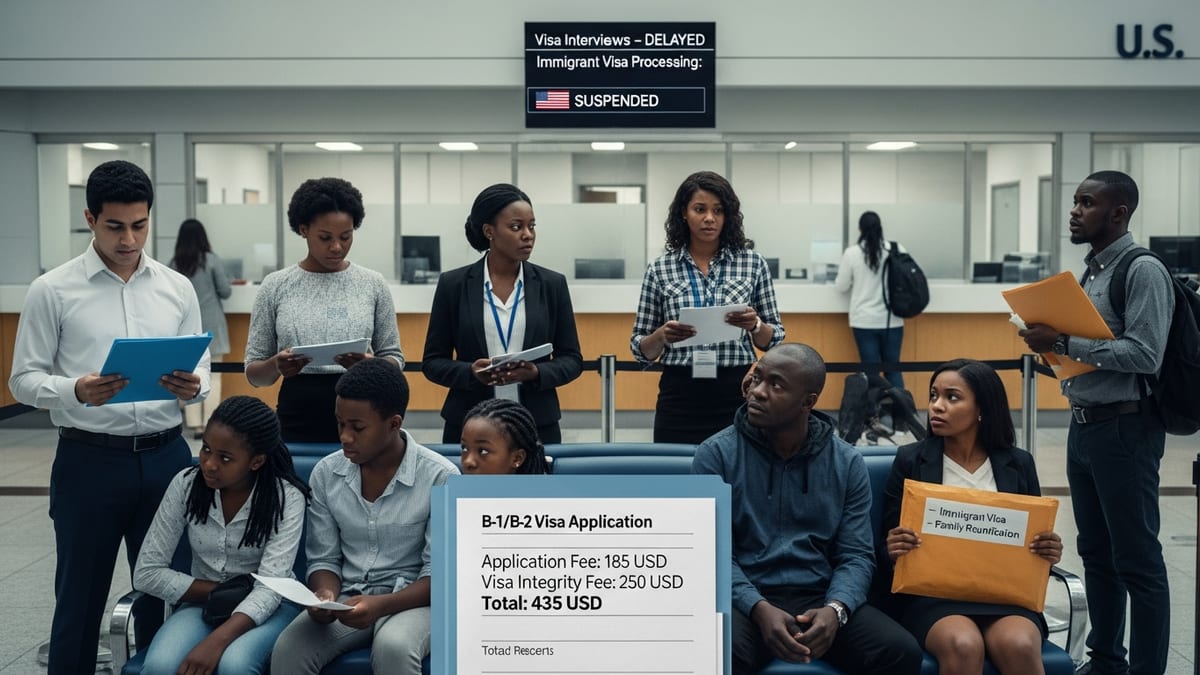
Visa crackdowns put international maternity travel in the spotlight
Recent announcements from the U.S. State Department indicate that consular officials have dismantled what they describe as organized birth tourism networks operating across parts of West Africa and Europe, resulting in the revocation of hundreds of B-1/B-2 visitor visas. Publicly available summaries of the operations say pregnant foreign nationals allegedly relied on fraudulent documents and visa “fixers” to secure travel with the primary aim of giving birth on U.S. soil so their children would receive American citizenship.
Reports indicate that one uncovered network in West Africa involved more than 100 travelers whose cases have now been flagged as suspected birth tourism. In Europe, investigators have linked more than 400 visa applications to at least six companies accused of coaching clients on what to tell consular officers, arranging accommodation and coordinating hospital deliveries in the United States. Officials have framed the effort as part of a broader campaign to protect the integrity of U.S. citizenship and clamp down on immigration-related fraud tied to travel.
The latest enforcement push builds on earlier moves dating back to 2020, when a State Department regulation instructed consular officers to deny visitor visas if they believed an applicant’s primary purpose was to give birth in the United States. The renewed focus under the current Trump administration, reinforced by a 2025 executive order aimed at narrowing birthright citizenship, has now pushed birth tourism back to the forefront of both immigration and travel-industry debate.
For the international travel sector, the message is that visa screening around pregnancy, medical travel and extended maternity stays is likely to become more intensive. Airlines, tour operators and medical-travel facilitators are watching closely as new guidance filters through embassies, consulates and ports of entry.
Hospitals warned about unpaid bills, fraud exposure and documentation gaps
Alongside the visa actions, immigration-focused think tanks and policy advocates are drawing renewed attention to the role of U.S. hospitals in birth tourism packages. Research circulated by groups that track the issue describes cases in which foreign patients left sizable unpaid balances for obstetric and neonatal care, leaving hospitals to absorb the costs or send accounts to collections. Some analyses cite examples where outstanding charges for nonresident births ran into the millions of dollars for a single facility.
An expert who recently briefed lawmakers on international maternity services has warned that hospitals serving as delivery points for foreign patients may be pulled into investigations if they appear in marketing materials or package descriptions used by birth tourism companies. Public testimony and written submissions describe scenarios in which operators advertise specific U.S. hospitals, bundle pre-arranged delivery plans and then coach clients on how to present their purpose of travel during visa interviews.
According to these materials, facilities that have not scrutinized their relationships with overseas referral agencies or informal “fixers” could face questions about billing practices, identity verification, and whether any staff knowingly facilitated misrepresentation. Risk specialists argue that even hospitals with no intent to participate in visa fraud may still confront reputational damage or extra regulatory attention if they become closely associated with birth tourism networks.
Industry advisers therefore urge hospital compliance teams to audit admission procedures for nonresident patients, ensure clear documentation of who is responsible for payment, and review how their names and logos are being used abroad. For travel medicine and international patient departments, the evolving enforcement landscape is a signal to tighten contracts with foreign intermediaries and to develop clear policies for maternity care sought by short-term visitors.
Travel and tourism sector faces new uncertainty over pregnancy-related trips
The crackdown is reverberating through parts of the travel industry that cater to medical tourism and long-stay visitors, especially those marketing packages to expectant parents. In past investigations, U.S. prosecutors have described businesses that charged tens of thousands of dollars to arrange visas, housing and hospital care, sometimes in upscale neighborhoods or near well-known maternity centers. Those cases, many involving clients from China and other countries, helped shape the perception that birth tourism had grown into a lucrative, globalized niche.
Travel commentators note that the current wave of visa revocations and high-profile announcements is likely to chill demand for maternity-focused itineraries, even among travelers who believe they are complying with the rules. Some tour operators and brokers may pull back from pregnancy-related marketing altogether, wary of having their activities reclassified as part of a fraudulent scheme if clients omit key details on visa forms.
Inbound tourism advocates, meanwhile, warn that broad-brush enforcement could have unintended consequences for legitimate visitors who happen to be pregnant or who need urgent obstetric care while in the United States. Without very clear standards, they argue, travelers may face inconsistent decisions at consulates and ports of entry, raising the risk that some will avoid U.S. destinations when planning trips in late pregnancy or seeking specialized medical treatment.
For now, the turbulence adds another layer of complexity to a post-pandemic travel landscape already shaped by shifting visa rules, changing health requirements and heightened geopolitical tensions. Travel insurers, immigration attorneys and cross-border medical coordinators are emerging as key intermediaries as families weigh the risks of long-haul journeys during pregnancy.
Legal and ethical debate intensifies around birthright citizenship
The administration’s emphasis on birth tourism is unfolding alongside a larger legal battle over the scope of birthright citizenship in the United States. A Trump executive order issued in 2025, which seeks to narrow who is automatically recognized as a citizen at birth, is now before the Supreme Court, with arguments expected to delve into both unauthorized immigration and alleged birth tourism.
Advocacy organizations that oppose the crackdown argue that focusing on a relatively small number of organized birth tourism cases risks conflating the practice with the broader, constitutionally grounded principle of citizenship by birth. Public commentary from immigrant-rights groups suggests concern that high-profile enforcement actions and rhetoric about “citizenship for sale” could influence the legal and political climate far beyond the niche travel market.
On the other side, restrictionist policy analysts contend that perceived abuse of birthright citizenship through organized travel schemes undermines public support for the current system and imposes hidden costs on hospitals, taxpayers and consular operations. Their position is that aggressive visa enforcement and closer scrutiny of international maternity packages are necessary to deter fraud and to prevent foreign governments or nonstate actors from exploiting U.S. citizenship benefits.
Whatever the eventual outcome in the courts, the legal debate is already reshaping how birth tourism is discussed in travel, health care and immigration circles. For hospitals near major gateways and in states that attract large numbers of international patients, the intersection of constitutional law, visa policy and maternity care is no longer an abstract issue but a concrete operational challenge.
Hospitals and travelers adjust strategies amid shifting rules
As the policy environment continues to evolve, both hospitals and international travelers are modifying their approaches. Some U.S. facilities that previously partnered openly with overseas agents to attract maternity patients are reportedly reevaluating those relationships, emphasizing direct bookings and requiring more detailed financial guarantees from nonresident parents. Legal advisers recommend that hospitals clarify that they do not provide immigration guidance and that any visa-related representations must come from licensed professionals.
For travelers, the heightened scrutiny has translated into more cautious planning. Prospective visitors who are pregnant or considering becoming pregnant during a planned stay are increasingly advised by immigration attorneys to disclose relevant medical details accurately during visa applications and interviews, and to document non-birth-related reasons for travel, such as work obligations or family events. Travel planners also stress the importance of comprehensive medical insurance that explicitly covers maternity and neonatal care for international trips.
Specialists in cross-border medical travel suggest that the current moment could accelerate a shift toward more regulated, transparent models of international maternity care, with clear separation between lawful medical tourism and any attempt to circumvent immigration rules. For the travel industry at large, the Trump administration’s latest actions serve as a reminder that evolving visa policies can quickly transform niche travel trends into high-risk ventures for both providers and clients.