


More news on this day
Air travel across the Gulf is facing fresh disruption as airports in the United Arab Emirates, Saudi Arabia, Kuwait and Qatar report waves of delays and cancellations, affecting carriers including Airblue, Saudia, Air Arabia and Qatar Airways at major hubs in Dubai, Sharjah, Riyadh, Kuwait City and Doha.
Get the latest news straight to your inbox!
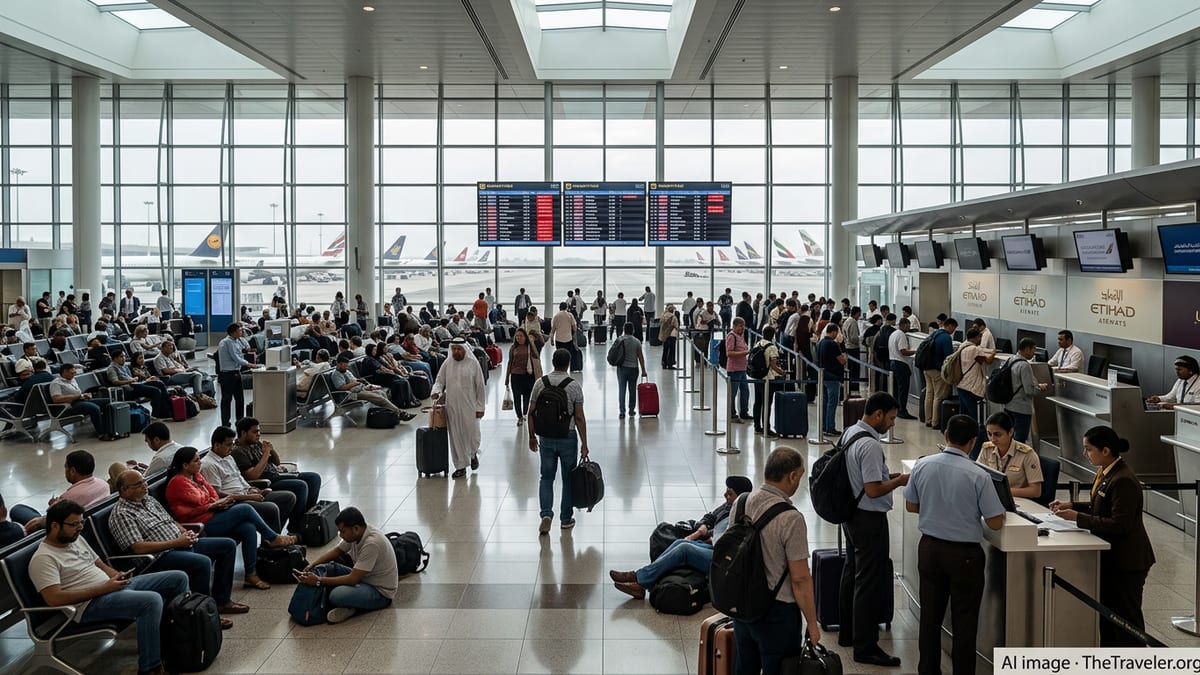
Gulf Hubs Report New Wave of Cancellations and Delays
Recent updates from aviation data trackers and regional media indicate that flight schedules across several key Middle Eastern hubs remain unstable, with hundreds of services delayed and dozens cancelled in recent days. Dubai International and Sharjah in the UAE, Hamad International in Doha, Kuwait International, and Riyadh’s main airport have all reported significant timetable disruption as airlines juggle aircraft positioning, crew rosters and evolving airspace constraints.
In the UAE, publicly available operational tallies cited by travel industry outlets for early June highlight the scale of the challenge. One recent breakdown of traffic at Dubai and Sharjah listed more than 160 delays and over 20 outright cancellations in a single update, involving regional carriers such as Flydubai, Emirates, Air Arabia and Jazeera Airways, as well as Gulf and South Asian airlines connecting through the emirates. These disruptions have spilled over into the wider network, slowing turnarounds and forcing missed connections on onward routes.
Similar patterns are visible in Kuwait and Qatar, where data from airport authorities and airline advisories show patchy service on some regional routes even as basic connectivity returns. Kuwait International briefly halted or curtailed operations during a recent bout of heightened regional security tensions before resuming limited schedules, while travel alerts from Doha describe continuing adjustments to frequencies and routings as carriers work within predefined flight corridors.
Security Tensions and Weather Hazards Combine to Hit Operations
The latest round of disruption is rooted in a combination of lingering security restrictions and volatile weather that has complicated operations across the northern Gulf. Following a series of regional incidents earlier this year, risk assessments by aviation consultancies and logistics firms describe intermittent airspace closures and tightened routing rules over parts of Iran, Iraq, Kuwait, Qatar and the UAE. These restrictions have forced airlines to lengthen flight paths, refile routes at short notice and, in some cases, suspend services altogether when safe alternatives are not immediately available.
Separate reporting on a rare severe weather pattern over eastern Saudi Arabia and the Gulf states in March, including Kuwait, Qatar and the UAE, underlines an additional layer of risk. Meteorological services warned of strong winds, dust, heavy rain and thunderstorms moving across major population corridors in these countries, conditions that commonly lead to reduced visibility and temporary suspension of takeoffs and landings. While airports are accustomed to handling dust and heat, the combination of intense storms and already constrained airspace has left less operational flexibility when weather forces short term closures.
For Saudi Arabia’s hubs, including Riyadh and Jeddah, that has meant periodic disruption on domestic links and services into affected Gulf neighbors when routing options narrow. Saudia and other operators have had to absorb extra flight times, adjust departure waves and occasionally cancel rotations when crews or aircraft would no longer remain within duty and maintenance limits.
Impact on Airlines: From Airblue to Qatar Airways
The uneven operating environment has affected a broad mix of airlines that depend on Gulf hubs for connectivity between Asia, the Middle East, Africa and Europe. Low cost and hybrid carriers such as Air Arabia, Jazeera Airways and Flydubai have reported some of the most visible schedule changes in the UAE and Kuwait, where dense short haul networks are particularly sensitive to knock on effects from even minor delays. A single late inbound can cascade into multiple missed slots across the day, prompting either further delays or selective cancellations.
Full service airlines, including Saudia and Qatar Airways, face a different set of challenges. Long haul operations into and out of Doha and Riyadh are heavily planned around carefully timed banks of connecting flights. Travel advisories and corporate updates from these carriers in recent months acknowledge that regional security events and route restrictions have forced timetable revisions, selective suspension of some destinations and the creation of dedicated flight corridors into Doha to maintain a base level of service.
Smaller regional and foreign carriers are also feeling the strain. South Asian airlines serving Dubai, Sharjah and Doha have, at times, cut Middle East rotations from secondary cities as a result of airspace closures and airport disruptions, according to airport statements in origin countries. In a number of cases, this has left passengers bound for the Gulf reliant on rebooking via alternative hubs or later departures, extending total journey times and crowding already busy services.
Passenger Experience: Long Queues, Missed Connections and Rebookings
For travelers, the practical effects of the current disruption cycle are familiar but still deeply frustrating. Reports from regional and international travel media describe long queues at check in desks and transfer counters in Dubai, Sharjah, Doha and Kuwait City as passengers seek rebooking options after cancellations or missed connections. Some outlets detail instances where onward flights to the Gulf from South Asia and other regions have been called off entirely, with passengers advised to await alternative arrangements or refunds.
Published guidance from airlines and travel risk advisers stresses that schedules in the region remain subject to rapid change and urges passengers to monitor flight status as close to departure as possible. Travel advisories circulated in March and April highlighted that even airports listed as operational, such as Dubai and Riyadh, were offering reduced frequencies and could alter services at relatively short notice in response to security updates.
Consumer advocates point out that the fragmented nature of the disruption complicates compensation and care rules. Many of the affected flights operate across jurisdictions with differing passenger rights frameworks, and some delays stem from broader airspace or security decisions rather than airline specific operational failures. Travelers are being encouraged by industry bodies to keep detailed records of boarding passes, booking confirmations and any written communication from airlines to support later claims or insurance requests.
Slow Recovery and an Uncertain Outlook for Summer Travel
Although the situation is no longer as acute as during the peak of airspace closures earlier in the year, the Gulf’s aviation network is still in a fragile recovery phase. Sector reports and risk analyses state that major hubs including Dubai, Doha, Sharjah and Kuwait City have gradually reopened to a wider range of destinations, but often with trimmed schedules and rerouted flights that leave little spare capacity to absorb fresh shocks.
At the same time, demand is rising as the summer travel period gets underway, pushing passenger numbers toward seasonal peaks while operational resilience remains weakened. Airlines such as Qatar Airways are publicizing expanded networks and new routes for the summer, but those plans remain dependent on a stable security environment and cooperative regional airspace management. Any renewed escalation in tensions or further bouts of extreme weather over the Gulf could quickly translate into another round of widespread delays and cancellations.
For now, publicly available aviation risk assessments suggest that travelers planning itineraries through Dubai, Sharjah, Riyadh, Kuwait City or Doha should factor in the possibility of schedule changes, longer journey times and last minute rerouting. As the region navigates the months ahead, the performance of these critical hubs will be closely watched by airlines, passengers and the wider travel industry that depends on the Gulf for global connectivity.