

More news on this day
A powerful late-winter storm has triggered severe disruption at Toronto Pearson International Airport, with thousands of travelers stranded amid mass cancellations and delays that are rippling through the North American air network.
Get the latest news straight to your inbox!
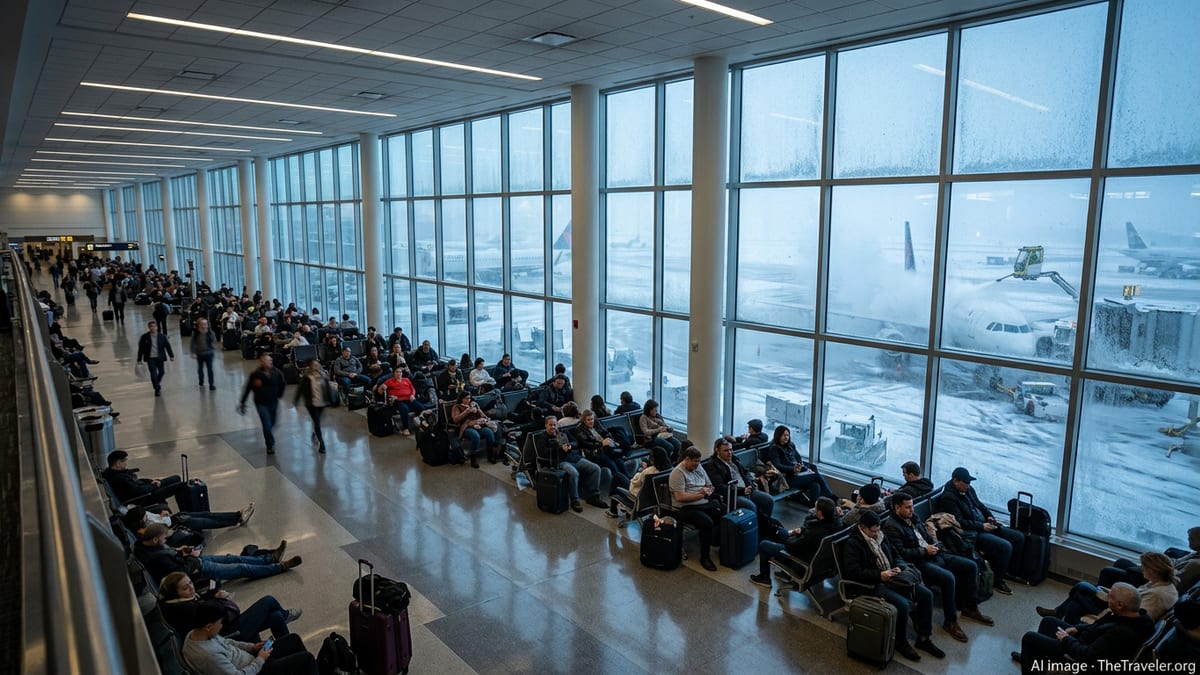
Storm Slams Key Canadian Hub
The latest disruption at Toronto Pearson follows a series of intense winter systems that have battered North American aviation in early 2026, repeatedly overwhelming airline schedules and airport operations. Publicly available flight tracking data for recent storms shows that major hubs across the continent, including Pearson, have faced waves of cancellations as snow, freezing rain, and high winds reduced runway capacity and slowed aircraft turnaround times.
During one of the most significant episodes in late January, Toronto recorded some of its heaviest single-day snowfall on record, with hundreds of flights at Pearson cancelled in a matter of hours and thousands more disrupted across the United States and Canada as the same storm hammered multiple hubs. Those earlier shocks left airlines with displaced aircraft and crews, creating a fragile operating environment that has made the current storm’s impact even more acute.
Weather models and meteorological summaries for March indicate that the transition from deep winter to early spring has brought volatile conditions, with rapid temperature swings capable of producing heavy, wet snow and ice that are particularly challenging for airport de-icing operations. When combined with strong crosswinds over the Greater Toronto Area, the result has been extended ground delays and periods when takeoffs and landings must be sharply reduced for safety reasons.
Toronto Pearson, the country’s busiest airport, functions as a central hub for both domestic connections and long-haul international services. Any prolonged weather disruption at this node tends to reverberate quickly across the broader network, especially on heavily trafficked corridors linking Canada with major U.S. and European cities.
Thousands Stranded as Cancellations Cascade
As the storm system intensified, publicly available airport and airline dashboards showed hundreds of departures and arrivals at Toronto Pearson cancelled or significantly delayed in a single day, with knock-on effects continuing into subsequent schedules. The scale of the disruption has left terminal departure halls crowded with passengers attempting to rebook, secure overnight accommodation, or retrieve baggage from cancelled flights.
North American aviation data from recent winter storms suggests that when a major hub such as Pearson experiences sustained weather-related ground delays, cancellations can quickly climb into the thousands across the continent. Tight aircraft utilization, limited spare crews, and already busy late-winter schedules mean that there is little slack in the system when a central node is forced to slow operations for hours at a time.
Travelers connecting through Toronto have been particularly exposed, as missed links cascade into further misconnection and re-routing challenges. Passengers arriving from sunnier destinations to find their onward flights to Canadian or U.S. cities cancelled are often left competing for limited seats on remaining services or facing the prospect of lengthy overland journeys as a backup plan.
Social media posts and forum discussions from recent weather events at Pearson describe long queues at service desks, extended waits for updates, and difficulty securing hotel rooms near the airport when large numbers of travelers are displaced simultaneously. While such reports are anecdotal, they align with the broader pattern of strain visible whenever severe weather intersects with peak travel periods.
Ripple Effects Across North American Routes
The disruption at Toronto Pearson is not confined to southern Ontario. Because many transborder and transatlantic routes funnel through the airport, weather-related cancellations there can strand travelers as far away as Florida, the U.S. Midwest, Western Canada, and major European gateways. Aircraft that were scheduled to operate multi-leg rotations are forced out of position, triggering a chain reaction of delayed or cancelled flights on subsequent segments.
Recent winter storms across North America have illustrated how quickly such ripple effects can build. On peak disruption days in January and February, aviation statistics showed more than ten thousand flights cancelled in a single 24-hour period across the United States and Canada, with Toronto listed among the worst-affected hubs. In those cases, ground stops and reduced arrival rates at a few key airports resulted in widespread schedule reshaping for multiple days.
For airlines using Pearson as a primary hub, the challenge lies not only in restarting operations once the worst of the weather passes, but in unwinding days of accumulated delays and repositioning aircraft and crew. Even after runways are cleared and visibility improves, it can take several more days before timetables resemble normal patterns and stranded passengers are fully re-accommodated.
Regional carriers and codeshare partners are also affected, as they rely on consistent feeding of passengers through Toronto to sustain smaller routes. When those flows are interrupted, flights to secondary cities may operate with reduced loads or be cut entirely, limiting options for travelers trying to reach or leave less-served destinations.
Strain on Infrastructure and Passenger Support
The latest episode of weather-induced chaos at Pearson comes as Canadian transportation officials and local agencies continue to highlight the growing operational risks posed by increasingly frequent extreme weather. Recent planning documents related to emergency preparedness in Ontario have emphasized the need for upgraded command and response facilities near the airport, acknowledging that major storms, flooding, and ice events can rapidly disrupt critical transportation links.
Within the terminals, capacity constraints are often most visible at check-in counters, security screening lanes, and airline help desks when large numbers of flights are cancelled close together. Extended lines and crowded boarding areas can create secondary challenges, such as difficulty accessing basic services, confusion over changing gate assignments, and strain on airport staff tasked with managing passenger flows in challenging conditions.
Accommodation and ground transport infrastructure in the Greater Toronto Area also come under pressure during severe weather disruptions. When thousands of travelers suddenly require last-minute hotel rooms, shuttle services, or intercity bus and rail tickets, availability can tighten rapidly and prices may rise, compounding the stress for passengers already dealing with cancelled flights.
Publicly available consumer guidance from airlines and travel organizations increasingly urges passengers to prepare for such scenarios by carrying essentials in hand luggage, monitoring flight status proactively, and considering travel insurance that covers weather-related delays. The recurring disruptions at Pearson this winter are likely to reinforce those recommendations for travelers using the hub in the coming weeks.
What Travelers Can Expect in the Coming Days
Forecasts for the remainder of March suggest that conditions over central and eastern Canada will remain unsettled, with additional systems capable of bringing snow, freezing rain, or high winds to the Toronto region. Even if subsequent storms are less intense, the cumulative impact on an already stretched aviation network means further disruption at Pearson cannot be ruled out.
Airlines operating through Toronto typically respond to severe weather by issuing flexible rebooking policies, encouraging passengers to move their trips away from the peak of the storm where possible. Recent travel alerts related to winter conditions in Canada have allowed customers to change flights without penalty within defined date ranges, helping to reduce the number of travelers who end up stranded at the airport during the worst of the disruption.
Travelers planning to pass through Pearson in the near term are likely to face longer-than-usual lines, tighter competition for available seats on rebooked flights, and the possibility of last-minute schedule changes as carriers attempt to rebuild normal operations. Those holding connections through Toronto, particularly on evening flights during active weather, may be at greater risk of misconnection and should factor additional time or backup options into their plans.
As North American carriers and airports continue to adapt to increasingly volatile winter weather, Toronto Pearson’s latest episode of mass disruption underscores the vulnerability of tightly interconnected flight networks. For passengers, the experience is likely to reinforce a growing reality of modern air travel in the region: when severe weather targets a major hub, chaos can spread far beyond the immediate storm zone.