


More news on this day
Travelers at John Wayne Airport in Orange County faced mounting frustration on Monday as a new wave of operational disruptions triggered six flight cancellations and at least 48 delays, snarling major routes to Los Cabos, New York, Los Angeles, San Jose and San Francisco on some of the airport’s busiest carriers, including Delta Air Lines, United Airlines and Southwest Airlines.
Get the latest news straight to your inbox!
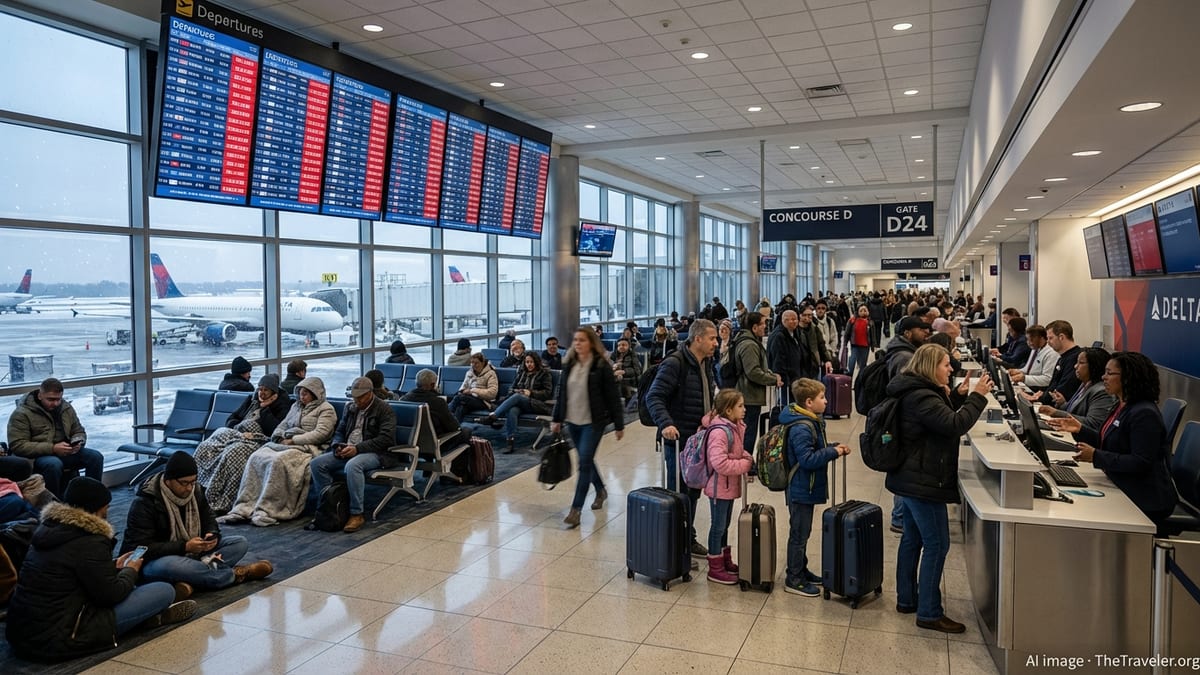
Operational Turbulence Hits a Usually Smooth Airport
John Wayne Airport, typically known for relatively fast processing times and a compact, easy-to-navigate terminal layout, saw its departures and arrivals board fill with yellow and red alerts as the day progressed. Publicly available tracking data showed a steady rise in delayed departures from early morning into the afternoon, as aircraft struggled to arrive from weather-affected hubs and tight turnaround schedules rapidly unraveled.
The disruption translated into six confirmed cancellations affecting both domestic and international services and an estimated 48 delayed flights on Monday. While John Wayne remains a smaller facility than nearby Los Angeles International, the airport plays an outsized role in Orange County’s business and leisure travel market, meaning even a modest number of schedule changes can quickly ripple through connecting itineraries.
The majority of impacted flights were short and medium-haul services to major West Coast and cross-border destinations, where aircraft rotations are highly interconnected. As delays compounded, later departures to core markets such as Los Cabos, San Jose and San Francisco were pushed back, creating uncertainty for travelers with onward connections throughout the United States and Mexico.
Airport operations themselves appeared to remain stable, with no indications of security screening disruptions or local infrastructure issues. Instead, the pattern of cancellations and late departures aligned with broader capacity constraints in the national airspace system and weather-driven slowdowns at larger coastal hubs.
Delta, United and Southwest Among Most Affected Carriers
Delta Air Lines, United Airlines and Southwest Airlines featured prominently among the disrupted operations at John Wayne Airport. Publicly available information from flight-status aggregators showed these carriers shouldering much of the schedule impact, reflecting their strong presence in key routes from Orange County to major hubs across the United States.
Delta’s network was particularly sensitive to turbulence at major East Coast and Midwest hubs, where thunderstorms and associated air-traffic restrictions constrained arrivals and departures. When inbound aircraft from affected airports arrived late or were forced to divert, knock-on effects emerged on departures out of Orange County, including services that feed into Delta’s broader domestic and international network.
United Airlines, which links John Wayne to major hubs such as San Francisco and other connecting cities, also registered multiple delays. Late-arriving aircraft, congestion at larger hubs and crew scheduling challenges combined to push several United departures outside their planned windows, causing some travelers to miss connections or arrive significantly later than expected.
Southwest Airlines, a key player in John Wayne’s domestic route map, was similarly impacted as delays cascaded across its point-to-point network. Because Southwest often relies on the same aircraft operating several legs in rapid succession, a delay on an early segment into Orange County can easily propagate to later flights bound for cities such as Los Cabos or San Jose, compounding the overall disruption.
Major Routes to Los Cabos, New York and the West Coast Disrupted
The day’s six cancellations and dozens of delays were concentrated on high-demand corridors linking Orange County with major North American destinations. Routes to Los Cabos attracted particular attention, as leisure travelers heading to Mexico’s resort region faced last-minute schedule changes and extended waits in the terminal.
Connections to New York area airports were also affected, reflecting a broader pattern of weather-related constraints and congestion on the U.S. East Coast. With carriers using New York as a critical gateway for both domestic and transatlantic travel, the disruption at John Wayne underscored how interdependent the national network has become. Even a relatively small coastal airport can experience outsized impacts when traffic flows at distant hubs falter.
On the West Coast, flights between Orange County and major California cities such as Los Angeles, San Jose and San Francisco saw mounting delays. While the absolute distances on these routes are short, they play a vital role in connecting Orange County passengers to long-haul services, business centers and technology hubs. Late departures out of John Wayne risked cascading into missed meetings, disrupted conferences and rebooked itineraries further up the line.
Some travelers attempting to bypass Los Angeles International in favor of John Wayne’s convenience found that Monday’s disruptions reduced the advantage. With regional skies constrained by broader traffic management initiatives, alternate airports in Southern California provided limited relief for those attempting to rebook at short notice.
Weather, Air-Traffic Controls and Network Strain Behind the Numbers
While no single cause appeared solely responsible for the six cancellations and 48 delays at John Wayne, the pattern of disruption mirrored national trends associated with severe weather and downstream air-traffic control measures. Industry trackers recorded widespread delays and cancellations across major hubs on Monday, as storms and low visibility forced the Federal Aviation Administration and its international counterparts to meter arrivals and departures more conservatively.
When such restrictions are introduced at key hubs, aircraft routing and crew schedules across the country come under pressure. Flights arriving late into Orange County can quickly fall outside allowable working windows for flight crews or run into nightly noise curfews and local operating limits, resulting in cancellations for later segments that cannot be legally or safely operated.
Network carriers such as Delta and United, which rely on tightly timed banked connections at their hubs, are particularly vulnerable to such rolling disruptions. If one or more hub airports experience heavy delays, connecting passengers and aircraft may arrive out of sequence, forcing airlines to prioritize certain routes and temporarily suspend others, as appears to have happened in part at John Wayne.
Point-to-point operators like Southwest also feel the strain when storms or congestion affect clusters of cities they serve. Because each aircraft is scheduled to perform multiple hops in a day, a single weather delay early in the schedule can echo through several airports, including John Wayne, before the system can fully reset.
What Travelers Can Do During Ongoing Disruptions
For passengers departing or arriving through John Wayne Airport in the coming days, publicly available guidance from travel experts and airline advisories suggests several practical steps. First, travelers are encouraged to monitor flight status closely through airline channels and flight-tracking tools rather than relying solely on scheduled times printed at booking.
Those whose flights have already been cancelled or significantly delayed may be eligible for fee-free rebooking, travel credits or other accommodations, depending on the ticket type and the carrier’s policies. During periods of widespread weather or airspace disruption, many airlines activate flexible travel waivers that allow customers to change their itineraries within certain date and route windows without additional charges.
At the airport, passengers connecting onward from disrupted flights are typically advised to seek updated routing as soon as possible, since available seats on later services can fill quickly when multiple departures are affected. While John Wayne’s smaller size can make it easier to move between check-in counters and gates, capacity on alternative flights from the airport is naturally limited compared with larger regional hubs.
With summer travel demand building and weather patterns becoming increasingly volatile, Monday’s wave of six cancellations and 48 delays at John Wayne Airport serves as a reminder that even well-run regional gateways are not immune to national and international aviation shocks. Travelers using Orange County as a starting point or connection hub may wish to build extra time into their itineraries and keep contingency plans ready when forecasts turn unsettled.