


More news on this day
An Emirates A380 operating Flight EK302 from Dubai to Shanghai diverted to Hangzhou on the night of July 22, 2026, leaving more than 370 passengers facing an overnight ordeal in a stationary aircraft and a disrupted journey that extended close to 24 hours before they could continue to Shanghai.
Get the latest news straight to your inbox!
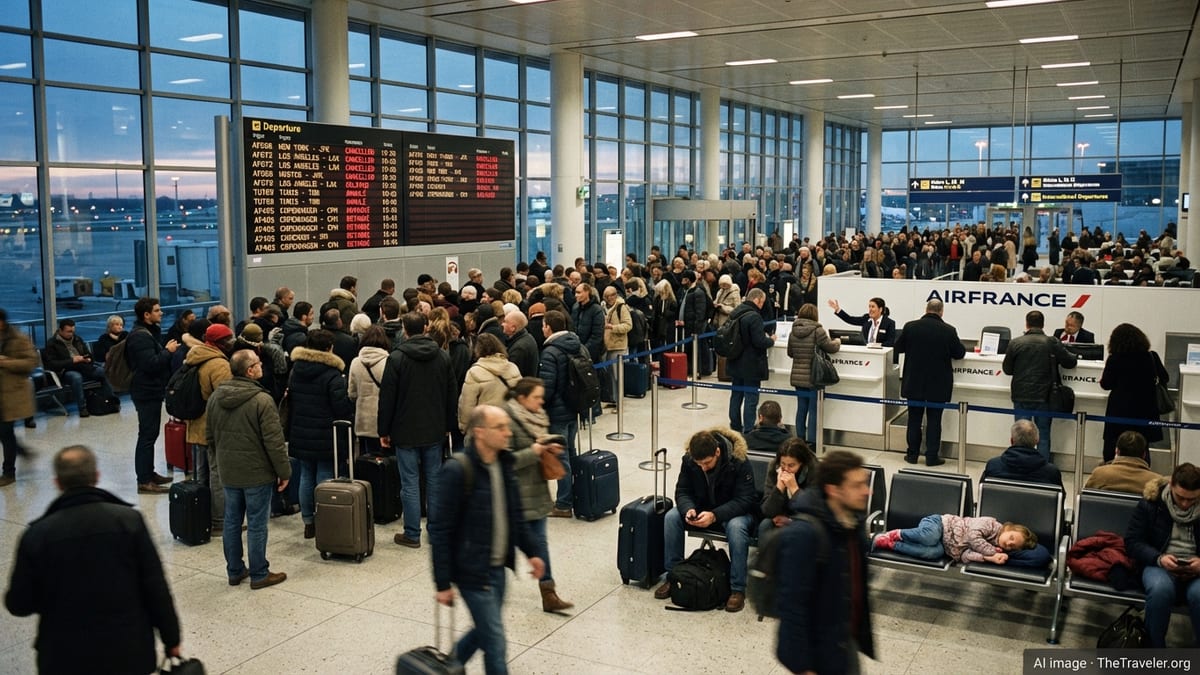
Weather Diversion Turns Into Overnight Ordeal
Publicly available flight tracking data and Chinese media coverage indicate that Emirates Flight EK302 departed Dubai on July 22 bound for Shanghai Pudong but was unable to land there due to severe weather affecting the airport’s operations. The Airbus A380 diverted to Hangzhou Xiaoshan International Airport, touching down shortly after 21:00 local time.
Reports from Chinese news outlets describe how 373 passengers remained onboard the widebody jet for more than 10 hours after landing in Hangzhou, as the situation unfolded slowly on the ground. Passengers shared images and descriptions on social media that appeared to show a darkened cabin, crowded aisles and growing frustration as the hours passed.
Accounts compiled by local media suggest that the aircraft’s air conditioning did not function normally for part of the time on the ground, contributing to discomfort in the full cabin. At least one passenger was reported to have fainted, with video clips circulating widely on Chinese social platforms and being cited in domestic news coverage.
The aircraft’s diversion, subsequent overnight ground delay and the eventual cancellation and reprogramming of the onward sector meant that many travelers ultimately experienced a disruption lasting close to a full day from the moment of landing in Hangzhou to the scheduled continuation to Shanghai.
Airline Cites Weather and Operational Constraints
According to statements reproduced in Chinese business and state-affiliated media, Emirates acknowledged that EK302 diverted due to what it described as adverse weather conditions at Shanghai Pudong. The airline’s public messaging emphasized that the decision to divert was taken for safety reasons and that operations at the destination airport were significantly affected by the weather.
Subsequent reports summarizing the airline’s explanation note that a combination of factors contributed to the length of the delay in Hangzhou. These included limited ground handling resources set up to process a fully loaded A380 at short notice, crew duty time considerations and the need to coordinate immigration and customs procedures for an unscheduled international arrival.
Media coverage of the incident highlights that Emirates later issued a formal apology through Chinese-language channels, expressing regret for the extended time passengers spent onboard after landing. The airline stated that all passengers had eventually disembarked and that it had arranged meals, hotel accommodation and other assistance once ground arrangements were in place.
Information carried by Chinese financial and regional outlets indicates that the original Hangzhou to Shanghai sector associated with EK302 was cancelled on July 23, with a rescheduled service planned around the early hours of July 24. This left many travelers facing an additional wait of roughly 24 hours from the time of the diversion before being able to complete the final short hop to Shanghai Pudong.
Passenger Experience Sparks Online Backlash
The delay and conditions onboard the aircraft quickly attracted widespread attention on Chinese social media platforms, where passengers and observers debated how long travelers should be kept on an aircraft after a diversion. Video clips and posts amplified reports of high cabin temperatures, limited refreshments and the medical episode involving a fainting passenger.
Commentary aggregated by Chinese news sites shows that many online users questioned whether passengers should have been allowed to disembark earlier to wait in the terminal, even if that required additional immigration processing or temporary entry arrangements. Others focused on communication, suggesting that the level and clarity of updates provided to those on board played a significant role in perceptions of the incident.
Some industry voices quoted in domestic media noted that, in diversion cases involving international flights, coordinating entry procedures at an alternate airport can be complex and costly. They argued that, from an operational perspective, having passengers remain onboard until a clear plan is confirmed is often seen by airlines as simpler and more efficient, particularly when there is hope of an early onward departure.
Nonetheless, the extended confinement of hundreds of travelers in a parked aircraft for most of the night became a flashpoint in online discussions about passenger rights, acceptable delay management and the responsibilities of airlines when unexpected operational disruptions occur in foreign jurisdictions.
Questions Over Passenger Rights and Airline Obligations
The EK302 diversion has renewed attention on the patchwork of passenger protection rules that apply to long international routes linking the Middle East and East Asia. Unlike routes touching the European Union, where EU261 regulations set out specific compensation and care standards, journeys between Dubai and mainland China are governed by a mix of carrier policies, local regulations and bilateral air service agreements.
Legal and aviation commentators cited in Chinese reports observed that there is limited publicly available case law in China specifically addressing long onboard ground delays after an international diversion. In practice, they suggest that redress typically depends on airline policies, contractual terms and, in some cases, negotiated settlements rather than automatic statutory compensation.
Guidance materials circulated in the aviation sector emphasize that many carriers commit to providing meals, refreshments and accommodation when passengers are stranded overnight due to disruptions outside their control, such as weather. However, time spent waiting on the aircraft before formal delay thresholds are reached can fall into a gray area that is not always clearly addressed in customer-facing documents.
The Hangzhou incident is likely to feed into ongoing global debates over whether more precise standards should govern maximum tarmac delays, access to fresh air and functioning climate control, and timely avenues for disembarkation when long waits become unavoidable during diversions.
A380 Operations and Route Resilience Under Scrutiny
EK302 is one of Emirates’ flagship services linking its Dubai hub with Shanghai, operated by the double-deck Airbus A380 that can carry well over 400 passengers in a typical three-class configuration. The July 22 diversion highlighted how the size of the aircraft can compound logistical challenges when irregular operations occur at airports that may not routinely handle the type.
Chinese media explanations of the response in Hangzhou point to limits in stand availability, equipment and staffing tailored to the A380, factors that may have slowed the turnaround from diversion to disembarkation and re-accommodation. Handling a full A380 load in an unplanned setting can strain airport and airline resources, particularly late at night when staffing is reduced.
In the broader regional context, the EK302 episode comes during a period of frequent weather-related disruptions across East Asia’s coastal hubs in the summer months. Typhoons, heavy rain and associated airspace restrictions have combined to create operational bottlenecks and diversions affecting multiple carriers and routes.
For Emirates and other long-haul operators, the Hangzhou diversion underscores the importance of contingency planning for large aircraft, including clearer communication strategies, stronger coordination with alternate airports and transparent policies around how long passengers may be asked to remain onboard after an unscheduled landing.