


More news on this day
Heavy rain, high winds and earlier winter snow on Jeju Island have caused repeated disruptions on the key Seoul–Jeju air corridor in recent months, unsettling travel plans on what is often described as the world’s busiest flight route.
Get the latest news straight to your inbox!
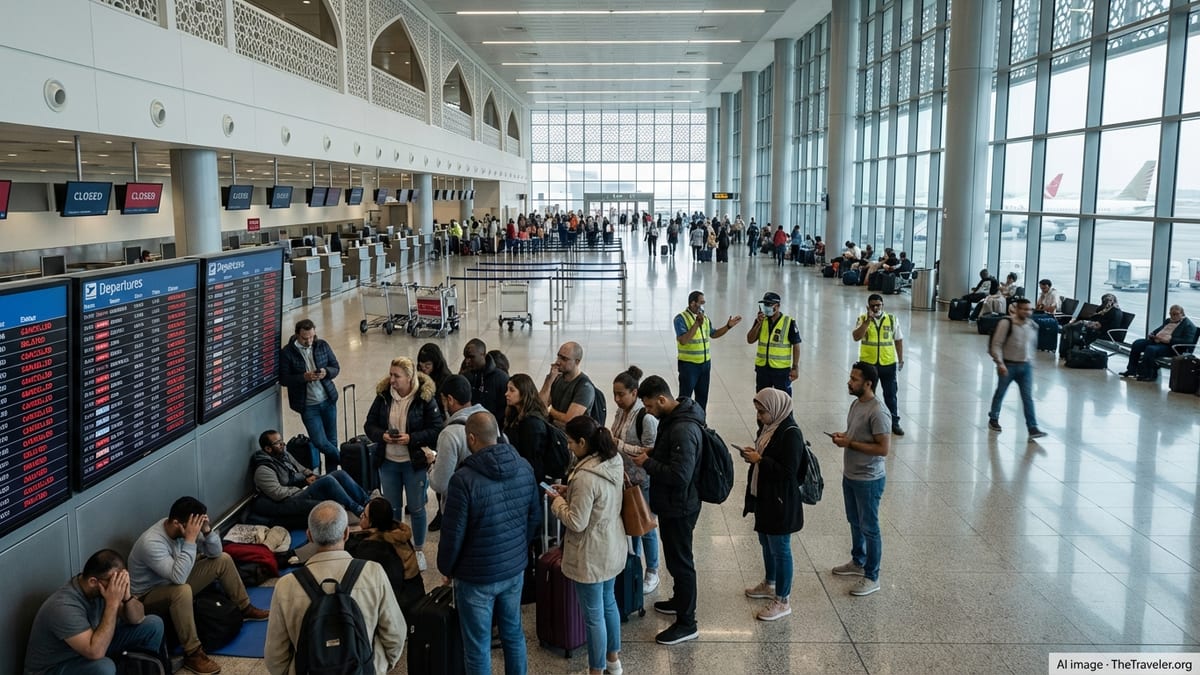
Spring Storms Trigger Mass Cancellations at Jeju Airport
Operations at Jeju International Airport have been repeatedly strained this spring, most notably in early April when strong winds and heavy rain led to the cancellation of nearly 250 flights in a single day. Published coverage from Korean outlets indicates that departure boards at the island’s main terminal were dominated by red cancellation notices, with the bulk of affected services linking Jeju with the Seoul area.
Reports from that period describe maximum wind speeds on and around Jeju reaching close to 30 meters per second, prompting aviation authorities to restrict operations for safety. As a result, airlines serving the island, including major carriers and low cost operators, were forced to ground aircraft or significantly delay departures until conditions stabilized.
The April disruption followed a difficult winter for Jeju aviation. In February, a heavy snowstorm temporarily halted runway operations and resulted in more than 160 canceled flights over the course of a day, again concentrating the impact on the dense shuttle pattern between Seoul’s airports and Jeju. Publicly available accounts from passengers describe long queues, limited seating and overnight waits inside the terminal as they sought rebooking options.
Together, these episodes highlight how quickly the tightly scheduled Seoul–Jeju shuttle network can unravel when weather deteriorates. With dozens of daily rotations between Seoul Gimpo, Incheon and Jeju, a single day of stormy conditions can strand thousands of travelers and create knock on effects that persist into subsequent days.
World’s Busiest Route Exposes Travelers to Ripple Effects
The domestic corridor between Seoul and Jeju has frequently been cited by aviation data providers as the world’s busiest airline route, carrying millions of passengers each year. That intensity brings convenience in the form of frequent departures, but it also amplifies disruption when storms or technical constraints interrupt the flow.
When large numbers of flights are canceled over a short window, the challenge is not only the immediate loss of capacity but also the limited options for rebooking. Aircraft and crew are tightly cycled through short haul turns, and once rotations are broken, airlines must reposition resources or compress later schedules. Published coverage of recent Jeju weather events notes that additional flights have occasionally been mounted after conditions improved, but available seats can still fall far short of demand.
Travel forums and booking platforms reflect this squeeze in the aftermath of major disruptions. Some travelers report difficulty finding same day alternatives from Seoul to Jeju or vice versa, particularly when trying to coordinate with international connections through Incheon. Others describe needing to adjust hotel bookings or shorten stays on the island when they are unable to depart as planned.
These ripple effects can be especially pronounced during peak travel periods such as weekends, public holidays and cherry blossom season, when load factors on the Seoul–Jeju corridor are already high. Even minor delays during such times can cascade into missed ferries, tour departures or tightly timed itineraries elsewhere in Korea.
Operational Notices and Airline Adjustments Shape the Outlook
Alongside weather related turbulence, operational notices and broader industry pressures are shaping how resilient the Seoul–Jeju link can be to future disruption. Aeronautical information for Jeju International Airport in early May shows technical updates and localized restrictions, including navigation and drone related advisories, which underline the complexity of maintaining safe operations in a constrained airspace.
At the same time, publicly available business reporting indicates that Korean low cost carriers are reviewing their networks in response to higher fuel costs and global uncertainty. While recent adjustments have focused more on international routes than on core domestic sectors such as Seoul–Jeju, the overall capacity strategy of these airlines can influence how much slack remains in the system when irregular operations occur.
Industry commentary suggests that some carriers have been adding relief flights after major weather events to help clear backlogs at Jeju. However, with aircraft also committed to other domestic and international services, there are limits to how much additional capacity can be deployed at short notice. The balance between maintaining dense schedules and preserving operational resilience remains a key consideration for airlines on this route.
Airport infrastructure also plays a role. Previous technical notices have documented maintenance work and taxiway lighting upgrades at Jeju, scheduled outside peak operating hours where possible. While such projects are designed to improve long term reliability, they can temporarily reduce flexibility if further constrained by concurrent bad weather or high seasonal traffic.
What Recent Disruptions Mean for Travelers Between Seoul and Jeju
For visitors planning to fly between Seoul and Jeju in the coming weeks and months, recent disruption patterns point to several practical implications. Weather related interruptions have been most severe during periods of heavy precipitation, strong winds or snow, and these conditions can arise quickly around Jeju’s coastal and mountainous terrain.
Travel planning resources advise that passengers with onward international flights build generous buffers between a Jeju departure and a long haul connection from Incheon or Gimpo. Public trip reports from earlier this year describe travelers shifting to earlier Jeju–Seoul flights or even traveling a day in advance to reduce the risk of missing overseas departures after airport shutdowns or mass cancellations on the island.
Travelers are also increasingly encouraged by consumer advocacy sites to familiarize themselves with airline policies on rebooking, vouchers and care provisions during irregular operations. While specific compensation rules vary by jurisdiction and ticket type, clear understanding of available options can help passengers respond more quickly if a Seoul–Jeju leg is canceled or significantly delayed.
Despite the recent turbulence, schedules for May show a full roster of services between Seoul area airports and Jeju, indicating that demand remains strong and that carriers continue to prioritize the route. For now, the Seoul–Jeju air bridge remains a vital link in South Korea’s domestic tourism economy, even as shifting weather patterns and industry pressures make reliability a growing concern for travelers.