


Book a package holiday from London to Tenerife, a winter-sun cruise in the Caribbean, or a family week in a resort in Turkey, and there is a good chance TUI sits somewhere behind the scenes. The German-based group is one of Europe’s biggest travel companies, selling millions of holidays each year through a web of tour operators, airlines, cruise brands and hotels. But what exactly is TUI, and why does it matter so much to European travelers?
Get the latest updates straight to your inbox!
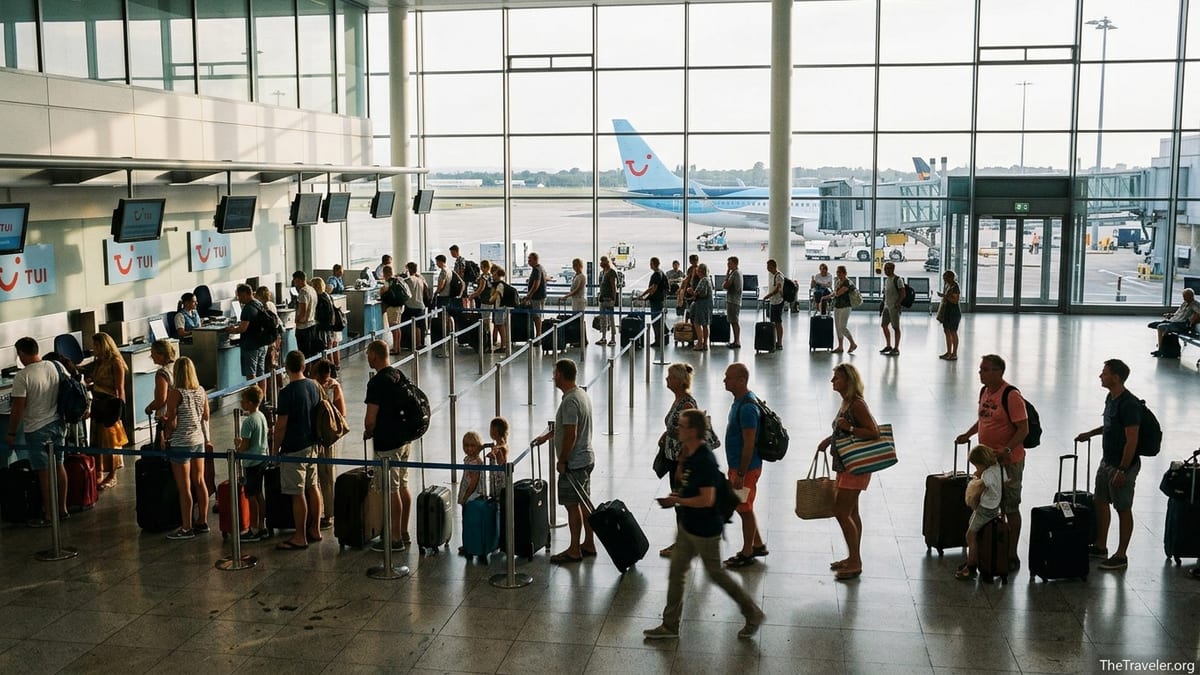
From German industrial conglomerate to global travel powerhouse
TUI began life in 1923 as Preussag, a German industrial and mining conglomerate. Over decades it shifted away from heavy industry and, in the 1990s and early 2000s, began buying up tour operators and travel businesses across Europe. By 2002 it had rebranded as TUI AG, focusing squarely on tourism.
Today TUI AG, usually called TUI Group, is headquartered in Hanover, Germany and describes itself as the world’s leading integrated tourism business. In its 2024 financial year it reported revenue of more than 23 billion euros and employed roughly 65,000 people, with operations across major European source markets including Germany, the UK, the Nordics, the Netherlands, Belgium, France, Spain and more.
For travelers, that industrial backstory matters far less than what TUI looks like on the ground. The company’s evolution means a British family booking a week in a Greek all inclusive, a Dutch couple taking a Caribbean cruise, and a German group heading to a Robinson club in Turkey might all be buying from the same parent company, even if the brand name on their booking differs.
Over time, TUI has absorbed or partnered with a long list of well-known European travel names. Former UK brand Thomson Holidays, for example, was gradually rebranded under TUI in the 2010s, while Thomson Cruises became Marella Cruises in 2017. This consolidation is a big part of why TUI now looms so large in the European travel landscape.
What “integrated” really means: packages, flights, hotels and cruises under one roof
TUI frequently describes itself as an integrated tourism group. In practice that means it controls multiple parts of a holiday: the flight you take, the resort you sleep in, the cruise ship you sail on, and the tour operator that packaged everything together. Instead of simply reselling seats on another airline or rooms in another company’s hotel, TUI often owns or co-owns those assets.
Across Europe, TUI runs several airlines under the TUI brand, including TUI Airways in the UK and TUI fly in Germany, Belgium, the Netherlands and the Nordic countries. Collectively they operate around 130 aircraft, the majority being Boeing 737s that shuttle holidaymakers from regional airports like Manchester, Düsseldorf, Brussels and Stockholm to destinations such as the Canary Islands, the Greek islands and the Red Sea.
On the accommodation side, TUI’s portfolio includes roughly 400 hotels and resorts managed or co-managed under brands like TUI BLUE, RIU Hotels & Resorts, ROBINSON and TUI MAGIC LIFE. A family who books a TUI BLUE hotel in Rhodes, for example, may find that not only is the resort branded and run by TUI, but most guests flew in on TUI aircraft and booked via a TUI website or high-street agency.
At sea, TUI is involved in three cruise brands. Marella Cruises serves mostly British guests with mid-sized, largely all inclusive ships sailing in regions like the Mediterranean, Canary Islands and Caribbean. TUI Cruises, a joint venture with Royal Caribbean Group, operates the Mein Schiff fleet focused on the German-speaking market, while Hapag-Lloyd Cruises caters to the luxury and expedition segment with smaller ships and higher price points.
How TUI shapes real holidays across Europe
TUI’s scale becomes clearer when you look at specific trips. Consider a typical seven-night summer package from the UK to Mallorca. A family might book a “TUI BLUE for Families” hotel near Alcudia, with flights from Birmingham, transfers and half-board included. The plane is operated by TUI Airways, the hotel is part of the TUI BLUE brand, and the transfer buses are organized by TUI’s own destination services arm. The entire trip, from airport check-in desks in the UK to kids’ clubs on the ground, runs largely on TUI infrastructure.
In Germany, a couple might book a week at a ROBINSON club in Turkey’s Antalya region. Their package could include scheduled or charter flights on TUI fly Germany, all inclusive dining, sports facilities and guided activities on site, plus organized excursions booked through TUI’s experiences platform. Again, while they may only interact with a few brand names, they are effectively traveling inside one company’s ecosystem.
On the cruise side, a British traveler opting for a winter-sun Caribbean itinerary with Marella Cruises might buy a “fly-cruise” package that bundles return flights from a UK regional airport, transfers and the cruise itself into a single booking. Because TUI controls the flights and the cruise ship, it can coordinate timings and handle disruptions more centrally than if multiple unrelated providers were involved.
This integrated model gives TUI considerable influence over pricing, scheduling and product design. It also helps explain why a TUI package can sometimes undercut a DIY trip that strings together separate low cost flights, independent hotels and third-party transfers, especially during peak periods when TUI can fill its own aircraft and hotels efficiently.
Why TUI became one of Europe’s biggest travel companies
Several factors helped TUI grow into one of Europe’s largest travel brands. One is simple scale. By consolidating tour operators, airlines and hotel stakes across multiple countries, TUI can spread costs like aircraft leases, technology platforms and marketing over millions of customers. That scale, in theory, allows the group to offer competitive prices while still investing in new products and destinations.
The second factor is vertical integration. Because TUI often owns or tightly controls the key elements of a holiday, it is less reliant on outside suppliers. If demand for Turkey softens but interest in the Canary Islands jumps, TUI can move aircraft capacity, renegotiate hotel allocations within its own portfolio and adjust its brochure focus relatively quickly. When crises hit, such as geopolitical tensions in a region, TUI can shift customers to alternative destinations like Spain, Portugal or the Western Mediterranean without completely rebuilding its supplier network.
A third reason is TUI’s focus on mainstream leisure travelers. Rather than chasing a narrow luxury niche, TUI has spent decades serving the core holiday market: families looking for a week away during school breaks, couples looking for affordable beach escapes, and older travelers who like the predictability of packages. For example, a typical TUI deal out of Manchester to Tenerife in January might combine a three-star all inclusive hotel in Playa de las Americas with flights and transfers for a price that is easy to compare and budget for, which appeals to cost-conscious travelers.
Finally, TUI has placed emphasis on brand recognition and retail presence. In markets like the UK and Germany, many travelers know the TUI name from TV adverts, football sponsorships and high-street travel shops. Even as online booking has grown, TUI has kept physical agencies, allowing customers to sit down with an advisor to build a complex multi-stop trip or a special-occasion honeymoon, then still benefit from the company’s scale.
What kinds of trips TUI actually sells
Although TUI is often associated with classic beach holidays, its portfolio covers a broad spectrum of trip types. At one end are straightforward seven-night packages to destinations such as the Costa del Sol, Cyprus, Crete or the Algarve. These typically bundle flights, checked baggage, transfers and hotel into a single per-person price, sometimes with extras like kids’ clubs or basic excursions.
At a higher tier, TUI offers more specialized brands. TUI BLUE, for example, includes sub-concepts aimed at different audiences: TUI BLUE For Families resorts focus on children’s entertainment and family rooms; TUI BLUE For Two properties skew toward adults-only, with quieter pools and more gourmet dining; TUI BLUE Sensatori-style hotels push into the premium all inclusive segment with upgraded food and more elaborate spas.
Club-style brands like ROBINSON and TUI MAGIC LIFE add an emphasis on sports and social activities. A ROBINSON club on the Greek island of Kos, for instance, might offer extensive tennis facilities, fitness classes, water sports and nightly entertainment, drawing guests who are happy to stay mainly within the resort. TUI MAGIC LIFE properties, common in Turkey and North Africa, lean into high-energy pool scenes, beach activities and entertainment programs.
Beyond sun and sea, TUI sells city breaks, ski trips, long-haul tours and cruise packages. A Dutch traveler might book a city break in Lisbon with charter flights, airport transfers and a centrally located hotel, while a German guest could choose a winter ski week in the Austrian Alps, flight-inclusive and with on-the-ground support from TUI reps. TUI’s experiences arm also sells standalone excursions and tickets, from catamaran cruises in the Balearic Islands to guided cultural tours in cities like Rome and Istanbul.
The benefits and trade offs of booking with a travel giant
For many travelers, the main appeal of TUI is convenience and perceived security. When a family books a package holiday through TUI, they typically get financial protection schemes relevant to their market, along with a single point of contact if something goes wrong. If a flight is delayed or a hotel becomes unavailable, the same company is usually responsible for finding a solution, rather than the traveler having to juggle multiple providers.
In real terms, that might mean being rebooked onto a later TUI flight if an earlier departure is canceled, moved to another TUI BLUE or partner hotel if a resort closes for refurbishment, or receiving on-the-ground assistance from TUI staff when luggage is delayed. During periods of air traffic disruption in Europe, customers on TUI packages may find it easier to obtain alternative arrangements than those who booked separate low cost flights and independent accommodation.
There are trade offs. Package holidays typically offer less flexibility than fully independent itineraries. Changing dates, swapping hotels, or flying from a different airport after booking can incur higher fees than a DIY approach, especially if the new plans do not fit into TUI’s existing flight schedules. Travelers who like offbeat, small-scale accommodations or very tailored routes may feel constrained by the company’s focus on mainstream resorts and well-established destinations.
Price is also not always lower through TUI. At off-peak times, savvy travelers can sometimes combine scheduled low cost flights with independently booked apartments or guesthouses at a cheaper overall cost, especially in cities or emerging destinations where TUI has less presence. The company’s main strength lies in popular leisure routes where it can fill large aircraft and big resort hotels, particularly during school holiday periods.
How TUI is evolving in a changing travel market
Like the rest of the industry, TUI has had to adapt to rapid changes in travel behavior and external shocks. The pandemic years forced the group to take on government-backed loans and to restructure parts of its business. As travel rebounded, TUI focused on paying down debt, improving margins and fine-tuning capacity rather than simply chasing maximum volume.
In its more recent financial updates, TUI has highlighted strong demand in segments like hotels and cruises, and ongoing efforts to streamline its Markets & Airlines division. That includes adjusting the mix of flights and destinations to match where European travelers actually want to go. For instance, during periods of geopolitical tension in parts of the Eastern Mediterranean or the Red Sea, TUI has emphasized safer-feeling alternatives such as Spain, Portugal and the Western Mediterranean.
The company is also pushing digital tools more aggressively. Travelers increasingly manage bookings, flight check-in and excursion reservations through TUI’s apps and online portals, rather than relying solely on paper documents and in-person reps. For a guest in a TUI BLUE resort in Gran Canaria, that might mean using an app to reserve a table at the à la carte restaurant, browse resort activities, or book a jeep safari in the island’s interior.
Sustainability has become another focus area. TUI has announced various targets related to emissions, fuel-efficient aircraft, and more responsible excursions, such as limiting certain wildlife encounters or supporting local community-based tourism initiatives. In practice, travelers might notice options like carbon-conscious excursions, information about fuel-efficient aircraft types on their flight, or partnerships with hotels that prioritize energy-saving measures and reduced plastic use.
The Takeaway
For most travelers, TUI is not an abstract corporate entity but the name on their booking confirmation, airport check-in desk and hotel welcome sign. Understanding how large and integrated the company is helps explain why its packages can feel so seamless: one group designs the brochure, operates the aircraft, manages or co-manages the hotel, and arranges the excursions.
TUI’s position as one of Europe’s biggest travel companies rests on that integration and scale. It offers convenience, bundled pricing and a sense of security that appeals especially to families, first-time travelers and those who prefer not to assemble every detail themselves. At the same time, its size and mainstream focus mean it is strongest in popular sun-and-sea destinations and standard trip formats, and less geared toward highly customized or off-the-beaten-track adventures.
If you are planning a European holiday, it is worth recognizing when TUI is behind the trip you are considering, even if the front-facing brand is Marella Cruises, TUI BLUE or ROBINSON. Knowing what TUI is, how it operates, and what trade offs come with booking through a travel giant can help you decide whether its model matches the kind of trip you want.
FAQ
Q1. What exactly is TUI Group?
TUI Group is a German-based tourism company that combines tour operators, airlines, hotels and cruise lines under one umbrella, selling mainly leisure holidays to European travelers.
Q2. Why is TUI considered one of Europe’s biggest travel companies?
Because it carries millions of customers each year across multiple countries, runs its own airlines and hotels, and has a large share of the mainstream package holiday market.
Q3. Which brands does TUI operate that travelers might recognize?
Common brands include TUI Airways and TUI fly for flights, TUI BLUE, ROBINSON, TUI MAGIC LIFE and RIU Hotels & Resorts for accommodation, and Marella Cruises, TUI Cruises and Hapag-Lloyd Cruises at sea.
Q4. What types of holidays can I book with TUI?
TUI sells beach packages, city breaks, ski trips, cruises, long-haul tours and resort-based stays, often bundling flights, transfers, accommodation and sometimes excursions into a single price.
Q5. Is booking with TUI cheaper than organizing everything myself?
It depends. On busy leisure routes and during school holidays, TUI’s scale can make packages competitive, but at off-peak times DIY trips using low cost carriers and independent hotels can be cheaper.
Q6. How does TUI handle problems such as flight delays or hotel changes?
Because TUI often controls multiple parts of the trip, it can usually rebook flights, move guests to alternative hotels or adjust transfers within its own network when disruptions occur.
Q7. Does TUI only operate in Germany and the UK?
No. While Germany and the UK are major markets, TUI also has strong positions in countries such as the Netherlands, Belgium, the Nordics, Austria and others across Europe.
Q8. Are TUI holidays suitable for independent or adventurous travelers?
TUI focuses on mainstream leisure trips, so it suits travelers who value convenience and predictability more than highly customized, off-the-beaten-track itineraries.
Q9. What is the difference between Marella Cruises and TUI Cruises?
Marella Cruises mainly targets British guests with English-speaking, largely all inclusive ships, while TUI Cruises’ Mein Schiff fleet is oriented toward German-speaking travelers, and Hapag-Lloyd Cruises focuses on luxury and expedition cruises.
Q10. How is TUI adapting to new travel trends and concerns?
TUI is investing in digital tools, refining its mix of destinations, expanding hotel brands like TUI BLUE and placing more emphasis on sustainability, from more efficient aircraft to more responsible excursions.