


Piazza dei Miracoli in Pisa is one of Italy’s most instantly recognizable places, yet many travelers experience it as a blur: a quick stop between Florence and the coast, a rushed Leaning Tower climb, a few photos among the tour groups, and back to the bus. With a bit of planning and the right timing, you can slow the pace, see more than just the tower, and actually feel the quiet grandeur that made this walled square a UNESCO World Heritage site in the first place.
Get the latest updates straight to your inbox!
Understand the Square Before You Arrive
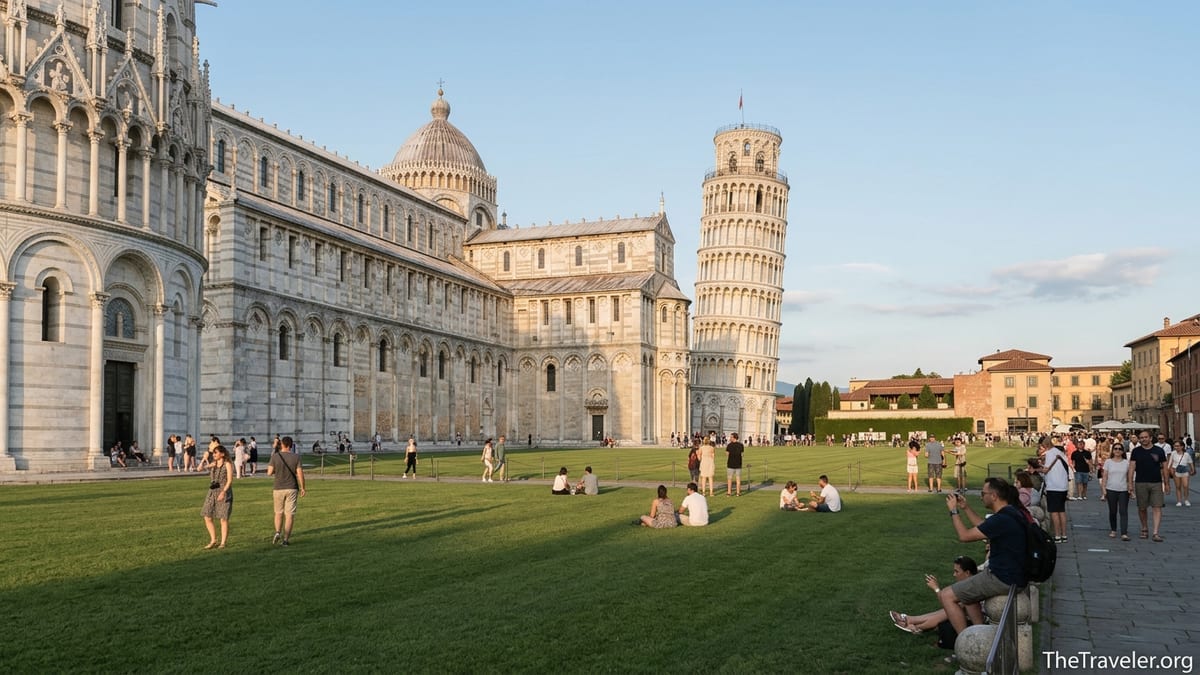
Piazza dei Miracoli, also known as Piazza del Duomo, is a compact walled complex that contains four main monuments: the Leaning Tower, the Cathedral of Santa Maria Assunta, the circular Baptistery and the cloistered Camposanto cemetery, plus the Opera del Duomo Museum. Knowing what is inside the walls helps you avoid wandering without a plan or treating the square as just a tower backdrop. Most visitors photograph the campanile and leave without stepping into the cathedral or camposanto, even though these are often the calmest and most atmospheric spaces.
Imagine your visit as a sequence, not a scramble. One realistic, unhurried order is: walk in from the city side, spend a few minutes simply taking in the lawn and façades, visit the Baptistery and Cathedral first, then the Camposanto, and finish with either a tower climb or a slow lap around the perimeter at golden hour. On a typical day, this sequence takes about three to four hours at a relaxed pace, which is feasible even if you are coming from Florence or the Ligurian coast as a day trip.
It also matters that this is not a town square in the usual sense. The piazza is separated from traffic and modern buildings by walls, which amplifies both its serenity in quiet moments and its intensity when tour groups pour in. Understanding that dynamic in advance makes it easier to accept that the atmosphere will change over the day and to plan around those swings rather than feel surprised or stressed by them.
Finally, think of the Leaning Tower as one piece of a larger story. It is the campanile of the cathedral, not a stand-alone attraction, and its famous tilt comes from the same soft soil that shaped the entire complex’s history. When you see it in relation to the striped marble of the Duomo and the rounded bulk of the Baptistery, the square becomes a coherent medieval ensemble rather than just a backdrop for playful photos.
Choose the Right Time of Day and Year
The single biggest factor that determines whether Piazza dei Miracoli feels rushed is when you visit. From roughly late May through early September, and especially on weekends, the square can feel extremely crowded between about 10:00 and 15:00, when cruise excursions and bus tours typically arrive. Travel operators that run Florence and Pisa in one day often drop passengers at the piazza late morning, which compresses many visits into the same window and leads to queues for everything from security checks to restrooms.
If your schedule allows, aim for early morning or late afternoon. In practice, that means entering the piazza not long after opening, often around 9:00, or planning your monument entries for the last two or three hours before closing, which can be around 19:00 or later in high season according to recent schedules. Travelers who stay overnight near the square often report that between 8:00 and 9:30 and again after 17:00 the lawns are noticeably quieter, tour groups thin out, and it becomes much easier to linger over details of the façades or photograph the tower without a crowd in every frame.
Time of year matters just as much. Spring and autumn generally bring milder temperatures and more manageable crowds compared with the peak of July and August, when daytime highs can make standing in exposed areas tiring. In shoulder seasons such as April, early May, late September and October, you are more likely to find same-week ticket availability for tower climbs and can often enjoy the piazza in softer, less punishing light. Winter sees shorter days and a higher chance of rain, but those willing to bundle up may find they share the square with mostly Italians and a fraction of the summer visitors.
When you cannot avoid a midsummer or midday visit, you can still reduce the sense of rush by building in quiet intervals. For example, if your tower climb is at 11:30 on a hot June day, you might arrive around 10:15, pick up your ticket, spend 20 relaxed minutes inside the cool interior of the Cathedral or Baptistery, then approach the tower only 10 minutes before your slot. Afterwards, retreat to the relative calm of the Camposanto cloister or step outside the walls for a drink before reentering the square in the late afternoon when the light softens and crowds start to thin.
Book Smart: Tickets, Time Slots and What to Reserve
Ticketing for Piazza dei Miracoli can feel confusing, and confusion often leads to wasted time in lines. The key point is that the Leaning Tower requires a dated, timed ticket, while admission to the Cathedral, Baptistery, Camposanto and museums is usually managed through a separate, flexible monument ticket that can cover several sites on the same day. Recent ticket bundles from the official operator often include a combined “Piazza dei Miracoli” option and a separate supplement if you want to climb the tower, with tower slots sold in 15-minute intervals and capped to a modest number of visitors each time.
Because tower climbs are strictly limited, advance purchase is strongly recommended, especially between late spring and early autumn. Many travelers report that morning and late afternoon climbs sell out first, leaving only midday options by the time they arrive in Pisa. Booking your preferred time slot a few weeks in advance for busy months or at least several days before for shoulder seasons will almost always give you more control over your schedule. If you are visiting in winter or on a rainy weekday, you may find same-day availability at the on-site ticket office, but it is still worth checking online before you travel.
Think of your tower ticket as the fixed point around which you plan everything else. For instance, if you secure a 9:45 tower climb, you can comfortably arrive around 9:00, walk through security without anxiety, climb, then step straight into the quieter parts of the complex such as the Camposanto or Opera del Duomo Museum while most day-trippers are just reaching Pisa Centrale station. On the other hand, if you have a 17:15 climb, you can spend the earlier afternoon exploring the historic center around Borgo Stretto and the Arno riverfront and enter the piazza only in the later part of the day when it starts to relax.
Guided tours can be worthwhile if you want to consolidate monuments and explanations into a defined block of time. Several operators sell small-group tours that include the Cathedral, Baptistery and Tower, often in about two hours, sometimes with radio headsets so you can stand slightly apart from the group. While this is more structured than wandering alone, it can actually feel less rushed for some visitors because a guide handles logistics such as when to queue, where to store bags and how to time restroom breaks, leaving you free to focus on what you are seeing rather than on the clock.
Design a Flow That Feels Human, Not Mechanical
Many travelers arrive at Piazza dei Miracoli with an internal checklist: tower photo, tower climb, cathedral interior, maybe the Baptistery if there is time. The result can feel mechanical, as if you are moving along a conveyor belt. A more relaxed experience comes from designing your own flow through the space, leaving room for pauses and small discoveries instead of rushing from ticket gate to ticket gate.
One realistic half-day itinerary might begin with a slow walk from Pisa Centrale station through the historic streets rather than a taxi straight to the square. The stroll, which takes about 20 minutes at an easy pace, leads you over the Arno River and past everyday shops and cafes, gradually shifting your mindset from transit to exploration. Reaching the piazza on foot, as medieval pilgrims once did, makes its walled green space and white stone façades feel like an arrival rather than a check-in.
Inside the walls, build deliberate breathing room between major sights. For example, after the intensity of a tower climb, take 10 or 15 minutes simply to sit on the grass or a bench along the edges of the lawn, watching the play of light on the marble and the choreography of visitors doing perspective tricks with the tower. Families can let children rest or have a small snack here before moving on to quieter interiors. Couples might wander to the less crowded north side of the cathedral, where the view of the tower and apse is often less obstructed than along the main approach.
Consider ending at the Camposanto or the Opera del Duomo Museum instead of the tower. The cloistered cemetery, with its long arcades and fragments of medieval frescoes, usually has fewer people than the other monuments and lends itself naturally to a slower, reflective pace. The museum, where many of the original sculptures from the cathedral and Baptistery are preserved, allows you to study details that are hard to appreciate on the exterior façades. Finishing your visit in one of these calmer spaces helps you leave with a sense of depth rather than of having just “ticked off” the tower.
Beat the Crowds on the Ground
Even at busy times of day, small tactical choices can dramatically reduce how rushed you feel. One simple technique is to approach the piazza from the side streets to the east or south rather than walking in with the main wave that arrives from the large coach parking area. Coming from Via Santa Maria, for instance, you often enter through a gate used more by independent travelers and locals, which can feel calmer than the main tour bus funnel.
Once inside, avoid zigzagging back and forth across the lawn between monuments. Each crossing adds time and mental fatigue as you weave through tour groups and people posing for photos. Instead, commit to one side at a time. You might start along the cathedral side, visiting the Baptistery and Duomo, then continue in a single direction toward the Camposanto and, finally, the base of the tower if you are climbing or want closer photographs.
Look for micro-oases of relative calm. The north flank of the cathedral, for example, often has more space for photographs that include both the Duomo and the tower without dense crowds in the foreground. The interior upper gallery of the Baptistery, accessible by a short stairway, is another spot where you can step away from ground-level noise for a few minutes. From there, you can watch and listen when staff demonstrate the Baptistery’s remarkable acoustics, which usually happens at regular intervals, and enjoy a different perspective on the cathedral’s façade through the high windows.
Sometimes “beating the crowds” means embracing them strategically. Rather than fighting for unobstructed views at the most popular photo angles, choose a secondary vantage point and accept that other people will be part of your photographs. Images that include visitors lying on the grass, adjusting cameras or playing with children can later feel more alive and authentic than posed, empty shots, and accepting this upfront can reduce the urge to push through or rush around other people in search of the perfect frame.
Slow Down Inside Each Monument
The interiors of Piazza dei Miracoli’s monuments reward attention, but many visitors spend only a few minutes inside each before moving on. To avoid that rushed feeling, give yourself a simple focus for every building. In the cathedral, for example, you might decide to concentrate on the contrast between dark and light: the alternating bands of marble on the columns, the gleam of the coffered ceiling, the way rays of sun slice through the dim nave on a clear afternoon. Pick one chapel or artwork to spend an extra minute with rather than trying to catalog everything.
In the Baptistery, climb up one level and pause. The circular space, with its domed roof and plain stone walls, has an acoustic effect that can turn a single human voice into a rich echo that spirals around the building. Staff often demonstrate this with a short chant, and if you happen to be there at the right time, simply standing still and listening can be one of the most memorable parts of the visit. The key is not to rush out the door as soon as you have walked a quick loop around the ground floor.
The Camposanto encourages an even slower rhythm. Here, long corridors surround a sheltered lawn, and the relative quiet makes it easy to forget the crowds just outside the walls. Rather than hurrying past the sarcophagi and fresco fragments, choose one wall or corner and stay there for several minutes, letting the details come to you: a carved lion at the base of a tomb, a faint medieval figure surviving in a damaged fresco, the changing light under the arcades as clouds pass. Many travelers reach this part of the complex with little time left; by reversing the order and visiting earlier in your circuit, you can enjoy it fully without glancing at your watch.
Spending a bit more time in each interior also has a practical benefit. Temperatures inside the stone buildings are often a little cooler than outdoors in summer and slightly milder in winter. Using them as intentional breaks helps manage fatigue, which in turn makes walking between monuments less stressful and reduces the sense that you need to “get it all done” before you run out of energy.
Practical Comforts: Bags, Food, Photos and Rest
Small logistical decisions often determine whether a visit feels rushed. The Leaning Tower has strict rules about bags: larger backpacks are not allowed on the climb, and visitors are usually required to store them in a nearby cloakroom before entering. Knowing this ahead of time lets you avoid a last-minute dash to drop your bag and then sprint back to your time slot. If you know you will be climbing, consider bringing only a small crossbody bag or camera on that portion of the visit and leaving larger items at your hotel or in station luggage storage.
Food and water also influence your pace. While you can buy snacks and drinks from stands and cafes just outside the piazza walls, these areas can be busy and sometimes expensive for what they offer. Many visitors prefer to have a light breakfast or coffee in the city center, perhaps near Piazza Vittorio Emanuele or along Corso Italia, before walking to the square. Carrying a refillable water bottle helps, as you can top up at public fountains in the city. Plan a proper sit-down meal either before or after your monument visits rather than squeezing a rushed lunch between tickets, which often leads to indigestion and impatience.
When it comes to photography, set a personal limit on how much time you will devote to playful tower poses. It is enjoyable to “hold up” or “push over” the tower in a few shots, but spending 30 minutes trying to perfect the illusion can leave everyone in your group feeling hurried for the rest of the visit. One practical method is to designate a single spot and a 10-minute window for these photos, then put the camera away for a while and simply walk. You will likely notice more of the marble carving, sky and lawn textures once you are no longer looking constantly through a screen.
Finally, schedule conscious rest. If you are staying in Pisa overnight, consider a short siesta back at your hotel or guesthouse in the early afternoon, when the sun is strong and the piazza is busiest. Returning around an hour and a half before closing gives you a second, often calmer experience of the same space. Day-trippers can approximate this by stepping into a shaded cafe a few streets away from the walls, where the atmosphere is more local and you can reset before deciding whether to return for a last look.
The Takeaway
Getting the best experience at Piazza dei Miracoli without feeling rushed is less about seeing everything and more about how you distribute your attention. When you understand the layout of the square, choose your time of day, lock in a tower ticket that suits your rhythm, and deliberately build in pauses, the visit shifts from a crowded obligation to a sequence of distinct, enjoyable moments.
Whether you are there for a single afternoon or staying in Pisa for a night or two, approach the piazza as a place to inhabit briefly rather than just a monument to conquer. Arrive a little earlier or stay a little later than the main surge, choose one or two interiors to savor, and allow yourself to sit and watch the play of light on white marble. You are far more likely to leave with clear memories and a sense of calm than with the feeling that the day disappeared in a rush of lines and snapshots.
FAQ
Q1. How long should I plan for a relaxed visit to Piazza dei Miracoli?
For an unhurried experience that includes at least one interior monument and a tower climb, plan around three to four hours. If you enjoy photography or art, add another hour so you can linger in the Camposanto or museum without checking the time constantly.
Q2. Do I really need to book Leaning Tower tickets in advance?
While it is sometimes possible to buy same-day tickets in quieter months or bad weather, advance booking is strongly recommended from roughly April through October. Securing a specific time slot before you travel lets you build a calm schedule around it instead of spending your first hour in Pisa queuing at the ticket office and hoping for a suitable time.
Q3. What is the least crowded time of day to visit?
In most seasons, the quietest times are early morning shortly after opening and the last two or so hours before closing. Midday, especially from about 10:00 to 15:00, tends to be busiest because of bus and cruise tours. If you can organize your day to enter the piazza before 9:30 or after 17:00, you will usually encounter a more relaxed atmosphere.
Q4. Can I enjoy the piazza without climbing the Leaning Tower?
Yes. The square itself is freely accessible, and many visitors choose to admire the tower from the lawn while focusing their ticket budget on the Cathedral, Baptistery and Camposanto. The Baptistery’s acoustics and the peaceful cloisters of the Camposanto, in particular, offer rich experiences that do not involve climbing stairs or dealing with timed entries.
Q5. Is it better to visit Pisa as a day trip or stay overnight?
Both options can work, but staying at least one night near the historic center or the piazza gives you access to the quieter early morning and evening hours, which many travelers find more rewarding. Day trips tend to compress everything into a late-morning or early-afternoon window, when crowds peak and the sun can be harsh in summer.
Q6. How strict are the Leaning Tower’s rules about bags and children?
The tower has firm safety rules. Larger backpacks and bags are not allowed on the climb and must be stored in a cloakroom nearby. Small crossbody bags or compact cameras are usually accepted. There is also a minimum age for children to climb, and younger children are typically not permitted for safety reasons, so families should check the current rules before booking.
Q7. Are there good places to eat near Piazza dei Miracoli that are not tourist traps?
There are many simple trattorias, pizzerias and cafes within a 10 to 15 minute walk, especially if you head back toward the Arno River or into streets like Via Santa Maria and Borgo Stretto. Prices and quality often improve once you step a few blocks away from the immediate perimeter of the piazza. Having a coffee or aperitivo in the historic center can be a pleasant way to bookend your visit.
Q8. What should I wear for a comfortable visit?
Wear comfortable walking shoes with good grip, especially if you plan to climb the tower, as the stairs can be worn and slightly tilted. Light, breathable clothing is helpful in warmer months, and carrying a light layer for cooler interiors or breezy days is wise. Because the Cathedral is a place of worship, shoulders should be covered, and extremely short shorts may not be appropriate.
Q9. Is Piazza dei Miracoli accessible for visitors with reduced mobility?
Access varies by monument. The square itself is relatively flat, and parts of the Cathedral and Camposanto can usually be reached with assistance or ramps, but the tower climb involves many stairs and is not suitable for those with significant mobility issues. Visitors with specific needs should consult up-to-date accessibility information from the site operator and consider focusing on the most accessible areas and viewpoints.
Q10. Can I visit Piazza dei Miracoli in bad weather?
Yes, the piazza is open in most weather conditions, and rainy or overcast days often bring fewer visitors, which can make the experience more peaceful. You will want a waterproof jacket or umbrella, and the lawns may be soggy, but interiors such as the Cathedral, Baptistery and Camposanto remain atmospheric in gray light. Only in cases of high winds, storms or specific safety concerns might certain areas or the tower climb be temporarily restricted.